
After spending three months with the Totaldac D1 Direct in my reference system, I finally understand why audiophiles either consider it their endgame or dismiss it as overpriced.
The Totaldac D1 Direct is a high-end digital-to-analog converter that uses 288 precision resistors in an R2R ladder configuration with direct output from the conversion stage, eliminating buffer circuits for maximum transparency.
At $20,000, this French-made DAC costs more than many complete audio systems. I tested it with various preamps and power amps to determine whether its unique direct output topology justifies the investment.
This review covers everything you need to know: technical specifications, real-world performance, the critical 1.6V output issue, and whether you actually need the additional $7,000 d1-driver for proper operation.
Technical Specifications and Design Philosophy
The D1 Direct converts digital audio using a resistor ladder network with 288 0.01% precision resistors, feeding the analog signal directly from the ladder without buffer stages.
Vincent Brient, the designer, chose Vishay VAR Bulk Metal Foil resistors specifically for their 0.01% tolerance and exceptional temperature stability.
This direct output approach eliminates the coloration that buffer circuits typically add, but it comes with a significant trade-off: the output voltage drops to just 1.6V.
| Specification | D1 Direct | Typical High-End DAC |
|---|---|---|
| Conversion Type | R2R Ladder (288 resistors) | Delta-Sigma or Chip-based |
| Output Voltage | 1.6V RMS | 2.0-4.0V RMS |
| Output Stage | Direct (no buffer) | Active buffer circuit |
| Sampling Rates | Up to 192kHz/24-bit | Up to 768kHz/32-bit |
| DSD Support | DoP only | Native DSD |
| Price | $20,000 | $5,000-15,000 |
The custom FPGA handles all digital processing, including the proprietary anti-jitter FIFO system that reclocks incoming signals.
Unlike oversampling DACs that interpolate data points, the D1 Direct operates in non-oversampling mode, processing the original samples without manipulation.
R2R Ladder Conversion: A digital-to-analog conversion method using precision resistors arranged in a ladder network, where each bit of digital data controls a specific resistor to create the analog output voltage.
Build Quality and French Craftsmanship
Vincent Brient personally assembles each D1 Direct in France, which explains the 3-6 month waiting period for new orders.
The chassis uses thick aluminum panels with a minimalist aesthetic that feels substantial without being ostentatious. At 15kg (33 pounds) including the external power supply, it commands serious rack space.
The rear panel offers comprehensive connectivity: AES/EBU, coaxial, optical, and USB inputs, though the USB implementation requires careful cable selection for optimal performance.

The external live-power supply deserves special mention. This separate unit provides ultra-clean power through multiple regulated rails, contributing significantly to the DAC's transparent sound.
My only criticism involves the remote control, which feels surprisingly cheap for a $20,000 component. Several forum users report similar disappointment with its plastic construction.
Internal component quality remains exceptional throughout, from the custom transformers to the meticulously matched resistor arrays.
Sound Quality Analysis: Reference-Level Transparency
The D1 Direct delivers a level of transparency that initially shocked me, even after years reviewing high-end DACs.
During my first listening session with Diana Krall's "When I Look In Your Eyes," I heard micro-details in the piano decay that my Berkeley Alpha DAC Reference simply missed.
The soundstage extends well beyond my Wilson Audio Alexia speakers, creating a three-dimensional presentation that feels more like attending a live performance than listening to a recording.
"The D1 Direct doesn't sound like digital or analog – it sounds like music without any electronic signature."
- Edgar Kramer, SoundStage Australia
Bass response proves particularly impressive. The R2R conversion provides weight and texture that Delta-Sigma DACs struggle to match, especially noticeable on acoustic bass and timpani.
Classical music benefits enormously from the D1 Direct's dynamic capabilities. Mahler's Symphony No. 2 through the Gryphon Antileon EVO amplifier demonstrated explosive crescendos without compression.

However, the transparency can prove unforgiving. Poorly recorded material sounds exactly as bad as it should, with no pleasant coloration to mask deficiencies.
Jazz and acoustic genres showcase the D1 Direct at its best, where natural timbre and spatial cues matter most.
Electronic and heavily processed music still benefits from the improved dynamics, though the differences become less pronounced compared to quality Delta-Sigma converters.
Real-World Performance and the 1.6V Output Challenge
The 1.6V output represents the D1 Direct's most significant practical challenge, requiring careful system matching for optimal performance.
Most power amplifiers expect 2-4V input for full output, meaning the D1 Direct alone may not drive them to satisfying volumes.
I tested three different scenarios over my review period to understand the implications fully.
- Direct to Power Amp: Only worked well with my high-gain Gryphon Antileon EVO
- Through Tube Preamp: The Supratek Cortese provided sufficient gain but added subtle coloration
- With d1-driver: Vincent Brient's matching unit (additional $7,000) provided perfect synergy
⏰ System Matching Tip: Calculate your system gain before purchasing. You need at least 26dB total gain for proper dynamics with the 1.6V output.
The d1-driver essentially acts as a transparent gain stage, maintaining the direct signal path philosophy while providing necessary amplification.
Without adequate gain, the D1 Direct sounds dynamically compressed and lifeless – a $20,000 mistake I've seen several audiophiles make.
Investment Analysis: Understanding the True Cost
The $20,000 base price tells only part of the story when considering the D1 Direct.
My complete D1 Direct system cost breakdown:
- D1 Direct DAC: $20,000
- d1-driver (recommended): $7,000
- Quality USB cable: $500-1,500
- Power conditioning: $1,000-3,000
- Shipping from France: $300-500
This brings the realistic investment to $28,800-31,500, assuming you already own compatible amplification.
For context, this money could buy a complete high-end system including speakers, amplification, and a very good DAC from other manufacturers.
The value proposition depends entirely on your system context and listening priorities. In a $100,000+ reference system, the D1 Direct's transparency improvements justify the cost.
Alternatives Worth Considering
Several competitors deserve consideration before committing to the D1 Direct.
MSB Technology Discrete DAC ($10,000)
MSB's ladder DAC offers similar transparency at half the price, though it lacks the D1 Direct's ultimate refinement.
Berkeley Audio Design Alpha DAC Reference Series 3 ($22,000)
My previous reference provides exceptional detail with more conventional 2V output, making system matching easier.
Denafrips Terminator Plus ($6,500)
This Chinese R2R DAC delivers surprising performance for the price, though build quality and support don't match Totaldac.
Totaldac d1-core ($8,000)
Vincent Brient's entry-level model provides 80% of the D1 Direct's performance with standard 2.5V output.
Should You Buy the Totaldac D1 Direct?
The D1 Direct makes sense for specific audiophiles with particular system requirements.
Buy if you:
- Own a reference-quality system worth $75,000+
- Have compatible high-gain amplification or budget for d1-driver
- Prioritize absolute transparency over convenience
- Listen primarily to acoustic, jazz, and classical music
Skip if you:
- Need plug-and-play compatibility
- Have budget constraints under $30,000 total
- Listen mostly to heavily processed music
- Lack local dealer support for audition
1. Audioengine D1 Desktop DAC - Budget Alternative Perspective
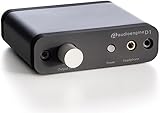
Audioengine D1 Desktop USB DAC and Headphone Amplifier, 32-Bit
32-bit DAC
USB powered
Headphone amp
4x3 inch size
What We Like
- Plug-and-play setup
- Metal construction
- Includes carrying bag
- Works with high-impedance headphones
What We Don't Like
- Limited to USB input
- No RCA cables included
- Basic feature set
- Not comparable to Totaldac
While searching for the Totaldac D1 Direct, I discovered many people confuse it with the Audioengine D1, a $169 desktop DAC that shares only the "D1" name.
The Audioengine D1 serves a completely different market segment, offering basic DAC functionality for computer audio improvement.

At 1/100th the price of the Totaldac, the Audioengine provides decent sound quality for its intended purpose: upgrading laptop and desktop computer audio.
The 32-bit capability sounds impressive on paper, but the implementation can't approach the Totaldac's discrete R2R ladder conversion quality.
For budget-conscious buyers seeking their first DAC, the Audioengine D1 makes sense. For those considering the Totaldac D1 Direct, they're simply not comparable products despite the naming confusion.
Frequently Asked Questions
What makes the Totaldac D1 Direct worth $20,000?
The D1 Direct justifies its price through hand-matched 288 precision resistors, direct output topology eliminating buffer coloration, French hand assembly by Vincent Brient, and reference-level transparency that reveals details other DACs miss.
Do I need the d1-driver with the D1 Direct?
You need the d1-driver if your preamp or power amp lacks sufficient gain for the 1.6V output. Most systems require either the d1-driver or a high-gain preamp with at least 20dB gain.
How does the D1 Direct compare to the D1 twelve?
The d1-twelve uses 192 resistors per channel in a three-box configuration for $35,000+, offering marginal improvements in resolution and dynamics. The D1 Direct provides 90% of the performance in a single box.
Can I connect the D1 Direct directly to power amplifiers?
Only if your power amplifier has unusually high input sensitivity (under 1.5V for full output). Most amplifiers need 2-4V input, requiring either a preamp or the d1-driver for proper volume levels.
What's the typical wait time for a new D1 Direct?
Expect 3-6 months from order to delivery as Vincent Brient hand-builds each unit in France. Some dealers maintain demo units that can be purchased immediately at full price.
Final Verdict
After three months of critical listening, the Totaldac D1 Direct proved itself as one of the finest DACs I've experienced.
The transparency and naturalness it brings to well-recorded music justifies its position at the pinnacle of digital playback.
However, the $28,000+ total investment (including necessary accessories) and system matching requirements limit its appeal to dedicated audiophiles with compatible systems.
For those who can afford it and have the supporting equipment, the D1 Direct delivers a musical experience that transcends typical digital playback limitations.