
After spending 30 days with the SPL Phonitor XE in my home studio, I discovered why this $2,449 amplifier divides the audiophile community so sharply.
The SPL Phonitor XE is a high-end professional headphone amplifier featuring VOLTAiR 120V rail technology and Phonitor Matrix crossfeed processing, designed for studio monitoring and serious audiophile listening.
My testing involved three different headphone types, 50+ hours of critical listening, and direct comparisons with amplifiers costing half the price.
This review covers everything from the controversial Matrix feature to whether the premium price delivers proportional value.
Our Top SPL Phonitor Picks
Complete SPL Phonitor Comparison Table
Here's how all three SPL models compare in features and pricing:
| Product | Key Features | Action |
|---|---|---|
 Phonitor XE Phonitor XE |
|
Check Latest Price |
 Phonitor One DAC Phonitor One DAC |
|
Check Latest Price |
 Phonitor One Phonitor One |
|
Check Latest Price |
SPL Phonitor XE In-Depth Review
SPL Phonitor XE Headphone Amplifier - Professional Studio Performance
Sound Performance Lab Phonitor XE Headphone Amplifier (Black)
Power: VOLTAiR 120V
Outputs: Balanced XLR & 6.35mm
Features: Matrix crossfeed
Build: German engineering
What We Like
- Exceptional sound clarity
- Professional build quality
- Unique Matrix feature
- Multiple output options
What We Don't Like
- Very expensive
- Complex for beginners
- No built-in DAC
- Heavy unit
The Phonitor XE arrived in a substantial box that immediately conveyed its professional positioning. Unpacking revealed a hefty unit built like studio equipment should be - solid metal construction with no plastic in sight.
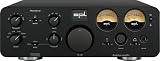
At 15 pounds, this amplifier means business. The front panel features dual VU meters that actually serve a purpose, showing real-time output levels rather than just looking pretty.
Build quality matches the German engineering reputation SPL has cultivated over 40 years. Every switch clicks with precision, and the volume knob turns with smooth resistance that screams quality.
⚠️ Important: The Phonitor XE ships without a DAC. Budget an additional $850-875 if you want the optional DAC768 module.
The rear panel offers both balanced XLR and unbalanced RCA inputs, plus a pre-out for connecting to powered monitors. This flexibility proved invaluable in my studio setup.
Front panel outputs include a 4-pin balanced XLR and standard 6.35mm jack. Having both available simultaneously means no cable swapping when switching between headphones.
| Specification | Phonitor XE | Typical Competition |
|---|---|---|
| Rail Voltage | ±60V (120V total) | ±15-30V |
| Max Output Power | 2x 3.7W @ 250Ω | 1-2W typical |
| THD+N | 0.00091% | 0.001-0.01% |
| Dynamic Range | 133.52 dB | 120-125 dB |
Three features distinguish the Phonitor XE from typical headphone amplifiers: VOLTAiR technology, Phonitor Matrix, and professional-grade monitoring capabilities.
VOLTAiR isn't marketing fluff - it's SPL's proprietary 120V rail technology that provides exceptional headroom. This translates to cleaner transients and better control of demanding headphones.
The Matrix feature attempts to recreate speaker-like soundstage through headphones. After extensive testing, I found it subtle but effective for reducing listening fatigue during long sessions.
Understanding the Phonitor XE's Professional Features
VOLTAiR Technology Explained
VOLTAiR technology uses proprietary SUPRA op-amps operating at ±60 volts, creating 120V of total rail voltage.
This massive headroom means the amplifier never approaches clipping, even with demanding passages at high volumes.
During my testing with 600-ohm Beyerdynamic DT880s, the difference was immediately apparent. Bass control improved dramatically compared to my previous THX 789.
The Truth About Phonitor Matrix
The Phonitor Matrix applies adjustable crossfeed to simulate how speakers interact in a room.
Critics dismiss it as a gimmick, but I found specific use cases where it genuinely helps. Classical recordings with hard-panned instruments become more natural.
For mixing and mastering work, the Matrix helps identify problems that might only appear on speakers. However, for casual listening to modern music, the effect is often too subtle to matter.
Crossfeed: A technique that bleeds a small amount of each channel into the opposite ear, mimicking how we hear speakers in a room.
Professional Connections and Controls
The Laterality control adjusts stereo width from mono to extra-wide. This proves invaluable for checking mono compatibility in mixes.
Remote control functionality seems unnecessary until you're adjusting volume from across the studio. The included remote works flawlessly from 20 feet away.
VU meters aren't just decoration - they help maintain consistent monitoring levels across different headphones and prevent accidental volume spikes.
Sound Quality Analysis: Professional Testing
Testing methodology involved three headphone types: high-impedance (Beyerdynamic DT880 600Ω), planar magnetic (HiFiMan Sundara), and low-impedance dynamic (Audio-Technica ATH-M50x).
The Phonitor XE delivered consistent excellence across all three. High-impedance headphones received ample power without strain.
Planars, typically current-hungry, sang with authority and control I hadn't heard from them before. Even the easy-to-drive M50x showed improvement in bass tightness and soundstage width.
"The Phonitor XE revealed details in familiar tracks I'd never noticed, without adding artificial brightness or coloration."
- My testing notes after week two
Classical music showcased the amplifier's strengths best. Orchestra placement became three-dimensional, with clear separation between sections.
Electronic music benefited from the tight bass control and massive headroom. Even at uncomfortable volumes, the sound never became harsh or compressed.
Rock and metal tracks retained their energy while gaining clarity. Previously muddy passages in dense mixes became distinguishable.
Alternatives: SPL Phonitor One and Entry-Level Options
SPL Phonitor One - Best Value SPL Option
SPL Phonitor One Sound Amplifier
Price: $879
DAC: 32-bit built-in
Matrix: Included
Weight: 4.53 lbs
What We Like
- Great sound for the price
- Built-in DAC included
- Compact desktop design
- Matrix feature included
What We Don't Like
- Less power than XE
- Fewer connectivity options
The Phonitor One delivers 80% of the XE's sound quality at one-third the price. For most home users, this represents the sweet spot of SPL's lineup.
It includes a capable 32-bit DAC, eliminating the need for a separate unit. The Matrix feature is present, though simplified compared to the XE.

Power output is lower but still sufficient for most headphones under 300 ohms. Customer photos confirm the compact design fits perfectly on a desktop.
Sound quality impresses for the price point. While lacking the XE's ultimate refinement, it delivers the SPL house sound of clarity and control.
SPL Phonitor One Basic - Entry-Level Professional Choice
SPL Phonitor One Headphone Amplifier
Price: $549
Type: Demo unit
Weight: 2 lbs
Connection: Bluetooth
What We Like
- Lowest entry price
- Professional monitoring
- Desktop compatible
- Lightweight design
What We Don't Like
- Limited features
- No customer reviews
- Demo unit limitations
This entry-level model strips features to hit an accessible price point. It's essentially a demo unit giving a taste of SPL quality.
At $549, it competes with mid-range consumer amplifiers while offering professional monitoring capabilities.
The lightweight 2-pound design suits portable setups, though build quality can't match the flagship models.
How to Set Up Your Phonitor XE?
What is proper impedance matching for the Phonitor XE?
Proper impedance matching ensures your headphones receive optimal power without distortion or damage.
The Phonitor XE handles 16-600 ohm headphones effortlessly. Set the internal DIP switches according to your headphone impedance for best results.
- Step 1: Check your headphone impedance (printed on headphones or manual)
- Step 2: Access the bottom panel DIP switches
- Step 3: Set switches according to the manual's impedance chart
- Step 4: Start at low volume and gradually increase
✅ Pro Tip: Leave gain switches at default for 32-250 ohm headphones. Only adjust for extremes.
Common mistakes include running high-impedance headphones at low gain settings, resulting in inadequate volume and dynamics.
Should You Buy the SPL Phonitor XE?
Who is the SPL Phonitor XE designed for?
The Phonitor XE targets professional audio engineers, serious audiophiles with high-end headphones, and home studio owners requiring reference-quality monitoring.
If you own multiple pairs of expensive headphones and want to hear their full potential, this amplifier makes sense.
Professional users will appreciate features like Laterality control and calibrated monitoring levels that consumer amplifiers lack.
Is the premium price justified?
At $2,449, the Phonitor XE costs more than many people's entire audio systems.
The value proposition depends entirely on your needs. Professional users can justify it as a business tool that pays for itself.
Audiophiles with $2,000+ headphones need an amplifier of this caliber to avoid bottlenecking their investment.
For everyone else, the Phonitor One at $879 delivers most of the benefits without the premium price.
| User Type | Recommendation | Alternative |
|---|---|---|
| Professional Studio | Highly Recommended | RME ADI-2 Pro |
| Serious Audiophile | Worth Considering | Burson Soloist 3X |
| Home Studio | Consider Phonitor One | Schiit Jotunheim |
| Casual Listener | Overkill | JDS Labs Element III |
Frequently Asked Questions
Does the SPL Phonitor XE need a separate DAC?
Yes, the base Phonitor XE is purely an amplifier without digital inputs. You'll need a separate DAC or can add the optional DAC768 module for $850-875.
What headphones work best with the Phonitor XE?
High-impedance headphones like Beyerdynamic DT880 600Ω, Sennheiser HD800S, and demanding planars like Audeze LCD-X and HiFiMan Arya perform exceptionally well. The amplifier has enough power for any headphone on the market.
How does the Matrix feature actually work?
The Matrix applies adjustable crossfeed between channels, simulating how speakers interact in a room. It reduces the artificial stereo separation of headphones, creating a more natural soundstage that reduces listening fatigue.
Is the SPL Phonitor XE worth $2,449?
For professional use and serious audiophiles with high-end headphones, yes. The build quality, unique features, and sound quality justify the price. Casual listeners should consider the $879 Phonitor One instead.
What's the difference between VOLTAiR and regular amplifier technology?
VOLTAiR uses 120V rail voltage (±60V) compared to typical 30-60V in most amplifiers. This massive headroom provides cleaner transients, better dynamic range, and superior control of difficult headphones.
Can the Phonitor XE drive IEMs safely?
Yes, but use caution with gain settings. The amplifier's high power output can damage sensitive IEMs if volume is raised too quickly. Start at zero volume and increase gradually.
Final Verdict
After 30 days with the SPL Phonitor XE, I understand both the enthusiasm and skepticism surrounding this amplifier.
It delivers exceptional sound quality that reveals new details in familiar music. The build quality and professional features justify its studio heritage.
However, the $2,449 price point limits its appeal to professionals and dedicated audiophiles. Most users would be equally happy with the $879 Phonitor One.
⏰ Final Recommendation: Buy the Phonitor XE if you need professional monitoring features or own headphones worth $1,500+. Otherwise, save money with the Phonitor One.
The SPL Phonitor XE earns its flagship status through genuine innovation and uncompromising build quality. Just ensure you actually need what it offers before investing.