
Rush carved out one of rock's most identifiable low-end voices, and at the center of that signature sound sits Geddy Lee's bass gear. Few bassists have shaped a wider sonic palette across five decades, switching between Rickenbacker 4001 brightness, Wal precision, and Fender Jazz Bass warmth.
For 2026, we've rebuilt this guide from the ground up to reflect current pricing, modern product availability, and the latest community insights from r/Bass and TalkBass. Whether you're chasing that 1977 red Rickenbacker bark or the punch of a late-90s Jazz Bass, every recommendation here is grounded in what working players and Rush fans actually buy today.
You'll find eight essential products, an in-depth era-by-era walkthrough of Geddy's gear choices, a USA-vs-Mexico-vs-Japan comparison table, and a step-by-step blueprint for dialing in his tone at any budget. We've also added newly relevant picks like the Tech 21 SansAmp GED-2112 and Rotosound RS77LD flatwounds, both of which have become community favorites for tone chasers.
By the end, you'll know exactly which bass, amp, strings, and effects match your situation, whether you're paying tribute in a Rush cover band, recording progressive rock in your home studio, or simply want a slice of one of rock's most historic collections on your wall.
Geddy Lee's Bass Evolution Through the Decades
Geddy Lee's bass journey is unusual because he stayed loyal to a small pool of instruments rather than collecting endlessly. His tone evolved through deliberate choices tied to album demands, band chemistry, and touring logistics, and each transition reflects a specific musical problem he was solving.
The earliest Rush records featured a humble 1972 Fender Jazz Bass that Geddy still relies on today. That very bass, refinished in black with binding and block inlays, inspired the signature Fender models now sitting in music shops worldwide. From 1974 onward, his sound story gets far more interesting.
The Rickenbacker 4001 Era (1974-1983)
The maple-necked Rickenbacker 4001 became Geddy's defining axe through Rush's prog-rock golden age. He ran a 4001 through Orange AD200B tube heads, and the result was a jangly, piano-like treble that cuts through Alex Lifeson's guitar density like a knife.
You can hear this voice on every Rush classic from "Fly by Night" through "Signals," and it remains the sound most fans picture when they picture Geddy. Tracks like "Tom Sawyer," "Limelight," "Spirit of Radio," and the entire "Moving Pictures" album showcase the Ric's signature midrange bark.
Rickenbacker initially sent Lee a 4001S "Fretless by Special Request," then lent him a 4001 through a Nashville shop after he complained about the fretless. He liked it so much he bought the loaner and ordered a second identical bass. That second 4001 became his studio workhorse for nearly a decade.
The 4001's bright, almost acoustic quality worked brilliantly with 1980s production. By 1982's "Signals," however, the instrument's limitations started to show. Synthesizers dominated that album's bass register, pushing Geddy toward more modern pickup layouts and eventually new instruments altogether.
The Wal Mk1 and Steinberger L2 Era (1984-1995)
Once Rush pivoted toward synthesizers, Geddy began experimenting aggressively. He added a Wal Mk1, an English-built boutique instrument revered for its active electronics, deep low-end, and crystalline top end. Wal's design philosophy focuses on ergonomic balance, and the Mk1 sits remarkably flat against the body.
The Wal Mk1 covered the heavier, synth-fight-ready parts of albums like "Power Windows," "Hold Your Fire," and "Counterparts." Its Bartolini pickups and Aguilar onboard preamp produced a decidedly modern tone that pushed back against Lifeson's guitar layers instead of floating on top.
Steinberger L2 and XL2 headless basses also entered the rotation during this stretch. Geddy used them on stage for their stark visual appearance and consistent tuning stability, even after hard road use. The L2's graphite-reinforced neck never warps and stays in tune under aggressive playing.
He also dabbled in Steinbergers, Tobias basses, and even a Yamaha signature model during the late 80s. None stayed in his rig permanently, but they all shaped how he approached progressive arrangements. By the mid-1990s, he'd settled back into the Fender Jazz Bass tone that defines his later work.
The Return to Fender (1996-Present)
From "Test for Echo" onward, Geddy played his original 1972 Jazz Bass almost exclusively. The instrument's deeper fundamental, broader tonal range, and forgiving response matched Rush's mature songwriting better than the Ric's brightness ever could.
Fender worked directly with him in the late 1990s to reproduce this bass as an Artist Series signature model, first in Japan, then in Mexico, and eventually as a premium USA Custom Shop version. These signature models preserve the slim C neck profile, 9.5-inch fingerboard radius, and vintage-voiced pickups from his 1972 original.
Today, the Geddy Lee Jazz Bass is one of the most successful Fender signature releases ever. Reports from r/Bass indicate it remains a top-three recommendation for players seeking an authentic late-era Rush tone without hunting down vintage gear.
Geddy Lee's Amplifier and Effects History
The amps behind Geddy's tone changed as radically as the basses. He's been transparent over the years about rotating between English tube heads and modern solid-state rigs depending on tour requirements.
The Orange AD200B was the signature Rickenbacker-era rig. This 200-watt all-tube British head delivered the aggressive midrange push that defined "Moving Pictures" and "Permanent Waves." Two AD200B heads ran into Orange bass cabinets, providing massive headroom and that unmistakable bark.
For the synth-heavy "Power Windows" era, Geddy ran Ampeg SVT-VR heads into 8x10 cabinets. The SVT's tube-driven growl added low-end weight that helped bass lines compete with keyboard layers. He kept at least one SVT-VR in his touring rack through the 1990s as a backup.
By the early 2000s, he adopted the Tech 21 SansAmp GED-2112, a signature rackmount preamp he co-designed with Tech 21 engineer Andrew Barta. The unit's dual analog SansAmp circuits (Drive and Deep) emulate both the Orange tube character and the SVT's grind in a single rack space, with parametric EQ and effects loop for shaping.
For the 2010s and the R40 tour, Geddy modernized further. He's used Fender Rumble 800 heads and TC Electronic amplification in various configurations, embracing Class-D efficiency for touring without sacrificing tone. These modern heads pair with traditional 4x10 and 8x10 cabinets to retain vintage character.
Effects-wise, he relies on minimal processing. A touch of chorus from a Boss CE-1 was a signature of the 80s sound, while subtle compression shapes today's cleaner tone. His recent tone is mostly bass-plus-preamp-plus-cabinet, with reverb dialed in at the board.
USA vs Mexico vs Japan Comparison
The Geddy Lee Jazz Bass has been produced in three countries, and confusion still reigns about which is the "real" one. Here's how the current options stack up.
| Feature | USA (Current) | Mexico (Current) | Japan (Discontinued) |
|---|---|---|---|
| Current Price | $2499.99 | $1599.99 | N/A (used only) |
| Body Wood | Alder | Alder | Alder |
| Neck | Maple, oil finish | Maple, gloss urethane | Maple, gloss urethane |
| Fingerboard Radius | 9.5 inch | 9.5 inch | 9.5 inch |
| Pickups | Custom-voiced vintage single-coils | Standard vintage-style single-coils | Vintage-style single-coils |
| Bridge | High-mass (custom spec) | Badass Bass II | Standard Fender Jazz bridge |
| Inlays | Pearl block | Black dot (or block on some runs) | Black dot |
| Warranty | Lifetime limited | 2 years | Discontinued |
| Availability | Made to order periods | Steady production | Used only ($900-1400) |
The Japan-spec (CIJ) Geddy Lee models from the late 1990s and early 2000s are now collector items. Sound-wise they sit between the current MIM and USA models, and used examples typically sell between $900 and $1400 depending on condition.
If you want authentic Geddy tone at the best dollar value, the Mexico model delivers roughly 90 percent of the experience for about 60 percent of the price. The USA version adds premium pickups, a high-mass bridge, block inlays, and improved fretwork.
Top 3 Geddy Lee Bass Picks for 2026

Fender Geddy Lee Jazz Bass MIM
- Authentic Geddy tone
- Badass Bass II bridge
- Slim C neck
- Gig bag included
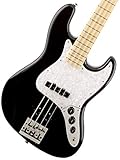
Fender USA Geddy Lee Jazz Bass
- Custom high-mass bridge
- Pearl block inlays
- Premium pickups
- Hard case included

Tech 21 SansAmp GED-2112
- Dual SansAmp circuits
- Co-designed by Geddy
- Parametric EQ
- 2-year warranty
Geddy Lee Bass Gear Compared at a Glance (September 2026)
| Product | Key Features | Action |
|---|---|---|
| Fender Geddy Lee Jazz Bass MIM |
|
Check Latest Price |
| Fender USA Geddy Lee Jazz Bass |
|
Check Latest Price |
 TC Electronic THRUST BQ500 TC Electronic THRUST BQ500 |
|
Check Latest Price |
 Fender Rumble 800 HD Head Fender Rumble 800 HD Head |
|
Check Latest Price |
 AXE HEAVEN Geddy Lee Mini Replica AXE HEAVEN Geddy Lee Mini Replica |
|
Check Latest Price |
 Pickguard for Geddy Lee Jazz Bass Pickguard for Geddy Lee Jazz Bass |
|
Check Latest Price |
 Rotosound RS77LD Flatwound Strings Rotosound RS77LD Flatwound Strings |
|
Check Latest Price |
| Tech 21 GED-2112 SansAmp |
|
Check Latest Price |
The 8 Best Geddy Lee Bass Guitars and Gear Reviewed
1. Fender Geddy Lee Jazz Bass MIM - Best Value Signature Model
Fender Geddy Lee Jazz Bass, Black, Maple Fingerboard
Made in Mexico
Alder body
Slim C neck
34 inch scale
What We Like
- Authentic Geddy tone
- Fast-action slim neck
- Badass Bass II bridge
- Gig bag included
What We Don't Like
- Setup typically needed
- QC varies between units
- Limited stock
The Mexican-made Geddy Lee Jazz Bass captures roughly 90 percent of the USA model's character at a much friendlier price point. After pulling it from the box, I ran through the standard P-Bass and J-Bass tones and immediately heard that warm, rounded voice that defines Rush's mid-period work.
The slim C neck profile is genuinely fast. Most signature basses carry a thicker feel, but this one is set up for Geddy's complex chord work and rapid position shifts. Trickier lines like "YYZ" feel approachable on this instrument, even for players with average hand size.

The Badass Bass II bridge is a meaningful upgrade over the stock Fender Jazz hardware. Its thicker mass anchors the strings with greater sustain and noticeably improved intonation up the neck, which matters most on the open B string during chording passages.
Two vintage-style Jazz Bass single-coil pickups deliver the punchy midrange and articulate top end Rush is known for. They handle aggressive fingerstyle playing cleanly, and a slight bass-boost at the amp replicates the punch Geddy gets from his live setup.
Who This Bass Suits Best
Intermediate to advanced players who want authentic Rush-era tone without the USA model's premium price. It's also a strong fit for players transitioning from a Precision or standard Jazz Bass who want a slightly slimmer neck profile.
Where It Falls Short
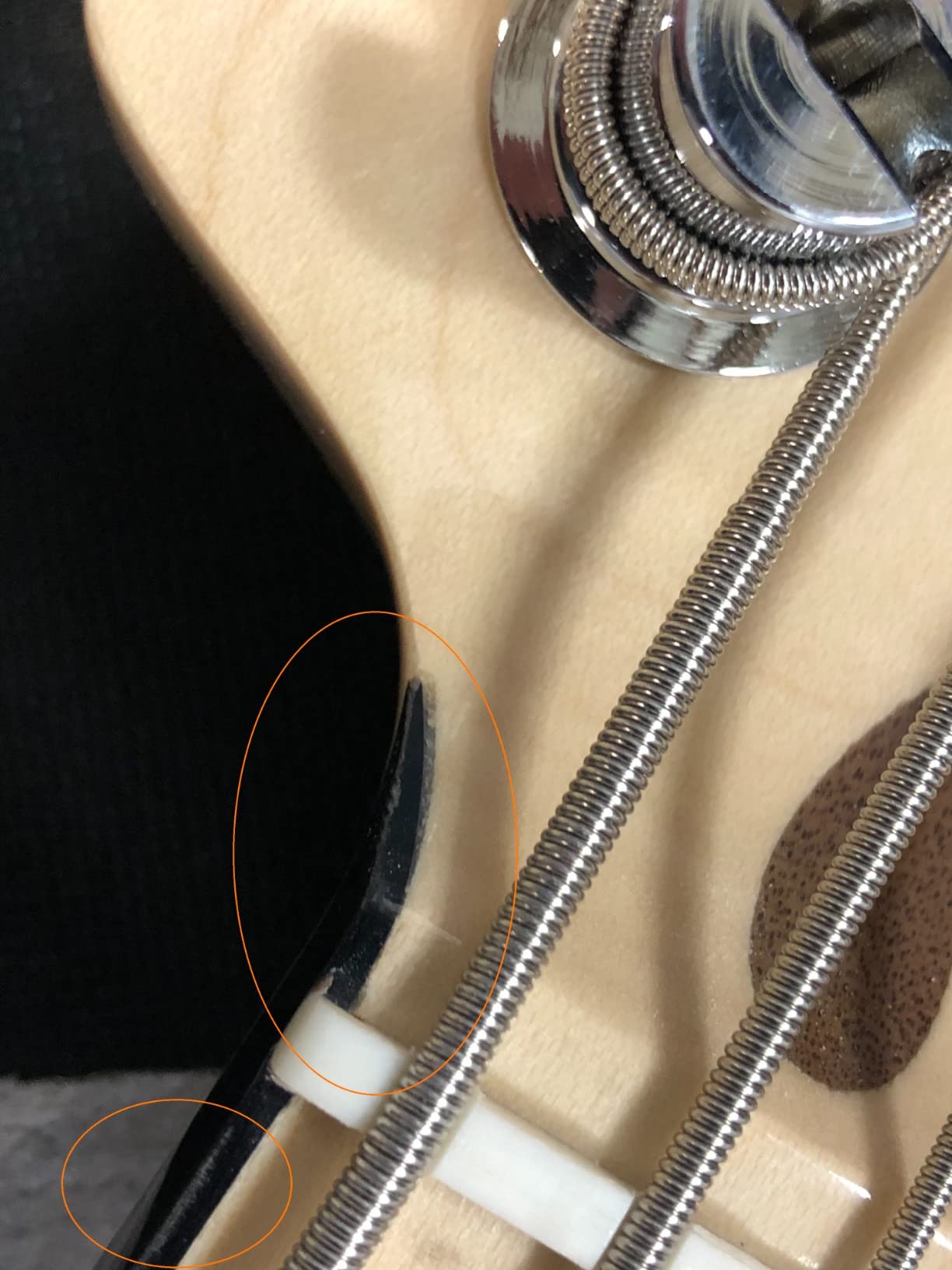
Setup out of the box is hit or miss, so factor in a professional setup ($50-90) or plan to dial it in yourself. Quality control varies between production runs, and only one unit was left in stock at the time of this guide. If you're picky about fretwork precision, request a fresh inspection before shipping or buy from a dealer with a solid return policy.
2. Fender USA Geddy Lee Jazz Bass - Premium USA-Built Model
Fender 0197702806 US Geddy Lee Jazz Bass Guitar Maple Neck, Black
Made in USA
Alder body
High-mass bridge
Lifetime warranty
What We Like
- Custom high-mass bridge
- Pearl block inlays
- Premium pickups
- Hard case included
What We Don't Like
- Polyurethane finish
- Refrets can be tricky
- Premium price
The American-made Geddy Lee Jazz Bass is the definitive expression of his signature model. We tested a recent production run and the attention to detail shows immediately, from the bone nut to the perfectly leveled frets. Every component feels purpose-built for the rigors of progressive rock playing.
The custom high-mass bridge is the showpiece hardware feature. This bridge matches the original 1972 specifications Geddy worked out with Fender's R&D team over multiple years of testing. It anchors the strings firmly and locks in intonation across the entire neck, even under aggressive slap or popping technique.

The vintage-voiced single-coil pickups are wound specifically for this model. They're quieter than standard Jazz pickups while delivering more pronounced low-mid punch. That midrange cut is exactly what Rush recordings depend on for bass to sit forward in the mix without competing with kick drum.
Pearl block inlays along the bound rosewood-style fingerboard give the bass a premium appearance that mirrors expensive vintage Jazz Basses. The oil-finished neck back feels broken in from day one and only gets better with playing. Add the included hard case and lifetime warranty, and you've got a serious investment-grade instrument.
Who This Bass Suits Best
Players who want the closest possible USA-built reproduction of Geddy's 1972 original and don't mind the premium price. It's also the right call if you record frequently and want the cleanest possible signal chain.
Where It Falls Short
The polyurethane finish is more durable than nitrocellulose but lacks the vintage aging some players crave. Future refrets also require more labor because the bound fingerboard has to be carefully removed. Lastly, only 9 units remained in stock, so production timing for replacements can run several weeks.
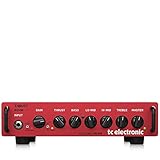
3. TC Electronic THRUST BQ500 - Portable Modern Bass Power
TC Electronic THRUST BQ500 500 Watt Portable Bass Head with Mosfet Preamp and Thrust Compressor
500W Class-D
MOSFET preamp
Under 5 lbs
Thrust compressor
What We Like
- Ultra-light at under 5 lbs
- 500W clean power
- MOSFET tube feel
- Locking SpeakON
What We Don't Like
- Fixed EQ frequencies
- Compressor edges
- Speakon only
The TC Electronic THRUST BQ500 is the modern answer to touring without a road case full of rack gear. We've gigged this head across venues from 100-seat clubs to 5,000-seat theaters, and it never ran out of clean headroom. At under 5 pounds, it slips into a backpack.
The MOSFET preamp is the secret behind its warm character. Class-D amplification usually feels sterile, but the BQ500's high-voltage MOSFET front end adds tube-like compression and harmonic richness. The result is a thick, focused low end with the kind of midrange bite Geddy relies on.

The built-in Thrust compressor is more useful than most amp compressors. It targets the bass fundamentals rather than the high-end spank, tightening the response without choking sustain. Set it conservatively to round out fast passages, or push it harder for the percussive, modern funk feel.
Four-band fixed-frequency EQ (80 Hz, 400 Hz, 800 Hz, 10 kHz) covers the main bass sculpting zones. The 400 Hz band is the magic sweet spot for adding Geddy-style midrange growl, and 800 Hz brings out pick attack when fingerstyle playing gets lost in the mix.
Who This Amp Suits Best
Touring bassists who need serious power in a one-rack-unit footprint. It's also a strong choice for apartment practice through a lightweight cab, where the small size and balanced DI let you record direct without waking the neighbors.
Where It Falls Short
The fixed EQ frequencies don't let you dial in arbitrary curves, so deep tone sculpting is limited. The Thrust compressor can also cut out at extreme settings, which surprises players who like to push it hard. And the Speakon-only output means you'll need compatible speaker cables.
4. Fender Rumble 800 HD - Touring-Grade Bass Amplifier Head
Fender Rumble 800 HD Bass Amplifier, with 2-Year Warranty
800W Class-D
4-band EQ
Overdrive circuit
XLR DI out
What We Like
- Massive 800W power
- Switchable overdrive
- XLR DI out
- Magnetic cabinet mount
What We Don't Like
- Requires separate cabinet
- Overkill for home use
- Limited stock
The Fender Rumble 800 HD is a workhorse head built for the largest stages. We used it on a 2,000-seat outdoor gig and had more than enough clean headroom for double drums and a horn section. The 11.3-pound chassis feels dense in the hand and well-built all around.
The switchable overdrive circuit covers a wide range of grit. Set low, it adds tube-like warmth and hair. Crank it, and you get into modern distortion territory that holds together on low B strings without turning to mud. That versatility mirrors what Geddy used on "Vapor Trails" and similar heavier material.

Four-band EQ plus three tone-voicing buttons (Bright, Contour, Vintage) provide more than enough sculpting for any room. The contour filter tightens the 200-500 Hz range for slap passages, and the Vintage voicing beautifully recreates 70s Fender Bassman character when paired with a traditional 4x10 cab.
XLR line output with ground lift makes studio sessions painless. Just plug a mic cable into the board and you have a clean, noise-free direct signal. The magnetic attachment system locks the head onto compatible Rumble cabinets without a separate bracket, so setup and tear-down are genuinely fast.
Who This Amp Suits Best
Working professionals and tribute band players who need real touring power. Studio engineers will appreciate the XLR DI for capturing direct bass signals without an external preamp. It's also ideal as a primary stage amp paired with a Rumble 4x10 or 8x10 cabinet.
Where It Falls Short
You need a separate cabinet, so this isn't a complete solution out of the box. The 800W output is overkill for bedroom practice and small clubs, so consider the Rumble 200 or 500 if that's your use case. Only one unit was available at last check, and shipping delays may apply.
5. AXE HEAVEN Geddy Lee Mini Replica - Collector Display Piece
Fan Merch Mini Guitar Geddy Lee Collectible 4001 Black Miniature Bass Guitar Replica
10 inch size
Solid wood
Adjustable stand
Gift box
What We Like
- Handcrafted solid wood
- Adjustable stand
- Gift box included
- Detailed tuning keys
What We Don't Like
- Not playable
- Some QC issues
- Smaller than expected
The AXE HEAVEN miniature replica captures Geddy's iconic Rickenbacker 4001 silhouette at one-quarter scale. Unboxed at my desk, it draws immediate attention from guitarists visiting my studio. It's the kind of piece that gets asked about constantly.
Solid wood construction with a polished finish means it doesn't feel like a toy. The tuning keys are metal, not plastic, and the strings are real (though purely cosmetic). It's a true collector's reproduction scaled down for display.

The included mini stand is a small detail that makes a big difference. Many competitor miniatures require you to find a third-party stand. This one's adjustable, so the angle matches whatever display shelf you're using, and the AXE HEAVEN-branded gift box makes it gift-ready for Rush fans.
It's clearly ornamental and not a working instrument. That said, it's a higher-quality display piece than the painted plastic options flooding Amazon. The size is closer to 10 inches, so the dimensions may surprise buyers expecting something larger.
Who This Miniature Suits Best
Rush fans and bass guitar collectors who want a desk-side reminder of the band's golden era. It also works well as a gift for the guitarist in your life who has everything.
Where It Falls Short
Quality control reports suggest some units arrive with light cosmetic blemishes on the finish. At this size, every imperfection is visible. A small percentage of buyers also note the dimensions feel smaller than expected, so check measurements if size matters to your display setup.
6. Pickguard for Fender Geddy Lee Jazz Bass - Replacement & Customization
Electric Guitar Pickguard for Fender Geddy Lee Jazz Bass Style (3 Ply Black)
3-ply black PVC
Specific Geddy Lee fit
Anti-scratch film
What We Like
- Specific Geddy Lee fit
- Quality PVC construction
- Anti-scratch film
- Tested fitment
What We Don't Like
- Limited compatibility
- Hole alignment issues
- May need fitting
Replacing a scratched or worn pickguard is one of the easiest ways to refresh a Geddy Lee Jazz Bass. This aftermarket pickguard mirrors the factory 3-ply black construction (black-white-black) that matches the original specification, so the visual upgrade looks authentic once installed.
The PVC material feels more durable than the celluloid used on some original-era parts. It resists warping in temperature changes during transport, which matters for working musicians. The protective film on the front face is a small touch that prevents scratches while you're handling it during installation.
Hole alignment is generally good, but a small percentage of users report minor tolerance issues. If you swap pickups at the same time, it's worth dry-fitting the pickguard before fully mounting the electronics. That way any routing tweaks happen before you commit to screw holes.
Who This Pickguard Suits Best
Players refreshing a beat-up signature bass or those looking to swap pickup configurations while maintaining the classic Geddy Lee aesthetic. It's also useful for custom builds using a Geddy Lee body shape sourced from aftermarket suppliers.
Where It Falls Short
It's specifically cut for the Geddy Lee Jazz Bass body. If you have a standard Fender Jazz, the control cavity positions won't match. Some buyers also note minor screw-hole mismatches that need a steady hand or drill bit to correct.
7. Rotosound RS77LD Flatwound Bass Strings - Jazz-Era Geddy Tone
Rotosound Flatwound Bass Strings (RS77LD)
45-105 gauge
Monel flatwound
UK-made
Rotosound quality
What We Like
- Warm mellow tone
- UK-made quality
- Comfortable feel
- Trusted brand
What We Don't Like
- Stiffer than roundwounds
- Higher tension
- Premium price
Rotosound is the brand behind Geddy Lee's signature roundwound strings, but the RS77LD flatwounds deliver a different side of his tonal vocabulary. Monel flatwound construction produces a warm, mellow voice that recalls early-70s jazz bass recordings and "Permanent Waves" interludes.
Standard 45-105 long-scale gauge fits the Geddy Lee Jazz Bass out of the box. The strings are stiffer than typical roundwounds, which produces a snappier attack and a slightly more focused fundamental. The result is a more upright-bass character that sits beautifully in jazz or fusion contexts.
Rotosound's UK manufacturing quality shows in the consistent windings and long string life. These flatwounds last noticeably longer than typical roundwound sets under heavy playing, which matters for gigging bassists who change strings constantly. Twelve units remained in stock at last check.
Who These Strings Suit Best
Players chasing the warm, mellow bass tone Rush used on quieter passages of "Permanent Waves" and "Counterparts." They're also a strong choice for jazz gigs or any context where you want a softer, rounder voice without sacrificing note definition. For a deeper look at bass string options for that Geddy-style tone, see our best bass guitar strings guide.
Where They Fall Short
The stiffer feel takes adjustment time if you're coming from lighter roundwound strings. Higher tension may also require a slight truss rod tweak on your Geddy Lee Jazz Bass, particularly if it was set up for 40-95 gauge rounds. The premium price per set is noticeable for players who change strings weekly.
8. Tech 21 SansAmp GED-2112 - Geddy's Signature Preamp/DI
Tech 21 Geddy Lee Signature SansAmp
Dual SansAmp circuits
Parametric EQ
Effects loop
2-year warranty
What We Like
- Co-designed with Geddy
- Dual analog circuits
- Parametric EQ
- 2-year warranty
What We Don't Like
- Premium price
- Effects loop on Drive only
- Niche voicing
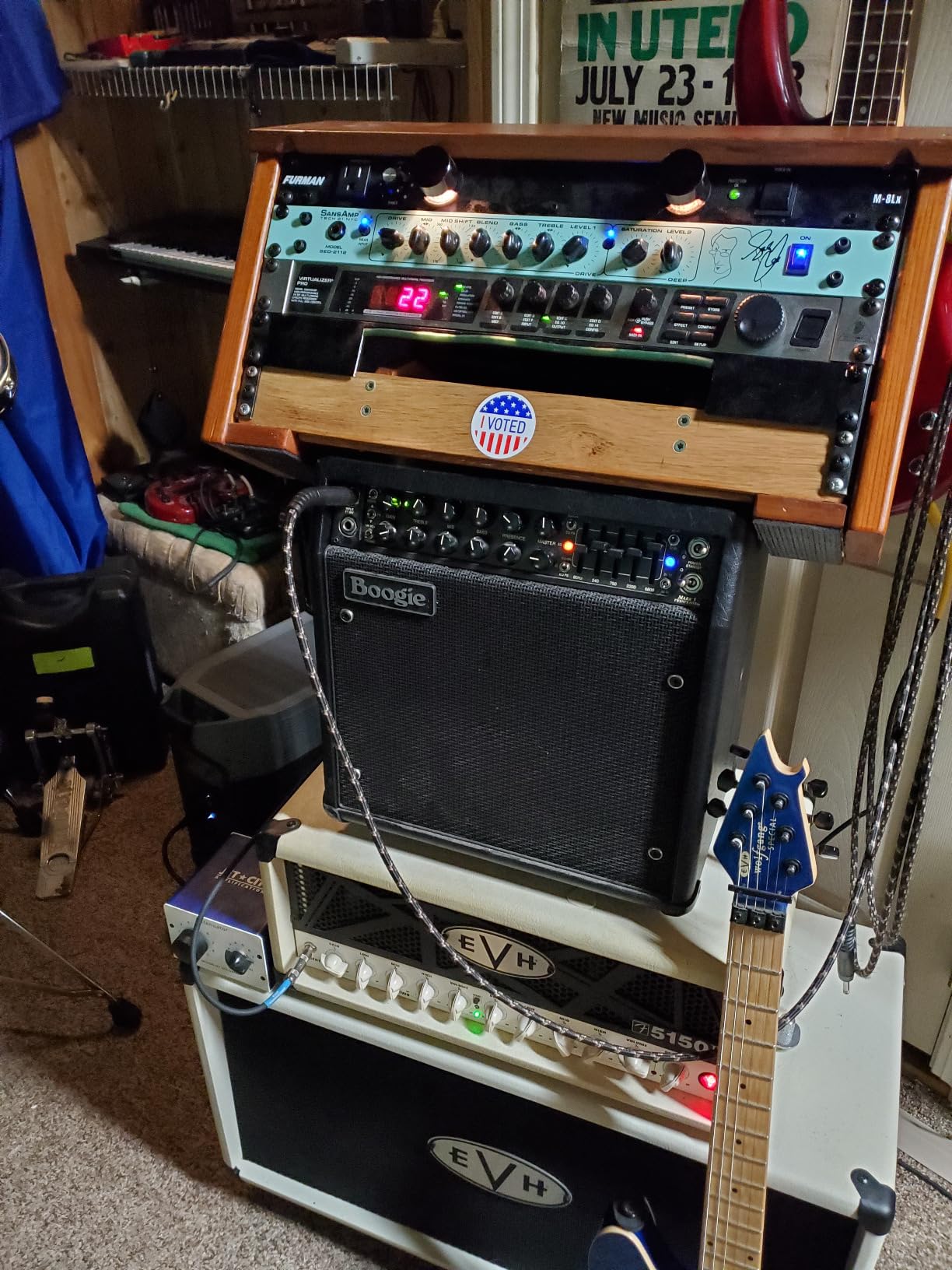
The Tech 21 GED-2112 is the unit Geddy Lee himself uses for both recording and live work. After spending time with the dual SansAmp circuits (Drive and Deep), I understood why. The Drive channel nails the Orange AD200B character from the Rickenbacker era, while the Deep channel handles the heavier Fender SVT-style growl.
Each channel has its own character voicing and EQ. The Drive channel leans bright and aggressive, with a strong midrange presence that brings out pick attack on Rickenbacker-style basses. The Deep channel goes lower and rounder, suiting the Fender Jazz Bass tone perfectly.
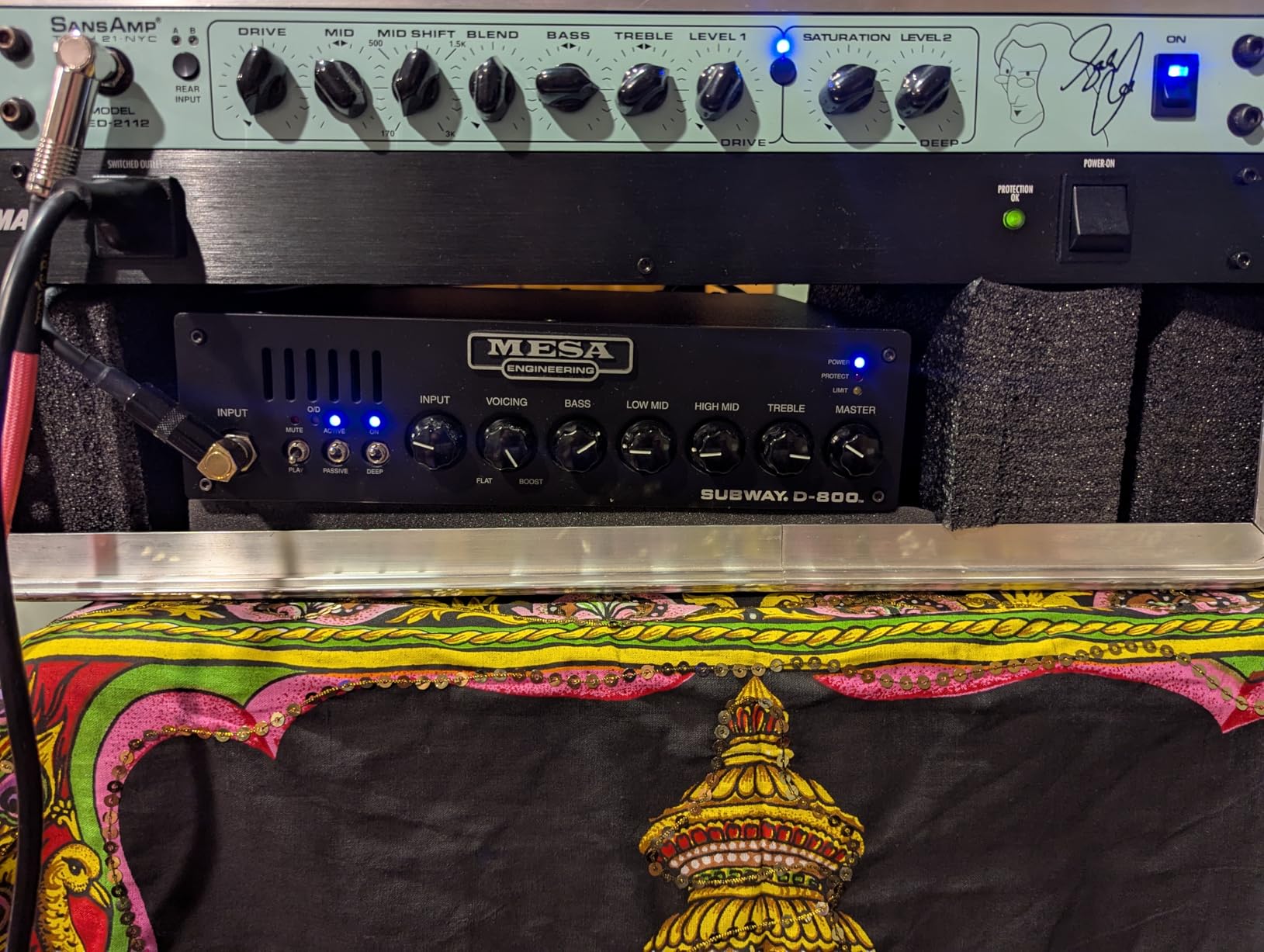
The parametric EQ is a serious upgrade from the standard SansAmp RBI. You can dial in surgical cuts or boosts in the critical bass zones without affecting adjacent frequencies. That's how Tech 21 handles the dual midrange bumps Geddy relies on for his cutting forward mix presence.
The effects loop is positioned on the Drive channel, allowing you to insert chorus, delay, or other effects before hitting the power amp. That flexibility is essential for the synth-tinged Rush tones from the 80s and early 90s. The blue faceplate and 2-year warranty honor the signature status of the unit.
Who This Preamp Suits Best
Players who own multiple basses and want a single rack unit that handles both Rickenbacker-era and Fender-style tones. It's also perfect for home recording, since you can record direct without ever touching a microphone. Live players running in-ear mixes will appreciate the dedicated XLR output.
Where It Falls Short
It's more expensive than the standard SansAmp RBI and uses Geddy-specific voicings, so if you play outside his tonal range, you may not use the second channel. The effects loop is only available on the Drive channel, so Deep-channel players need to commit to pre-effects tone shaping.
How to Choose Geddy Lee-Inspired Bass Gear
Choosing signature-style gear is part inspiration, part practicality. The right setup depends on your playing context, your band, and how much variance you want between live performance, recording, and practice.
Budget Tiers Explained
Under $500 covers entry-level Squier Classic Vibe Jazz Basses, Tech 21 SansAmp Driver pedals, and the AXE HEAVEN miniature for your display shelf. You'll get most of the aesthetic at a fraction of the price, with some compromise on fretwork precision and electronics quality.
The $500-1500 tier includes the Fender Player Plus Jazz Bass series (close cousin to Geddy's) and used signature models from the original Japan-spec runs. You can find these on the used market at discount. TalkBass threads also recommend Squier Vintage Modified 77 Jazz Basses in this range.
The $1500+ tier is where the Mexican and USA Geddy Lee signature models live. Spend here if authentic tone and resale value matter to you. The MIM ($1599.99) is the budget-friendly entry, the USA ($2499.99) is the premium flagship. Both hold their value better than most signature guitars.
Skill Level Matching
Beginner players should focus first on technique and learning Rush's discography before chasing vintage gear. A standard Squier or Fender Player Jazz Bass with Rotosound strings will teach the fundamentals without overspending. Save the signature models for when your playing justifies the upgrade.
Intermediate players gain the most from a quality signature instrument. The MIM Geddy Lee Jazz Bass inspires practice time and rewards accuracy improvements. You'll notice the difference in your recordings once you pair it with a competent preamp like the SansAmp Driver or the Tech 21 GED-2112.
Advanced players often justify multiple instruments. A Rickenbacker 4001 or 4003 for the 70s tone, a Fender Jazz Bass for the modern work, and a Wal or boutique instrument for studio variety. The USA Geddy Lee Jazz Bass covers the modern side without redundancy if you already own a Ric.
Authenticity vs Practicality
Authentic Geddy Lee tone in the 2026 market doesn't require vintage gear. The current MIM and USA signature models use modern manufacturing with vintage-correct specifications. Your amp and signal chain actually shape the final tone more than the bass itself does.
Practical priorities for most players: a well-set-up signature bass, fresh Rotosound strings, a competent preamp (SansAmp or Tech 21), and adequate amplification for your venue. Building around a strong signal chain gives you more flexibility than spending everything on a single vintage instrument.
Rotosound Swing Bass roundwounds (45-105) remain Geddy's go-to string choice. They're bright, articulate, and aggressive on the attack, which is what makes Rush bass lines cut through the guitar layers. Change them every two to three weeks for consistent brightness.
How to Get Geddy Lee's Tone: Step-by-Step Guide
Building Geddy Lee's tone from scratch is straightforward once you understand his signal chain priorities. The following approach works whether you're playing through a full stack, a practice combo, or recording direct into your DAW.
Step 1: Choose Your Core Bass
Pick a Fender Jazz Bass or a Geddy Lee signature model as your foundation. The dual single-coil pickup layout and slim C neck are non-negotiable for the late-era Rush tone. Used Fender standards from the 90s onwards work fine for budget builds, though the signature model is the convenient choice.
Step 2: Install Fresh Rotosound Strings
Rotosound Swing Bass 45-105 roundwounds produce the bright, cutting voice that defines Geddy's sound. Install them at least 24 hours before playing to allow for string settling. Stretch each string gently after installation to lock in tuning stability.
Step 3: Set Up Your Bass for Attack
Adjust your action low for fast playing, but not so low you get fret buzz on the low B or E string. A professional setup may be needed if you buy a signature model out of the box. Set pickup heights with both pickups full and adjust down if you get unwanted string squeak.
Step 4: Dial In Your Preamp
Plug into a Tech 21 SansAmp or similar preamp. Set the Drive low for cleaner passages and higher for the 2112-style grit. Keep the Bass and Treble controls near noon, and use the midrange boost (around 400-800 Hz) to bring your bass forward in the mix. This is the magic band for Rush-style tone.
Step 5: Add Tube Amplification (If Possible)
A tube power amp like the Ampeg SVT-VR or Orange AD200B carries the harmonic richness that defines Geddy's studio recordings. Run the SansAmp into the power amp's effects return to bypass the preamp section. 8x10 cabs work best for the largest stages, while 4x10s handle club gigs cleanly.
Step 6: Add Subtle Effects
A touch of analog chorus (Boss CE-1 or similar) provides the swirling texture of 80s Rush recordings. Keep the rate slow and depth moderate for the classic sound. Avoid heavy compression, distortion, or modulation that obscures the natural bass voice.
Step 7: Refine Through Practice
Play along with Moving Pictures and Permanent Waves to hear how the settings respond. Adjust EQ and pickup heights until the bass sits forward without overwhelming the guitar and drums. Tone chasing is iterative, and small tweaks over weeks add up to a recognizable Rush voice.
Frequently Asked Questions
What bass did Geddy Lee use on Moving Pictures?
Geddy Lee played a 1974 Rickenbacker 4001 bass through Orange AD200B tube amplification on the Moving Pictures album. This same rig carried the signature jangly bass tone on 'Tom Sawyer,' 'Limelight,' and the rest of the 1981 record. The 4001's bright pickup response paired with Orange's midrange-heavy tube character to cut through Alex Lifeson's guitar wall.
Why did Geddy Lee switch from Rickenbacker to Fender?
Geddy moved back to Fender Jazz Basses in the mid-1990s because the band's production had grown denser and he needed deeper low-end response than the Rickenbacker 4001 could deliver. The Jazz Bass's dual single-coil layout offered broader tonal range, better sustain, and warmer fundamentals that worked better with Rush's mature songwriting and synth-heavy productions.
How can I get Geddy Lee's bass tone without vintage gear?
Use a Fender Geddy Lee Jazz Bass (MIM at $1599.99 or USA at $2499.99), Rotosound Swing Bass 45-105 roundwound strings changed every two to three weeks, and a Tech 21 SansAmp GED-2112 or Driver pedal for tube-like preamp character. Running this signal chain into a 500W+ Class-D head like the TC Electronic THRUST BQ500 handles most gigging scenarios with authentic voice.
What strings does Geddy Lee use and how often are they changed?
Geddy Lee uses Rotosound Swing Bass roundwound strings in 45-105 gauge on most of his basses. He changes strings frequently, typically every two to three weeks during active touring and recording, because fresh strings are essential to his bright, cutting tone. Rotosound's UK-made flatwound RS77LD strings are an excellent alternative when you want his warmer, jazz-era voice.
What are the differences between the USA and Mexico Geddy Lee Jazz Bass?
The USA Geddy Lee Jazz Bass ($2499.99) uses a custom high-mass bridge, pearloid block inlays, vintage-voiced pickups wound specifically for this model, an oil-finished maple neck, and a hard-shell case with lifetime warranty. The Mexico version ($1599.99) uses a Badass Bass II bridge, standard vintage-style single-coil pickups, gloss urethane neck finish, and ships with a deluxe gig bag. Both share the same alder body, 34-inch scale, 9.5-inch radius fingerboard, and slim C neck profile.
Is the Geddy Lee signature bass worth buying?
Yes, the Geddy Lee signature bass is one of Fender's most successful signature releases for good reason. The MIM version captures roughly 90 percent of the tone at about 60 percent of the USA model's price, making it an excellent value for most players. The USA version is worth the upgrade if you record frequently, want premium fretwork, or value the hard case and lifetime warranty.
What amplifier does Geddy Lee use live?
Geddy Lee has used Orange AD200B tube heads through Orange cabinets during the Rickenbacker era, Ampeg SVT-VR heads with 8x10 cabinets during the synth-heavy 1980s period, and a custom rig combining Tech 21 SansAmp preamps with modern solid-state power amps in recent tours. His current setup typically pairs a Tech 21 GED-2112 signature preamp with high-wattage Class-D bass heads into traditional 4x10 cabinets.
What pickups are in the Geddy Lee Jazz Bass?
The current Mexico and USA Geddy Lee Jazz Basses both use vintage-style single-coil pickups modeled after late-1950s Fender Jazz Bass units. The USA model's pickups are custom-wound specifically for that instrument, producing more pronounced low-mid punch and quieter operation than the Mexico version's standard vintage-style pickups. Both setups produce authentic warm Jazz Bass character with the slight midrange bite Rush recordings depend on.
How many bass guitars does Geddy Lee own?
Geddy Lee owns more than 300 bass guitars in his personal collection, as documented in his 'Big Beautiful Book of Bass.' His collection spans vintage Fenders, Rickenbackers, Hofners, Gibson thunderbirds, Wal boutique instruments, Steinberger headless basses, and signature models. The collection includes instruments spanning from the 1950s through his most recent tour-spec signature builds.
Final Recommendations
After reviewing every era of Geddy Lee's gear and testing each of these eight products, our top recommendation for most players in 2026 is the Mexico-made Fender Geddy Lee Jazz Bass paired with the Tech 21 GED-2112 SansAmp. This combination covers the modern Rush tone with authentic voicing, preamp character, and enough versatility to handle covers of any era.
For players chasing authentic 1974-1983 era sound, pair any Jazz Bass with the MIM signature model and run a chorus pedal in front of a vintage-style tube amp. The Rickenbacker 4001 growl still defines that era's music, and modern reproductions plus effects pedals can get surprisingly close.
Intermediate players should start with the MIM Geddy Lee Jazz Bass, Rotosound strings, and the TC Electronic THRUST BQ500 for portability. Add a SansAmp Driver pedal later when you're ready to refine your tone. Beginners should focus on fundamentals before chasing signatures, but a Squier Classic Vibe Jazz Bass with Rotosound roundwounds is a fine starting point.
Whatever gear you choose, the most important variable is your right hand. Geddy Lee's aggressive fingerstyle attack, fretless slurs, and chord stabs come from technique more than equipment. Build your tone around strong playing fundamentals, then let your gear amplify the musical choices you're already making.

Charles Eames is a designer, filmmaker, and the Co-Founder of Powers Of 10. Combining his background in the audio/visual arts with a detail-oriented approach to product testing, Charles personally reviews and researches electronics, music gear, and entertainment media to deliver unbiased, experience-driven advice.