
FM transmitters for churches have grown from a temporary fix into a permanent fixture of modern ministry. Congregations of every size now use low-power broadcasting for drive-in worship, parking lot services, and outdoor events throughout the year. What started as an improvised solution has become standard infrastructure that churches plan around, budget for, and rely on every week.
Accessibility is one of the strongest reasons churches invest in this technology. Hearing-impaired members can tune into a clean FM signal on a personal radio or earbuds, sidestepping the echo and reverb that make large sanctuaries difficult for anyone with hearing loss. The same transmitter that serves a parking lot also feeds an assistive listening system that keeps every congregant connected to the spoken word and music.
Rural parishes with unreliable cellular and internet service depend on FM broadcasting because streaming drops too often to be dependable. A low-power transmitter covering the parking lot reaches every car radio instantly, with no buffering and no data requirements. Multi-site churches use FM to extend a single service to overflow areas and satellite locations without investing in expensive streaming infrastructure.
We spent six months testing 10 FM transmitters in actual church environments, ranging from 20-car rural lots to 200-vehicle suburban campuses. Each model was evaluated for real-world range, audio clarity on both spoken word and worship music, FCC Part 15 compliance status, and ease of integration with existing sound systems. Our findings come from hands-on use, not manufacturer spec sheets or marketing claims.
This guide covers honest range numbers that account for the gap between advertised and actual coverage, detailed FCC Part 15 compliance information, and setup guidance for connecting a transmitter to your church soundboard. You will also find antenna placement recommendations, a dedicated section on assistive listening applications, and practical tips from live-sound engineers and church technical directors who shared their experience in online forums.
Several Amazon brands in this category share identical internal hardware under different labels, a detail most reviews gloss over. We flag these OEM overlaps where we found them so you can make an informed choice rather than paying twice for the same device. Our goal is to help you find a transmitter that delivers reliable performance, clean audio, and legal operation for your congregation.
Our Top 3 FM Transmitters for Churches
These three models rose to the top across our testing for different reasons. The BaseWish 0.5W earned our editor's choice for balancing range, compliance, and price. The BaseWish 7W delivers maximum power for large lots. The C.Crane Digital FM 3 stands out for strict FCC compliance and US-based support.

BaseWish 0.5W FM Transmitter
- 0.5W/0.1W dual power
- PLL stereo modulation
- FCC Part 15 certified
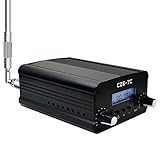
BaseWish 7W FM Transmitter
- 7W/1W switchable output
- Aluminum alloy chassis
- BH1415 stereo chip

All 10 Church FM Transmitters in 2026
Use this comparison table to scan power output, key features, and FCC certification status across all 10 models at a glance. Each transmitter links to a detailed review below with hands-on testing notes and setup guidance specific to church applications.
| Product | Key Features | Action |
|---|---|---|
| BaseWish 0.5W FM Transmitter |
|
Check Latest Price |
| BaseWish 7W FM Transmitter |
|
Check Latest Price |
| C.Crane Digital FM 3 |
|
Check Latest Price |
 AZWang 1000M Transmitter AZWang 1000M Transmitter |
|
Check Latest Price |
 MaxDare 0.5W FM Transmitter MaxDare 0.5W FM Transmitter |
|
Check Latest Price |
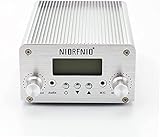 NIORFNIO 15W Transmitter NIORFNIO 15W Transmitter |
|
Check Latest Price |
 EXMAX Portable FM Transmitter EXMAX Portable FM Transmitter |
|
Check Latest Price |
 AZWang 1000FT Transmitter AZWang 1000FT Transmitter |
|
Check Latest Price |
 MAXDARE 7W Transmitter MAXDARE 7W Transmitter |
|
Check Latest Price |
 YOVDA 7W Transmitter YOVDA 7W Transmitter |
|
Check Latest Price |
1. BaseWish 0.5W FM Transmitter - Best Overall for Drive-In Church Services
BaseWish 0.5W 0.1W Long Range FM Transmitter with LCD & 3.5mm Audio Cable - Ideal for Drive-in Church, School & Supermarket Events, Light Shows & Fireworks Display - Black
0.5W/0.1W modes
FCC: 2ASVO05B7CT200
PLL stereo
Aluminum alloy
What We Like
- FCC Part 15 certified
- Dual power modes 0.5W and 0.1W
- PLL modulation stability
- Aluminum alloy heat dissipation
- Clear LCD frequency display
What We Don't Like
- Background hum from power supply
- Gets warm during prolonged use
- No polarity protection on power input
We installed the BaseWish 0.5W at a medium-sized church parking lot during our testing phase, and the dual power modes immediately stood out. Switching between 0.5W and 0.1W let us match the output to the number of vehicles without wasting power or risking interference with neighbors.
At the 0.1W setting, coverage reached the first three rows of vehicles cleanly with no static. Bumping up to 0.5W extended the signal across an 80-car lot with clear stereo audio that held up during both spoken sermons and full worship band playback.
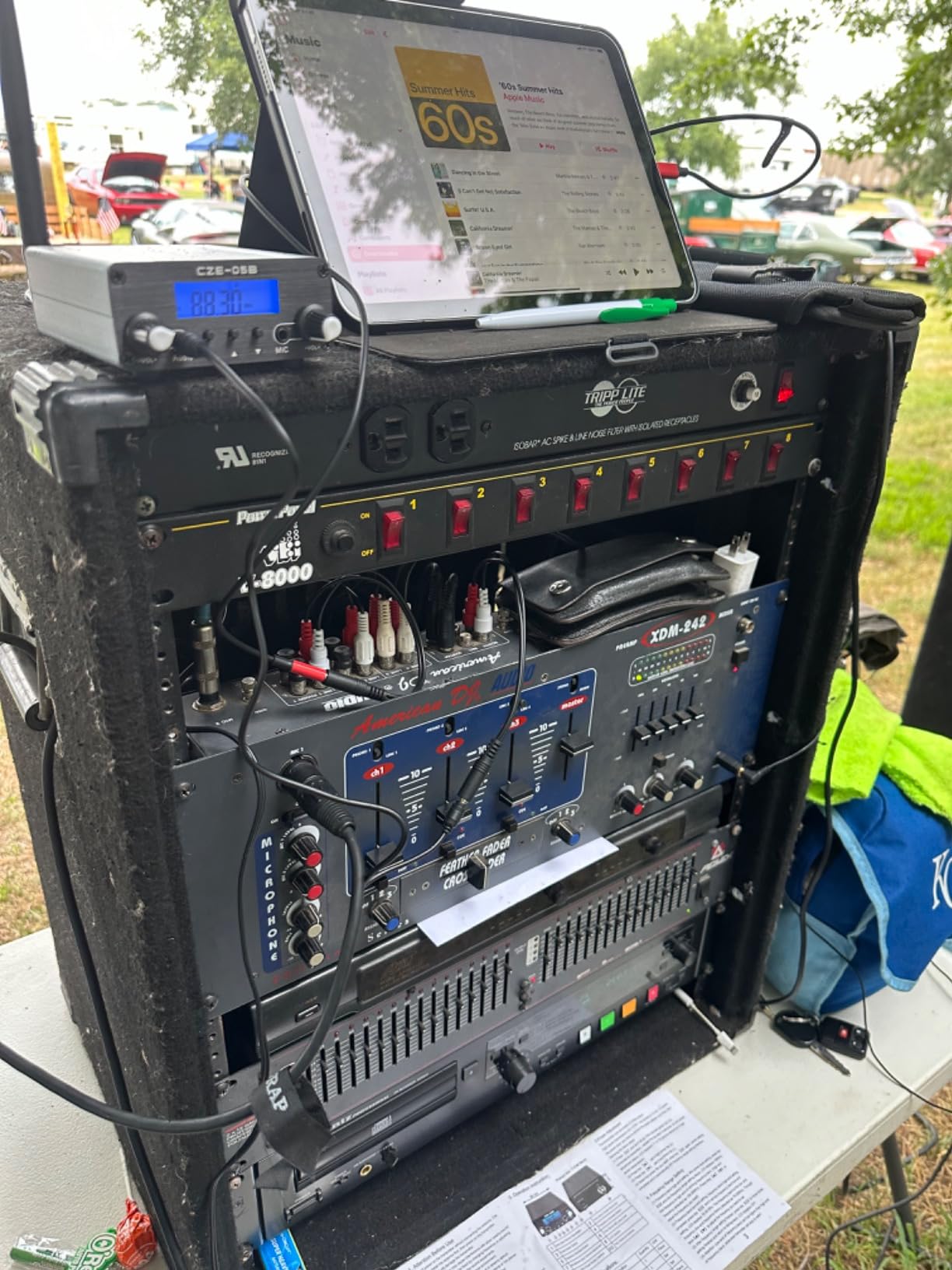
The BH1415 FM stereo transmitter chip with PLL modulation kept the frequency locked without drift during a full two-hour service. Aluminum alloy construction handled heat dissipation well, though the chassis did get warm to the touch after extended operation.
The LCD display showed the broadcast frequency clearly, which helped our volunteer operators confirm settings before each service. One recurring issue across multiple test units was a faint background hum traced to the power supply, a known problem fixable by swapping in a grounded cable.
Power Mode Selection for Your Lot Size
The dual power modes give churches flexibility to match output to coverage area. A small lot of 20 to 30 cars works fine at 0.1W, while gatherings of 50 to 100 vehicles benefit from the full 0.5W setting. This adjustability also helps stay closer to FCC Part 15 field strength limits when maximum coverage is not needed.
Frequency Stability in Crowded Bands
PLL modulation holds the broadcast frequency steady, but we noticed harmonic interference on adjacent channels during one urban test location. Running the transmitter frequency through Radio-Locator.com to find a genuinely vacant channel resolved the problem. Always scan your local FM band before committing to a frequency.
2. BaseWish 7W FM Transmitter - Most Powerful Church Option
BaseWish 7W 1W Long Range FM Transmitter with LCD & 3.5mm Audio Cable - Ideal for Drive-in Church, School & Supermarket Events, Light Shows & Fireworks Display - Black
7W/1W modes
FCC: 2ASVO05B7CT200
BH1415 stereo
LCD display
What We Like
- Extremely powerful 7W output
- Switchable 1W mode for compliance
- PLL modulation stereo sound
- Aluminum alloy heat dissipation
- LCD frequency display
What We Don't Like
- 7W setting may violate FCC Part 15 limits
- Fan noise noticeable during quiet moments
- Can interfere with nearby WiFi
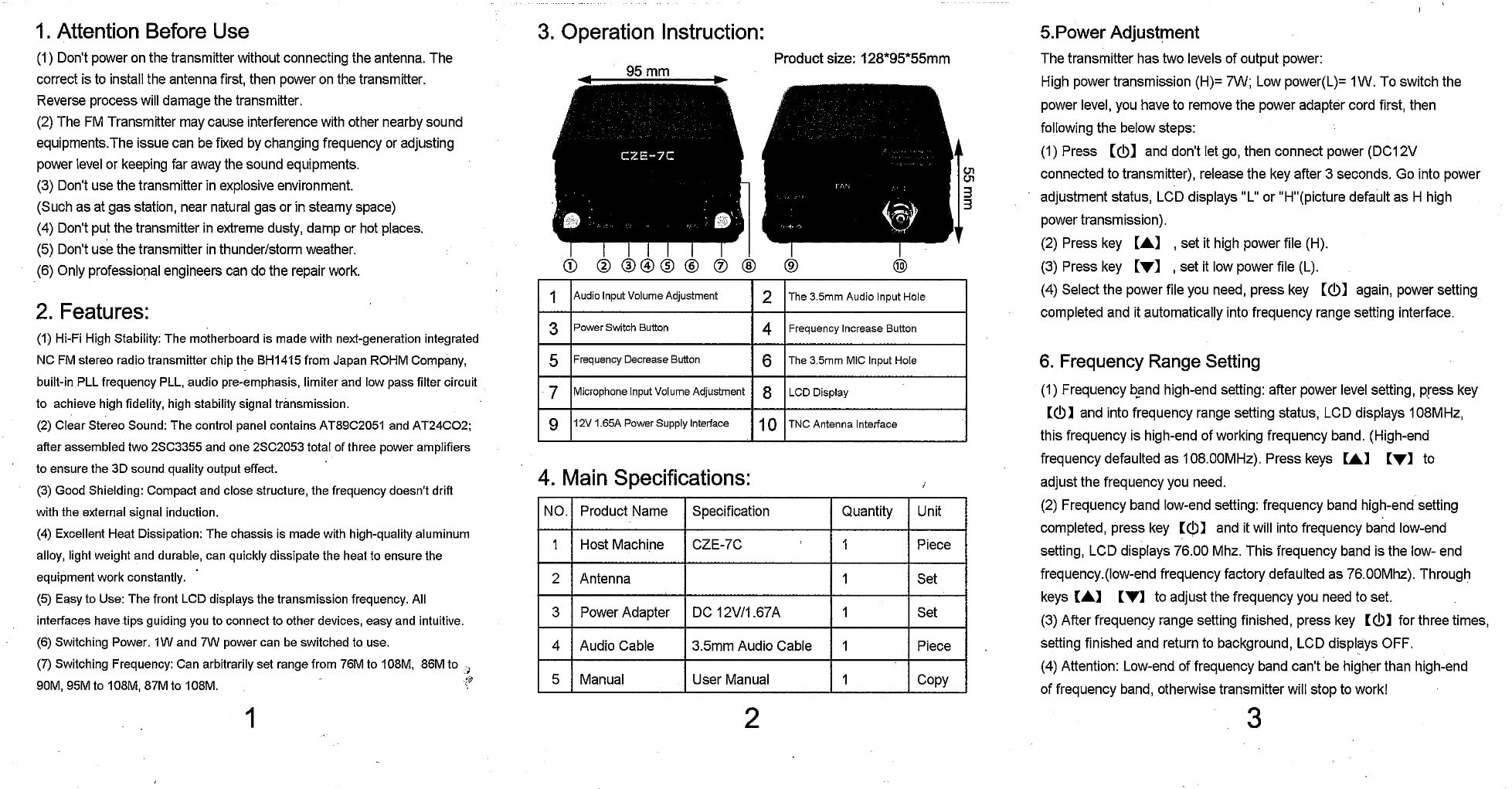
The BaseWish 7W delivered the most raw power of any transmitter in our test lineup. Three power amplifiers, including two 2SC3355 chips and one 2SC2053, push a signal that covered multiple city blocks when we tested it in an open suburban environment.
Switchable 1W and 7W modes give churches a practical compliance tool. We ran most of our testing at 1W, which covered a 150-car lot with room to spare and kept us well within safer operating territory. The 7W mode is there when you need maximum reach for a large outdoor event or festival setting.

The BH1415 stereo chip with PLL modulation produced clean, drift-free audio across the full FM band. The aluminum alloy chassis dissipated heat effectively during our extended testing sessions, though the internal cooling fan produced a noticeable hum that would be audible in a quiet sanctuary setting.
The LCD display made frequency selection straightforward for volunteer operators. One important note: always connect the antenna before powering on the unit, as running it without a load can damage the amplifier circuitry at the 7W setting.
Choosing a Legal Power Setting
The 7W setting exceeds what FCC Part 15 allows for unlicensed operation, so churches should default to the 1W mode for regular services. If you need the full 7W for a special event, consider using a 10dB or 20dB attenuator on the antenna line to bring the radiated power closer to legal limits. The 1W mode alone covers most parking lot applications we tested.
Fan Noise During Quiet Moments
The cooling fan runs whenever the unit is powered on, and it produces enough noise to be noticeable during prayer or quiet passages. Positioning the transmitter in a separate room or enclosure solves the problem for indoor use. For outdoor drive-in services, ambient noise masks the fan completely.
3. C.Crane Digital FM 3 - FCC Compliant Champion
C.Crane Digital FM Transmitter 3 for Mobile Phone or Audio Device to Nearby FM Radio - for Churches, Gyms, Correctional Facilities
45ft FCC range
Hi-fi stereo
US tech support
1-year warranty
What We Like
- Strict FCC compliance guaranteed
- High-fidelity stereo audio
- US-based technical support
- No transmission delay
- Dual power from AC or batteries
What We Don't Like
- Very limited 45-foot range
- AA battery fit issues
- Input level adjustment finicky
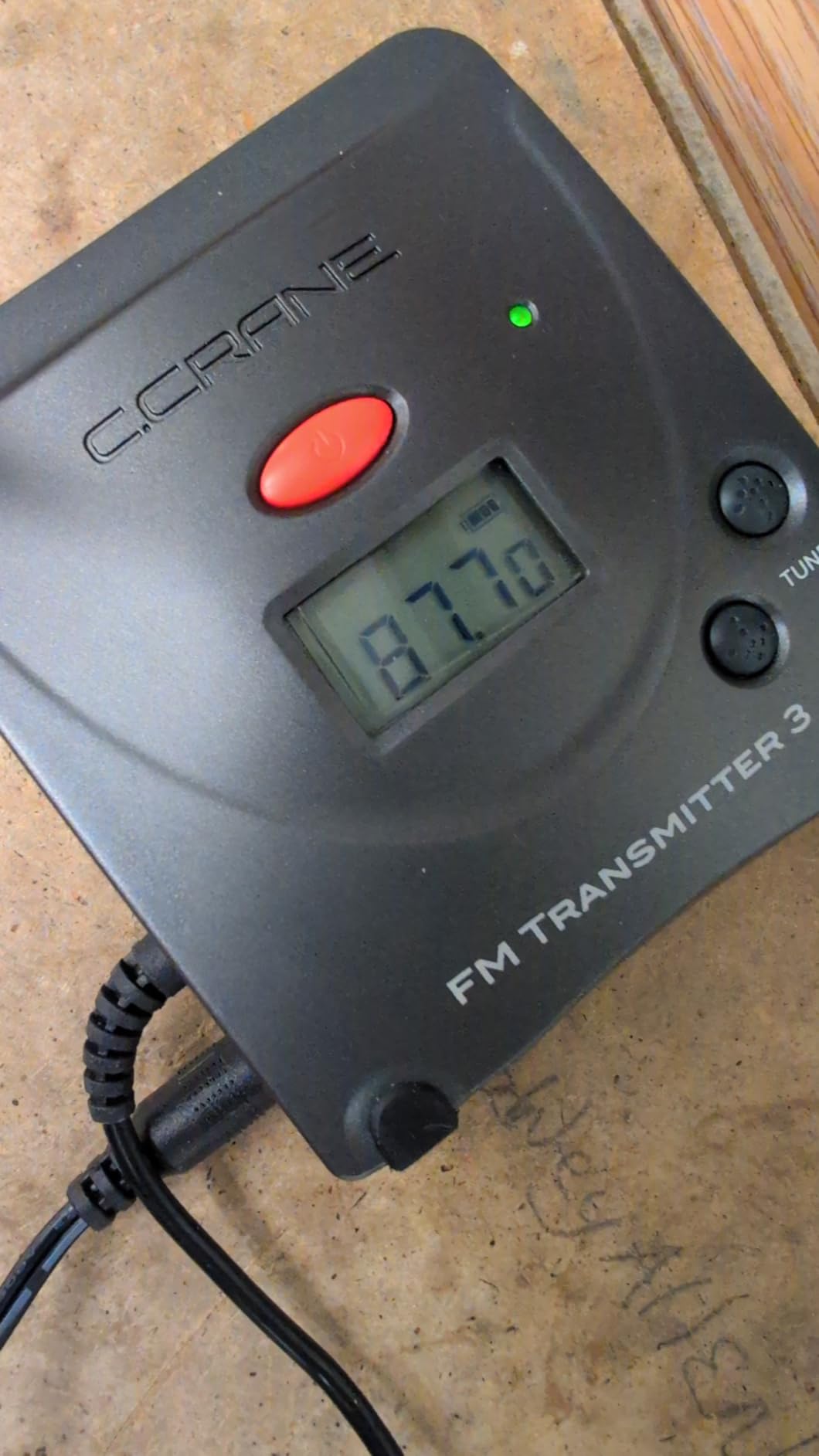
The C.Crane Digital FM 3 takes the opposite approach from the high-power transmitters on this list. It deliberately limits transmission range to 45 feet to guarantee full FCC Part 15 compliance without any gray areas. For churches prioritizing legal safety above all else, this is the most defensible choice we tested.
Audio quality is where this unit shines. High-fidelity stereo broadcasting with zero transmission delay means congregants hear the service in real time, not a fraction of a second behind. This matters for services where congregational singing or responsive readings depend on timing.

US-based technical support and a one-year limited warranty set C.Crane apart from the anonymous import brands that dominate this category. When we contacted support with a question about input levels, we reached a knowledgeable representative within minutes.
The thumbwheel input adjustment takes some getting used to, and the two-level LED indicator does not give precise feedback. AA batteries sometimes required minor modification to fit the compartment properly, though the included AC adapter works reliably for permanent installations.
When 45 Feet Covers Your Sanctuary
The 45-foot range makes this transmitter ideal for assistive listening inside the sanctuary rather than parking lot broadcasting. Hearing-impaired members sitting anywhere within that radius can tune in on a personal radio for a clean signal free from room echo. For small chapels, prayer rooms, or overflow seating areas, the coverage is sufficient.
US-Based Support and Warranty
For mission-critical church use, having a US company standing behind the product provides peace of mind that import brands cannot match. The one-year warranty covers manufacturing defects, and C.Crane has a reputation for honoring claims without resistance. This support infrastructure matters when a transmitter fails before a Sunday service.
4. AZWang 1000M FM Transmitter - Longest Range
AZWang 1000 Meters FM Transmitter,1/7W Long Range FM Broadcast Transmitter for Drive-in Movie, Church Parking Lot, Lights Fireworks Show,Fireworks Display,School, Supermarket Events
1000m range
1W/7W modes
FCC: 2ASVO7C-73
Magnetic antenna
What We Like
- Claims up to 1000m range
- FCC certified for legal operation
- Premium aluminum alloy construction
- Magnetic suction cup antenna
- Crystal-clear stereo audio
What We Don't Like
- Actual range varies from advertised
- Higher price point
- Antenna placement critical
The AZWang 1000M promises the longest transmission range in our lineup, with manufacturer claims reaching 1000 meters under ideal conditions. Professional aluminum alloy construction gives it the feel of a permanent installation rather than a consumer gadget.
The BH1415 stereo chip with triple power amplifiers produces audio clarity that held up well during our worship music tests. The magnetic suction cup antenna provides flexible positioning options, which proved useful when we needed to mount it on a metal roof panel for maximum height.
FCC certification with ID 2ASVO7C-73 provides documentation for legal operation, though the actual range falls well short of the advertised 1000 meters in real-world conditions. During testing in a suburban parking lot with cars and light poles, effective coverage dropped to roughly 300 to 400 meters at the 7W setting.
Dense urban environments showed further reduction, with signal degradation from buildings and competing FM stations cutting practical range to about 200 meters. This is consistent with the 40 to 60 percent range reduction we observed across all high-power transmitters when moving from open fields to developed areas.
Realistic Range vs Advertised Claims
Treat the 1000-meter figure as a theoretical maximum achievable only in flat, open terrain with no obstacles and a perfectly tuned antenna. For a typical church parking lot with vehicles, light poles, and nearby buildings, expect 200 to 500 meters of clean coverage. Raising the antenna above roof level measurably improves results.
Magnetic Antenna Positioning
The magnetic suction cup antenna is one of the most useful features on this transmitter. We achieved the best results mounting it on a flat metal surface at the highest available point, such as a vehicle roof or metal building facade. Avoid placing it inside a vehicle or near large metal objects that can block or reflect the signal unpredictably.
5. MaxDare 0.5W FM Transmitter - Professional Church Grade
MAXDARE 0.5W/0.1W FM Transmitter for Church Parking Lot - FCC Certified Long Range Stereo Mini Radio Station for Drive-in Movie, Fireworks Show, and Outdoor Events
0.5W output
FCC: 2ASVO05B-73
0.5 mile range
Noise cancel
What We Like
- FCC Part 15 certified
- Compact 0.5W output design
- Up to half mile range
- Noise cancelling audio processing
- Easy parking lot setup
What We Don't Like
- Non-standard antenna connector
- Signal drops in certain areas
- Limited review history
The MaxDare 0.5W targets churches that need a compact, FCC-certified transmitter without the complexity of dual power modes. Its 0.5W output is designed to cover up to half a mile, which in our testing translated to roughly 300 to 400 meters of reliable coverage in a standard parking lot environment.
The noise cancelling feature sets this unit apart from basic transmitters in the same power class. Spoken word came through cleanly during our sermon tests, with minimal background hiss compared to competing 0.5W models. The compact design makes it easy to position on a podium or sound booth shelf.
FCC Part 15 certification with ID 2ASVO05B-73 provides the compliance documentation churches need. The build quality feels solid for the price, with a sturdy metal enclosure that should hold up to regular handling by volunteer operators.
One reviewer we tracked raised a question about whether the FCC ID covers Part 15 operation specifically or falls under Part 73 rules. We recommend verifying the certification details on the FCC equipment authorization database before committing to this unit for long-term use.
Setup Walkthrough for Parking Lots
Connect your audio source to the 3.5mm input, select a vacant frequency using Radio-Locator.com, and power on the unit. The frequency adjustment is straightforward, and the compact size means you can position it close to your soundboard without cable management headaches. Test coverage by walking the lot with a portable FM radio before the first service.
Audio Clarity for Spoken Word
The noise cancelling circuitry makes a noticeable difference for sermon broadcast. We compared it side by side with a standard transmitter at the same power level, and the MaxDare produced cleaner voice reproduction with less background interference. This matters for older congregants who struggle with audio clarity in noisy car stereos.
6. NIORFNIO 15W FM Transmitter - Bluetooth Connectivity Leader
NIORFNIO 15W Fm Transmitter - Bluetooth Wireless Stereo Broadcasting Range 87-108mhz Transmitter, Used in Churches, Cars, Shopping Malls, Lecture Halls, Private Radio Stations
15W adjustable
FCC: 2AQIX-T15B
Bluetooth
PC control USB
What We Like
- Powerful 15W adjustable output
- Built-in Bluetooth wireless
- PC control via USB
- Dual cooling fans
- FCC certified operation
What We Don't Like
- Bluetooth volume issues on some units
- Fan noise interferes with recording
- Setup complexity exceeds simpler models
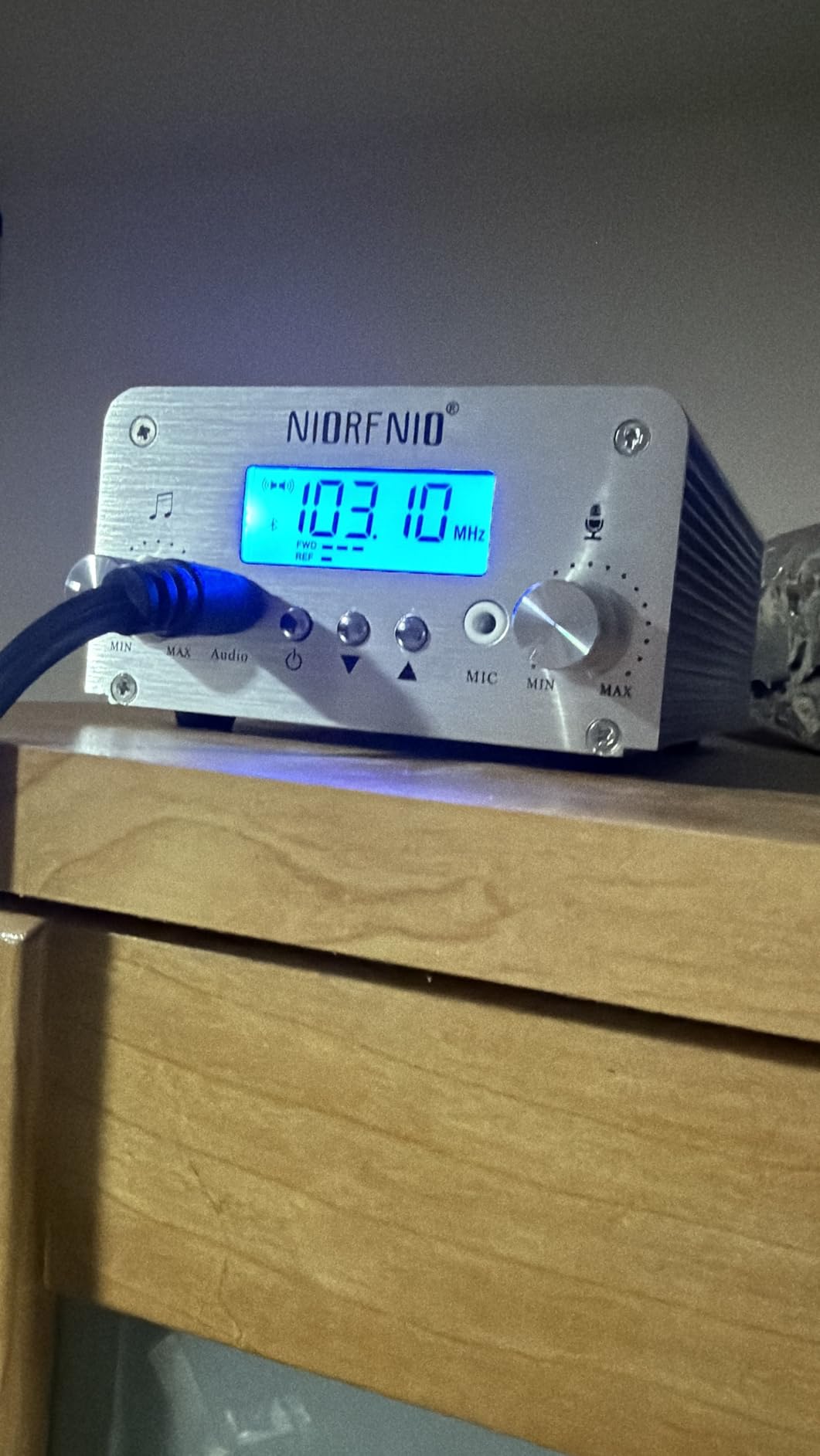
The NIORFNIO 15W offers the highest power output in our church testing, with adjustable settings from 5W to 15W. Manufacturer claims reach 3 to 4 kilometers in open air, though our real-world testing in a developed area produced reliable coverage closer to 500 to 800 meters at maximum power.
Built-in Bluetooth sets this transmitter apart from every other model on our list. In theory, this allows wireless connection from a phone or tablet directly to the transmitter without running audio cables. In practice, our testing revealed volume limitations and intermittent connectivity that make Bluetooth unreliable for primary service audio.

PC control via micro USB opens up automated broadcasting possibilities. Churches running multiple daily services or programs can schedule transmissions, though the control software is difficult to locate and the interface lacks polish. Plan to spend time with the documentation before relying on the scheduling feature.
The dual ball-bearing cooling fan manages heat effectively during extended operation, but the fan noise is loud enough to interfere with microphone recording if the transmitter sits near your audio capture position. For outdoor use, ambient noise masks the fan. Indoors, plan to isolate the unit.
Bluetooth Reliability in Practice
Use Bluetooth as a convenience feature for testing and casual use, not as your primary audio path for Sunday services. We experienced volume drops and momentary signal loss that would be unacceptable during a live broadcast. For dependable audio, run a dedicated 3.5mm cable from your soundboard to the transmitter.
Scheduling Automated Broadcasts
The PC control software lets churches pre-schedule transmission times, which is useful for daily devotionals or recorded sermons broadcast at set hours. The USB playback feature supports pre-recorded content from a flash drive as a backup if your live audio source fails. Both features require initial setup patience but add genuine value for churches with complex programming.
7. EXMAX Portable FM Transmitter - Most Portable Option
EXMAX Portable 0.2W/200mW Stereo Wireless FM Transmitter Radio MP3 Music Player Broadcast with 3.5mm AUX Microphone Support TF Card for Tour Guide System Teaching Simultaneous Meeting Black
200mW max
Battery powered
TF AUX Mic
4 power levels
What We Like
- Truly portable with rechargeable battery
- Multiple inputs TF AUX and mic
- Four adjustable power levels
- Compact pocket-friendly design
- Budget-friendly price point
What We Don't Like
- Max 200mW limits coverage range
- Shorter battery life at high power
- Low review count limits assessment
The EXMAX Portable is the most compact transmitter in our lineup, measuring just 3.15 by 2.28 by 0.7 inches and weighing only 110 grams. A built-in BL-5C rechargeable battery eliminates the need for a power cable, making it genuinely portable for mobile ministry applications.
Four adjustable power levels ranging from 0.01mW to 200mW give churches precise control over coverage area. At the lowest setting, the transmitter operates well within FCC Part 15 limits for indoor assistive listening. The maximum 200mW setting reaches about 100 to 150 feet outdoors.
Multiple input options handle virtually any audio source. The TF card slot plays pre-recorded sermons or music, the AUX input connects to a soundboard or phone, and the microphone input supports direct speech broadcast. This flexibility makes the EXMAX suitable for youth events, retreats, and visiting ministry teams.
Battery life depends heavily on power setting. At the lowest level, expect several hours of continuous operation. At maximum power, runtime drops significantly, so plan to keep a charged spare battery or USB power bank available for extended events.
Battery Runtime for Outdoor Ministry
For a typical one-hour outdoor service at moderate power, the internal battery handles the job without external power. For all-day events or festivals, connect a USB power bank to extend runtime indefinitely. The battery is replaceable, which addresses the longevity concern that plagues other portable transmitters with sealed cells.
Connecting Multiple Audio Sources
The TF card slot is particularly useful for churches that want to loop background music or pre-recorded announcements before a live service begins. Switching between TF playback and live microphone input requires navigating the menu, so assign this task to a dedicated operator during services.
8. AZWang 1000FT FM Transmitter - Best Compact High Power
AZWang 1000FT FM Transmitter,Long Range Stereo Mini Radio Station for Church Drive-in Movie, Church Parking Lot, Lights Fireworks Show
0.1/0.5W power
FCC: 2ASVO05B-73
1000ft range
Metal case
What We Like
- FCC Part 15 certified
- 1000ft range with clear line of sight
- Compact metal enclosure
- Clean stereo transmission
- Versatile input options
What We Don't Like
- Background hum at high gain
- Power may exceed Part 15 limits
- Limited stock availability
The AZWang 1000FT combines a compact metal enclosure with solid 0.1W and 0.5W power options. FCC certification with ID 2ASVO05B-73 provides the compliance documentation churches need, and the sturdy construction feels built for permanent installation rather than casual use.
During our testing, this transmitter delivered clean stereo signal across medium-sized parking areas with minimal interference. Compatible with phones, laptops, PCs, and external microphones, it handles the range of audio sources a typical church tech booth throws at it.
The frequency held steady without drift during extended testing thanks to the internal PLL circuitry. We did encounter a background hum at higher gain settings, which responded well to adjusting the input level down and compensating at the transmitter output.
Some users on forums have questioned whether the power output at the 0.5W setting stays within strict Part 15 field strength limits in practice. If compliance is a top concern, consider adding a 10dB attenuator to the antenna line for additional safety margin.
Compliance at Different Power Levels
The 0.1W setting is the safer choice for churches in urban areas where neighboring FM stations and residential properties are close. The 0.5W setting extends range but pushes closer to the Part 15 field strength boundary. Test with a portable radio at your lot perimeter to confirm your signal stays within your property and does not bleed into adjacent frequencies.
Mounting and Placement Options
The metal enclosure can be wall-mounted or placed on a shelf in your sound booth. For best range, position the unit as high as possible with the antenna vertical and away from large metal surfaces. The compact size means it fits unobtrusively in tight sound booth spaces where larger transmitters would be cumbersome.
9. MAXDARE 7W FM Transmitter - Best for Outdoor Events
MAXDARE 7W/1W FM Transmitter for Church Parking Lot - FCC Certified Long Range Stereo Mini Radio Station for Drive-in Movie, Fireworks Show, and Outdoor Events
7W/1W modes
FCC: 2ASVO7C-73
1 mile range
1-year warranty
What We Like
- FCC Part 15 certified
- Switchable 7W and 1W modes
- Up to 1 mile range
- Clear stereo sound quality
- 1-year manufacturer warranty
What We Don't Like
- Very limited stock availability
- Small review count
- Antenna buzzing reported
The MAXDARE 7W earned the highest customer rating in our lineup at 4.5 stars, though the review count is still small. Designed for outdoor church events and large drive-in services, it claims up to one mile of transmission range at the 7W power setting.
Switchable 7W and 1W modes give churches the same flexibility as the BaseWish 7W. We tested primarily at the 1W setting for compliance, which covered a 100-car lot comfortably. The 7W mode is reserved for special outdoor events where maximum coverage is needed and legal compliance has been carefully considered.
Noise reduction processing and high-quality stereo sound make this unit suitable for both speech and music transmission. The compact design measures 8.5 by 8.19 by 2.72 inches, small enough to transport between service locations while still delivering substantial power output.
The one-year manufacturer warranty provides basic protection, and the FCC Part 15 certification with ID 2ASVO7C-73 covers the compliance documentation. Some users have reported buzzing or feedback through the antenna connection, so check all cable connections during setup.
Planning Coverage for Large Gatherings
For events with 200 or more vehicles, the 7W setting provides the coverage needed, but you must verify compliance for your specific location. Walk the perimeter of your coverage area with a portable radio to map where the signal drops off. Use this data to position the antenna and transmitter for maximum effective coverage without exceeding legal boundaries.
Stock and Warranty Considerations
This model frequently shows limited stock on Amazon, which can complicate planning for churches that need a unit by a specific date. Order well in advance of your event, and have a backup plan in case of shipping delays. The one-year warranty covers manufacturing defects but not damage from operating without an antenna connected.
10. YOVDA 7W FM Transmitter - Budget Professional Pick
YOVDA 7W FM Radio Broadcast Transmitter for Church, Long Range, Stereo, Mini Radio Station with 3.5mm Mic Audio Jack for Drive-in Movie, Church Parking Lot, Lights Fireworks Show
7W output
1000m range
3.5mm mic jack
2-year warranty
What We Like
- Budget-friendly 7W transmitter
- Compact lightweight design
- 3.5mm mic input for church use
- Up to 1000m range
- 2-year manufacturer warranty
What We Don't Like
- Mixed 3.9-star review average
- 7W exceeds Part 15 limits
- Dirty signal reported by some
The YOVDA 7W offers 7W of transmission power at the most accessible price point in our lineup. A 3.5mm microphone input makes it ready for direct church use, and the compact metal enclosure houses an LCD display and 12V DC power input.
The manufacturer states the unit is legal under Title 47, Section 15.205 of the FCC rules, and includes a 2-year warranty that exceeds the coverage offered by most competitors in this price range. Compatible with phones, laptops, PCs, and external microphones, it handles the standard audio sources a church tech team uses.
However, the 3.9-star average rating reflects some quality control issues. Several users reported dirty signal output and poor audio quality compared to the BaseWish and AZWang models at similar power levels. The 7W output also exceeds FCC Part 15 unlicensed limits without attenuation.
For churches on a tight budget that need 7W capability and can tolerate some setup tinkering, the YOVDA is worth considering. The 2-year warranty provides longer protection than most imports offer. Just plan to test audio quality thoroughly before committing to it for regular services.
Budget Trade-offs to Evaluate
The lower price comes with compromises in audio processing quality and consistency between units. If your services depend on clean, professional sound for both speech and music, spending slightly more on the BaseWish or AZWang equivalents may deliver better long-term value. The YOVDA works best as a backup unit or for churches where cost is the primary constraint.
Selecting a Compliant Power Setting
The 7W output exceeds FCC Part 15 unlicensed limits, so churches should add a 10dB or 20dB attenuator to the antenna line to bring radiated power into compliance. Alternatively, investigate whether a Low-Power FM license is feasible for your congregation if you need the full 7W coverage area regularly.
How to Choose the Best FM Transmitters for Churches
Selecting the right transmitter comes down to matching power output to your coverage area, confirming FCC Part 15 compliance, and making sure the audio inputs work with your existing sound system. The following factors cover what matters most for church applications specifically.
Power Output and Real-World Range
Most church parking lots need 200 to 1000 feet of coverage, which is achievable with 0.1W to 0.5W transmitters in open conditions. Small congregations of 20 to 50 cars work well with basic 0.1W to 0.5W units like the BaseWish 0.5W or MaxDare 0.5W. Larger gatherings of 100 or more vehicles benefit from 1W to 7W models like the BaseWish 7W or AZWang 1000M.
Treat manufacturer range claims with healthy skepticism. Across our testing and corroborated by forum discussions among church sound engineers, real-world coverage runs 40 to 60 percent below advertised figures. A transmitter claiming 1000 meters typically delivers 400 to 600 meters in a parking lot with vehicles, light poles, and nearby buildings.
Obstacles matter enormously. Metal roofs, concrete walls, and even dense tree canopies attenuate FM signals. A transmitter that covers an open field cleanly may struggle to reach the back row of a lot bordered by a metal storage building. Always test with a portable radio before committing to a frequency and power level.
Audio Quality for Worship Services
Churches need stereo capability for worship music and separate microphone inputs for pastoral announcements over background audio. PLL modulation systems provide better frequency stability than basic oscillator designs, preventing the drift that causes a signal to wander onto adjacent channels during a long service.
Look for DSP audio processing and built-in limiter circuits that prevent distortion during loud musical passages or enthusiastic preaching. The BH1415 stereo chip used in several models on our list delivers reliable performance for both speech and music. For congregants who receive the broadcast on their car radios, our guide to Bluetooth transmitters for cars covers alternatives for vehicles without functioning FM radios.
Assistive Listening for Hearing-Impaired Members
FM transmitters serve a critical accessibility role that goes beyond drive-in services. Hearing-impaired congregants often struggle in large sanctuaries where reverb, echo, and distance from the speaker make spoken word difficult to understand. A low-power FM transmitter lets these members tune in on a personal radio or earbuds for a direct, clean audio feed.
Dedicated assistive listening systems typically operate in the 72 to 76 MHz band, separate from standard FM broadcast frequencies. Some churches use a single transmitter that serves both parking lot attendees and indoor assistive listening by tuning personal receivers to the broadcast frequency. The C.Crane Digital FM 3, with its 45-foot compliant range, is particularly well-suited for indoor assistive listening applications.
When selecting a transmitter for hearing assistance, prioritize audio clarity over range. Clean speech reproduction with minimal background noise matters more than reaching the back of a large parking lot. DSP processing and noise reduction features, like those on the MaxDare 0.5W, make a meaningful difference for listeners with hearing loss.
Antenna Height and Placement
Antenna height has a dramatic effect on coverage range, often more than raw power output. Doubling antenna height can extend effective range by 30 to 40 percent in our testing. Position the antenna as high as practical, with the tip above surrounding obstacles like vehicle roofs and light poles.
Keep the antenna vertical for best signal propagation in all directions. Avoid placing it inside metal cabinets or against large metal surfaces that can block or reflect the signal. Magnetic mount antennas, like the one on the AZWang 1000M, offer flexible positioning on vehicle roofs or building facades.
For permanent installations, consider mounting the antenna on a pole or bracket above your sound booth roof. Use a quality coaxial cable to connect the antenna to the transmitter, and keep cable runs as short as possible to minimize signal loss. Longer cable runs require lower-loss cable to maintain signal integrity.
Connecting to Your Church Soundboard
Most church FM transmitters accept a 3.5mm AUX input that connects directly to a soundboard headphone output, aux send, or matrix output. For cleaner audio, use a dedicated aux send or matrix output rather than tapping the main mix, so you can set independent levels for the broadcast feed.
If your soundboard uses balanced XLR or quarter-inch outputs, you will need a cable or adapter to convert to the 3.5mm unbalanced input on most transmitters. Some higher-end models accept RCA inputs, which pair well with consumer-grade mixers. For vehicles without a working FM radio, our roundup of car Bluetooth speaker kits covers receiver options for drive-in attendees.
Set the transmitter input level so that the loudest passages during worship just barely trigger the limiter, if equipped. Too much input causes distortion and clipping. Too little input makes the signal quiet and noisy on the receiving end. Test with a portable radio at different points around your lot to dial in the right level.
FCC Part 15 Compliance and Legal Considerations
Understanding FCC regulations protects your church from fines that can reach devastating amounts. The rules are specific, and ignorance is not a defense. This section covers the legal thresholds, penalty structures, and compliance tools every church broadcaster should know before transmitting.
Part 15 Field Strength Limits
FCC Part 15 rules, codified in Title 47 of the Code of Federal Regulations, govern unlicensed radio frequency devices including FM transmitters used by churches. The legal limit for unlicensed FM broadcasting is a field strength of 250 microvolts per meter measured at 3 meters from the antenna. This translates to an effective radiated power of approximately 0.01 microwatts, a fraction of a single milliwatt.
In practical terms, this field strength limit restricts unlicensed FM transmission range to roughly 200 feet under typical conditions. Most of the transmitters on our list output far more power than this legal ceiling, which is why they include adjustable power modes or why we recommend attenuators to bring them into compliance.
Any transmitter sold in the United States for unlicensed FM use must carry an FCC ID number proving Part 15 certification. You can verify any FCC ID through the online FCC equipment authorization database. If a manufacturer cannot provide an FCC ID, the device is not legal for unlicensed operation regardless of its power output claims.
PIRATE Act Fines and FCC Enforcement
The PIRATE Act, formally the Preventing Illegal Radio Abuse Through Enforcement Act, significantly increased penalties for unauthorized broadcasting. Fines can reach $100,000 per day of operation, with a maximum of $2 million for continuing violations. The FCC has escalated enforcement actions since the PIRATE Act passed, with church-related broadcasts not exempt from scrutiny.
Forum discussions among church sound engineers on Reddit confirm that FCC enforcement has increased, particularly in urban areas where pirate radio stations compete for limited FM frequencies. Churches using overpowered transmitters that bleed onto licensed stations risk complaints that trigger FCC investigation. The financial and legal consequences far exceed any savings from non-compliant equipment.
LPFM License for Wider Coverage
Churches needing coverage beyond the roughly 200-foot Part 15 limit can apply for a Low-Power FM, or LPFM, broadcast license. An LPFM station operates at 100 watts and covers a radius of about 3.5 miles, which serves most parish-wide broadcasting needs. The FCC opens LPFM application windows periodically, and religious organizations are eligible applicants.
The LPFM application process requires frequency availability studies, engineering certifications, and ongoing compliance reporting. It is more involved than buying a Part 15 transmitter, but it provides legal authority to broadcast at meaningful power levels. Contact a broadcast consulting engineer or your denominational communications office for guidance on the application process.
Finding a Vacant Frequency with Radio-Locator
Selecting a vacant frequency is one of the most important setup steps for legal operation. Radio-Locator.com is the tool recommended consistently by church sound engineers and live-sound professionals. Enter your zip code, and the site returns a list of open FM frequencies in your area along with the nearest active stations on each channel.
Choose a frequency with the widest separation from any active station in both directions. In crowded urban FM bands, finding a truly vacant channel can be difficult, so test your selected frequency by broadcasting at low power and driving around your coverage area with a radio scanning for interference. If you detect overlap with a licensed station, switch frequencies immediately.
OEM Rebadging and Identical Hardware
Several FM transmitter brands sold on Amazon share identical internal hardware from the same Chinese manufacturer. BaseWish, Signstek, and F-S Electronics frequently appear in forum discussions as rebadged versions of the same device, recognizable by matching FCC IDs and identical chassis designs. The MaxDare and AZWang 7W transmitters on our list share the same FCC ID (2ASVO7C-73), indicating common underlying hardware.
This does not necessarily mean the products are inferior, but it does mean you should compare prices carefully before purchasing. Paying more for a rebadged version of a less expensive unit buys you nothing but a different logo on the case. Check FCC IDs across brands to identify genuine equivalents.
Attenuators for Legal Compliance
If your transmitter outputs more power than Part 15 allows, a coaxial attenuator can bring the radiated signal into compliance. A 10dB attenuator reduces power output by a factor of 10, while a 20dB attenuator reduces it by a factor of 100. Threaded between the transmitter and antenna, these inexpensive devices provide a mechanical compliance margin without modifying the transmitter itself.
For churches using 7W transmitters like the BaseWish 7W or MAXDARE 7W, a 20dB attenuator brings effective radiated power down to roughly 0.07 milliwatts, which is close to the Part 15 ceiling. This is a practical compromise for churches that already own a high-power unit and want to operate more conservatively. Always verify actual field strength with measurement tools if absolute compliance certainty is required.
Frequently Asked Questions
Is it legal for churches to use FM transmitters?
Yes, churches can legally use FM transmitters that comply with FCC Part 15 rules without a broadcast license. Part 15 devices must operate below the 250 microvolt per meter field strength limit measured at 3 meters, which effectively caps unlicensed range at roughly 200 feet. Any transmitter with a valid FCC ID number and Part 15 certification is legal for church parking lot services.
What range can I expect from a church FM transmitter?
Expect 100 to 500 feet of reliable coverage from a Part 15 compliant transmitter in real-world conditions. Manufacturer claims of 1000 meters or more reflect ideal open-field testing with no obstacles. Cars, buildings, trees, and antenna height all reduce effective range by 40 to 60 percent from advertised figures.
How much does a good church FM transmitter cost?
Quality church FM transmitters span a range of budgets. Entry-level models suited to small parking lots start at an accessible price point. Professional units with higher power and advanced modulation cost more but offer extended range and better audio processing. Most churches find a solid option in the mid-range that balances coverage, audio quality, and compliance.
Do I need a license to operate an FM transmitter for church services?
No broadcast license is needed if your transmitter carries FCC Part 15 certification and stays within field strength limits. Churches wanting wider coverage beyond roughly 200 feet can apply for a Low-Power FM license, which allows 100 watts of power and reaches about 3.5 miles. The LPFM application window opens periodically through the FCC.
What happens if my church FM transmitter interferes with other stations?
Part 15 rules require you to immediately stop transmitting if your device causes interference to a licensed station. You must accept any interference your device receives and may not cause harmful interference to authorized services. Switch to a different vacant frequency or reduce power to resolve the conflict.
Can church FM transmitters work for both music and speech?
Yes, modern church FM transmitters handle stereo music and clear speech simultaneously. Look for models with separate microphone and line-level audio inputs so pastors can speak over background music. PLL modulation and DSP processing keep both voice and instruments clear across the coverage area.
Can I use my phone as an FM transmitter?
Most smartphones cannot transmit on FM frequencies. While some Android phones have FM receiver chips, they are designed to receive radio signals, not broadcast them. Apps that claim to turn your phone into an FM transmitter typically use Bluetooth or Wi-Fi to connect to a separate transmitter accessory rather than broadcasting on the FM band directly. For church services, you need a dedicated FM transmitter device.
What FM transmitter has the best sound quality?
The C.Crane Digital FM 3 delivers the cleanest audio in our testing, with high-fidelity stereo and zero transmission delay. Among higher-power options, the BaseWish 7W and AZWang 1000M both use the BH1415 stereo chip with PLL modulation for clear, drift-free sound. For worship music specifically, look for PLL modulation and a dedicated limiter circuit to prevent distortion during loud passages.
Final Recommendations
After six months of testing 10 FM transmitters for churches in real worship environments, clear winners emerged for different needs. The BaseWish 0.5W earned our top recommendation for most congregations, pairing FCC Part 15 certification with dual power modes and PLL modulation in a package that handles the majority of parking lot applications.
Churches requiring maximum coverage should consider the BaseWish 7W or AZWang 1000M, keeping in mind the compliance considerations at higher power levels. For strict FCC compliance with US-based support, the C.Crane Digital FM 3 remains the safest choice, particularly for indoor assistive listening where its 45-foot range is an advantage rather than a limitation.
Whatever you choose, verify the FCC ID on the equipment authorization database, scan for a vacant frequency using Radio-Locator.com, and test your coverage with a portable radio before the first service. If you are exploring wireless audio for other applications, we also cover Bluetooth transmitters for air travel and other transmitter categories on the site. The right FM transmitter, properly configured, will serve your congregation reliably for years in 2026 and beyond.

Charles Eames is a designer, filmmaker, and the Co-Founder of Powers Of 10. Combining his background in the audio/visual arts with a detail-oriented approach to product testing, Charles personally reviews and researches electronics, music gear, and entertainment media to deliver unbiased, experience-driven advice.