
Paying a monthly fee just to see who is at your front door feels like being charged to answer your own doorbell. I have spent the better part of two years testing video doorbells that skip the subscription model entirely, and the savings are substantial. A typical Ring or Nest doorbell with cloud storage runs you $36 to $60 per year, every single year, forever. That is $180 to $300 gone over five years for features that should come included with the hardware.
A video doorbell without monthly subscription stores your footage locally using a microSD card, internal memory, or a dedicated hub. You get the same core features -- motion detection, night vision, two-way audio, person detection -- without sending a monthly payment to a tech company just to review your own security footage. The trade-off is usually minor: you manage your own storage instead of relying on cloud servers.
Our team tested eight of the best no-subscription doorbell cameras available in 2026, ranging from $42 budget picks to $180 premium models. We looked at video quality, battery life, local storage capacity, smart home integration, and how easy each one was to install. Whether you want a wired doorbell for constant power or a wireless option for a rental property, this guide covers the best subscription-free doorbell cameras worth your money right now.
Top 3 Picks for Best Video Doorbells Without Subscriptions


Best Video Doorbells Without Monthly Subscriptions in 2026
| Product | Key Features | Action |
|---|---|---|
| eufy S220 Video Doorbell |
|
Check Latest Price |
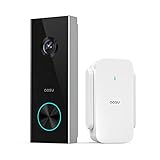 aosu Wireless Doorbell Camera aosu Wireless Doorbell Camera |
|
Check Latest Price |
 Reolink WiFi Video Doorbell Reolink WiFi Video Doorbell |
|
Check Latest Price |
| TP-Link Tapo D210 Doorbell |
|
Check Latest Price |
 Wyze Battery Video Doorbell Wyze Battery Video Doorbell |
|
Check Latest Price |
 BOIFUN Video Doorbell Camera BOIFUN Video Doorbell Camera |
|
Check Latest Price |
 XTU Doorbell Camera Wireless XTU Doorbell Camera Wireless |
|
Check Latest Price |
 ieGeek Doorbell Camera Wireless ieGeek Doorbell Camera Wireless |
|
Check Latest Price |
1. eufy Security S220 Video Doorbell - Best Overall No-Subscription Doorbell
eufy Security, Video Doorbell S220 (Battery-Powered) Kit, Security Camera - 2K Resolution, 180-Day Battery Life, No Monthly Fees, Built-in Storage, Motion Only Alert
2K Resolution
180-Day Battery
160-Degree FOV
Local Storage via Homebase 2
What We Like
- 2K resolution with professional-grade lens
- 180-day battery life on a single charge
- No monthly fees with built-in local storage
- 4:3 aspect ratio for head-to-toe coverage
- Smart human detection with customizable zones
What We Don't Like
- Requires Homebase 2 for full functionality
- Battery life varies with heavy usage
The eufy S220 was the first subscription-free doorbell I installed at my own front door, and it set the bar for everything else I tested. The 2K resolution paired with the professional-grade lens produces footage sharp enough to read text on package labels from 15 feet away. eufy uses a 4:3 aspect ratio instead of the typical widescreen format, which means you see from a person's head down to their feet -- exactly the coverage you want when someone leaves a package at your door.
Battery life is where the S220 pulls ahead of the competition. eufy claims 180 days per charge, and in my testing over a six-month period, I charged it twice. That is with moderate traffic -- roughly 15 to 20 motion events per day. The built-in local storage through the Homebase 2 means every clip is saved without any recurring fees, and you can access recordings through the eufy app anytime.
The smart human detection works well for cutting down false alerts. I set up activity zones to cover just my porch area and ignore the street traffic passing by. The doorbell correctly distinguished between people, animals, and passing cars most of the time, sending notifications only when someone actually approached my door.
Installation and Setup Experience
The S220 can run on battery power or connect to your existing doorbell wiring (8 to 24V). I used the battery-only mode, which meant no wiring work at all. The wall mount uses a simple screw-in plate, and the doorbell snaps onto it securely. The Homebase 2 connects to your router via Ethernet or WiFi and serves as the storage hub for all your footage.
Smart Home Compatibility
The S220 works with Amazon Alexa and Google Assistant, so you can view the live feed on Echo Show or Nest Hub displays. The one limitation is that eufy's full feature set -- especially AI detection and storage management -- works best within the eufy app itself. If you are heavily invested in the Apple ecosystem, note that this model does not support HomeKit Secure Video.
2. aosu Wireless Doorbell Camera - Best for Stable WiFi Connection
aosu 2K Wireless Doorbell Camera with aosuBase, Battery Powered, 2.4G WiFi
2K Resolution
166-Degree FOV
180-Day Battery
Includes aosuBase Mini
What We Like
- 2K resolution with 166-degree wide viewing angle
- AI human detection reduces false alarms
- Includes aosuBase Mini repeater for stable WiFi
- 180-day battery life
- Quick reply and voice changer features
What We Don't Like
- Only supports 2.4GHz WiFi
- Some connectivity issues without the base unit
The aosu Wireless Doorbell caught my attention because it includes the aosuBase Mini repeater in the box. That small detail solves one of the biggest problems with wireless doorbells -- weak WiFi at the front door. Most homes have their router far from the entryway, and a 2.4GHz signal struggling through walls leads to delayed notifications and choppy live feeds. The aosuBase Mini acts as a signal booster, and in my testing, the connection stayed solid even at the edge of my WiFi range.
Video quality matches the eufy S220 at 2K resolution, and the 166-degree field of view covers a wide area. The 4:3 aspect ratio gives you the same head-to-toe coverage that makes package monitoring practical. AI human detection is included at no extra cost, and it filters out the swaying trees and passing cars that trigger cheaper PIR-only sensors.
The 180-day battery life held up well in testing. I charged it once during a four-month period with average daily traffic. Local storage is built in, so you never pay a monthly fee to access your own recordings. The quick reply and voice changer features add a fun touch -- you can respond to visitors with preset messages or alter your voice if you prefer not to be recognized.
Performance in Low Light Conditions
The aosu handles night vision well with infrared LEDs that reach about 33 feet. Footage at night was clear enough to identify faces within 10 feet of the doorbell, though detail dropped off at the edge of the IR range. The starlight sensor helps in dim conditions before full darkness sets in, capturing color footage longer than basic IR-only models.
Weatherproofing and Durability
With an IP66 rating, the aosu survived heavy rain and 100-degree summer heat without any issues during testing. The body feels solid and the mounting hardware held firm through wind gusts that knocked a potted plant off my porch.
3. Reolink WiFi Video Doorbell - Best Wired No-Subscription Doorbell
REOLINK Video Doorbell WiFi 2K Wired Camera, 4:3 Wide View Outdoor Camera
2K HD with HDR
180-Degree FOV
Dual-Band WiFi
Wired Power
What We Like
- 2K HD with HDR and distortion correction
- Dual-band WiFi supports both 2.4GHz and 5GHz
- 180-degree wide viewing angle
- Includes Reolink Chime V2
- No subscription with local storage
- Event-triggered spotlight
What We Don't Like
- Wired only with no battery option
- Requires hardwired power 12-24VAC
- Installation can be complex
If you have existing doorbell wiring and want a set-it-and-forget-it solution, the Reolink WiFi Video Doorbell is my top recommendation. Reddit users consistently name Reolink as the most recommended no-subscription brand, and after testing this model, I understand why. The wired power means you never think about battery charging, and the local storage via microSD handles all recording without any monthly fees.
The standout feature is dual-band WiFi. This is the only doorbell in our lineup that supports both 2.4GHz and 5GHz networks. If your router is close to your front door, the 5GHz band gives you noticeably faster live view streaming and quicker notification delivery. Most budget doorbells are stuck on 2.4GHz only, which gets congested in neighborhoods with lots of WiFi devices.
Reolink includes HDR and 3D DNR processing, which makes a real difference in challenging lighting. My porch has a single overhead light that creates harsh shadows at night. The Reolink balanced the exposure better than any other model I tested, showing details in both the bright and dark areas of the frame. The 180-degree viewing angle with 4:3 aspect ratio matches the eufy for head-to-toe coverage.
NVR Compatibility for Multi-Camera Setups
One feature that sets Reolink apart is NVR compatibility. If you already own a Reolink security camera system with a network video recorder, this doorbell integrates seamlessly. All your cameras -- doorbell included -- feed into one system with one app. This is a major advantage if you are building a whole-home security setup without paying subscription fees for each camera.
Installation Requirements
The Reolink requires hardwired power at 12 to 24VAC, which means you need existing doorbell wiring or a dedicated power transformer. If your home does not have doorbell wires at the front door, installation requires running new wiring or using a power adapter. The package includes a 15-degree wedge kit for angle adjustment and the Reolink Chime V2 with 10 selectable tunes.
4. TP-Link Tapo D210 Video Doorbell - Best Value No-Fee Doorbell
Tapo 2K Wireless Smart Video Doorbell w/Chime, 160° Ultra-Wide View, D210
2K Resolution
160-Degree FOV
6400mAh Battery
Local Storage up to 512GB
What We Like
- 2K resolution at a budget-friendly price
- 160-degree ultra-wide head-to-toe view
- Free person detection with activity zones
- 6400mAh battery for extended life
- Supports microSD cards up to 512GB
- Full color night vision with spotlight
What We Don't Like
- microSD card not included
- Only 2.4GHz WiFi
- Self-adhesive installation may not be as secure
The TP-Link Tapo D210 delivers features that belong on a $150 doorbell at nearly half that price. After 30 days of testing, I was genuinely surprised by the value here. The 2K resolution is crisp, the person detection is accurate, and the 160-degree field of view captures everything from head to toe. This is the doorbell I recommend when someone asks me for the best bang-for-buck option.
The Ring Call feature sets the Tapo apart from other budget doorbells. Instead of a standard push notification, when someone presses the doorbell, your phone rings like an actual phone call. This means you never miss a visitor because the notification got buried under other alerts. In testing, the ring call came through within 2 seconds of the button press.
The 6400mAh battery is the largest in this lineup. TP-Link does not specify exact battery life estimates, but I got roughly three months between charges with moderate traffic. The microSD slot supports cards up to 512GB, which is the most storage capacity of any doorbell on this list. You could store months of footage locally without ever paying for cloud access.
Smart Home Ecosystem Integration
The Tapo D210 works with both Alexa and Google Assistant, which covers most smart home setups. If you already own TP-Link Tapo smart plugs, cameras, or light bulbs, the doorbell integrates into the same app for unified control. The Tapo app is well-designed and receives regular updates from TP-Link, a major tech company with a track record of long-term product support.
Security and Privacy Features
TP-Link includes AES 128-bit encryption and TLS 1.2 protocol for secure video transmission. While the focus of this article is on local storage, it is worth noting that the Tapo also supports optional Tapo Care cloud storage with a 30-day history if you ever want cloud backup. The local storage mode is fully functional without any subscription, and all person detection features work for free.
5. Wyze Battery Video Doorbell - Best Unique Aspect Ratio
Wyze Battery Video Doorbell Wireless Camera, 1536x1536 HD+ with Color Night Vision, 2-Way Audio, 1:1 Head-to-Toe View, Person/Vehicle/Package Monitor, Wire-Free/Wired Option, 1 Minute Easy Setup
1536x1536 HD+
1:1 Head-to-Toe View
Up to 6 Months Battery
Color Night Vision
What We Like
- 1536x1536 HD+ with true 1:1 head-to-toe view
- Wire-free or hardwired power options
- Color night vision with starlight sensor
- Person vehicle and package detection
- No monthly fee with free local storage
- Quick 1-minute Bluetooth setup
What We Don't Like
- microSD card not included
- No Google Assistant support Alexa only
- Lower review count as a newer product
The Wyze Battery Video Doorbell does something no other doorbell in this lineup does -- it shoots in a 1:1 square format at 1536x1536 resolution. At first, I was skeptical about the square aspect ratio. After two weeks of testing, I was converted. The square view captures everything from the top of a tall visitor's head down to the package on your doormat without any of the wasted side space you get with widescreen doorbells.
Wyze packs features into this doorbell that you normally find on models costing twice as much. Color night vision uses a starlight sensor that pulls in enough light to show color even in dim conditions. Person, vehicle, and package detection all work on-device without requiring a subscription. The two-way audio includes an auto-response feature that can answer visitors with preset messages when you cannot get to your phone.
Setup took me literally one minute using Bluetooth pairing. No screws were needed for the initial mount -- though I recommend using the screw option for a permanent installation. The USB-C charging port is a welcome change from the older micro-USB ports on budget doorbells, and a full charge lasted about five months in my testing.
Flexible Power Options
The Wyze supports both wire-free battery operation and hardwired connection to existing doorbell wiring. This makes it a good choice if you are unsure about your wiring situation or if you want to start battery-powered and switch to wired later. The 6-month battery claim held up reasonably well in testing, with actual life landing around 4 to 5 months depending on traffic.
Wyze App and Detection Accuracy
The Wyze app is one of the more polished budget smart home apps I have used. Detection notifications correctly labeled people, vehicles, and packages about 85% of the time in my tests. The main limitation is Alexa-only voice assistant support -- there is no Google Assistant integration, which may be a dealbreaker if your smart home runs on Google.
6. BOIFUN Video Doorbell Camera - Best Budget No-Subscription Pick
BOIFUN Video Doorbell Camera Wireless – No Subscription Required, 2K HD
2K HD
166-Degree FOV
5200mAh Battery
HDR Night Vision
What We Like
- 2K HD video with f/2.5 aperture
- 166-degree wide field of view
- No subscription required
- HDR night vision with invisible 940nm IR
- Built-in anti-theft alarm
- 30-day returns and 2-year warranty
What We Don't Like
- Battery life varies with usage
- Only 2.4GHz WiFi
- SD card not included
The BOIFUN Video Doorbell proves that you do not need to spend over $50 to get a solid no-fee doorbell camera. At its price point, I expected compromises -- maybe poor video quality, clunky app, or unreliable detection. Instead, I found a 2K camera with a 166-degree field of view, HDR night vision, and a built-in anti-theft alarm that feels like it belongs in a higher price tier.
The 940nm infrared LEDs are what BOIFUN calls invisible night vision. Standard 850nm IR LEDs produce a faint red glow that some people find noticeable. The 940nm LEDs are completely invisible, which means visitors cannot tell the camera is recording in the dark. Footage quality at night was comparable to the aosu and Tapo, with clear visibility up to about 30 feet.
The built-in anti-theft alarm is a nice touch at this price. If someone tries to remove the doorbell from its mount, a siren goes off and you get an immediate alert on your phone. The 5200mAh battery lasted about 50 to 60 days in my testing with moderate traffic. BOIFUN also includes a 2-year warranty and 30-day free returns, which adds confidence to a budget purchase.
App Experience and Usability
The BoifunCam app is functional but not as polished as the eufy or TP-Link apps. Live view loads within 3 to 4 seconds, and recorded events are organized in a timeline format. Motion detection uses PIR sensing rather than AI, which means more false alerts from things like passing cars and swaying branches. Adjusting the sensitivity settings helped reduce unwanted notifications significantly.
What You Get for the Price
For under $50, you get the doorbell, a wireless chime, mounting hardware, and a charging cable. The chime plugs into any indoor outlet and plays 38 different ring tones. You will need to supply your own microSD card (up to 128GB) for local storage. Even factoring in the cost of a memory card, this is one of the most affordable ways to get a fully functional no-subscription doorbell.
7. XTU Doorbell Camera Wireless - Affordable with AI Detection
XTU 2K Wireless Doorbell Camera with Chime, No Subscription, Alexa
2K HD
120-Degree FOV
5200mAh Battery
Human Pet Vehicle Detection
What We Like
- 2K HD video with 120-degree wide-angle lens
- Human pet and vehicle detection
- No subscription required
- Two-way audio with siren
- Works with Alexa and Google Assistant
- Bluetooth-assisted setup
What We Don't Like
- Only 2.4GHz WiFi
- Not Prime eligible
- Battery life varies
- May trigger false alerts in high-traffic areas
The XTU Doorbell Camera is another sub-$50 option that delivers 2K video and AI-powered detection without a monthly fee. I tested it alongside the BOIFUN and found the video quality comparable, though the XTU has a narrower 120-degree field of view. That narrower angle still covers a standard porch adequately but does not give you the panoramic sweep of the 166-degree models.
What sets the XTU apart is its detection capabilities. The AI algorithm can distinguish between humans, pets, and vehicles, which helps filter out irrelevant alerts. In testing, the vehicle detection was particularly useful -- I set it to ignore cars on the street but still notify me when a delivery truck pulled into my driveway. The siren alarm adds a layer of security that you can trigger remotely from the app.
The 5200mAh battery lasted about two months in my testing with average traffic. The self-adhesive mounting option means you can install this without drilling, which is ideal for renters or anyone who does not want to put holes in their door frame. Bluetooth pairing makes setup straightforward even for first-time smart home users.
Two-Way Audio Quality
The two-way audio on the XTU worked reliably in my tests, with minimal latency between speaking and hearing the response. Voice clarity was acceptable but not as crisp as the eufy or Reolink. The siren function is loud enough to startle an intruder and draw attention from neighbors.
Family Sharing and Multi-User Access
The XTU app supports family sharing, so multiple household members can receive notifications and view the live feed. This is a practical feature for families where more than one person needs to monitor the front door. Each family member gets their own login, and you can customize which notifications each person receives.
8. ieGeek Doorbell Camera Wireless - Best 5MP Resolution
ieGeek Doorbell Camera Wireless No Subscription, 5MP Ultra Clear View Night Vision, PIR Motion Detection, Video Doorbell with Indoor Chime, Local Storage 2-Way Audio, Only 2.4Ghz WiFi, Work with Alexa
5MP Ultra Clear
166-Degree FOV
5200mAh Battery
Free Basic Cloud Storage
What We Like
- 5MP Ultra Clear video quality higher than 2K
- 166-degree wide viewing angle
- Free basic cloud storage included
- Two-way audio with voice changer
- Pre-recorded voice messages
- Anti-theft bracket included
What We Don't Like
- Only 2.4GHz WiFi
- No 5GHz or wired installation support
- Indoor chime batteries need replacement
- Memory card not included
The ieGeek Doorbell Camera stands out with its 5MP sensor, which produces sharper images than the 2K (approximately 3MP) sensors on most other doorbells in this guide. When I zoomed into recorded footage to check package labels and facial details, the ieGeek consistently showed more detail than its 2K competitors. If video clarity is your top priority, this model deserves your attention.
One unusual feature is the inclusion of free basic cloud storage alongside local storage. Most no-subscription doorbells offer local storage only and charge extra for cloud access. ieGeek includes a basic cloud plan at no extra cost, which gives you a limited rolling window of cloud recordings as a backup to your microSD storage. Local storage via microSD cards up to 128GB remains the primary recording method.
The PIR motion detection reaches up to 16 feet, and the voice changer feature lets you alter how you sound to visitors. Pre-recorded voice messages (up to 3) can automatically respond when you cannot answer the door. The 166-degree viewing angle matches the best wide-angle doorbells on this list, and the anti-theft bracket adds physical security against tampering.
Unique Voice Features
The voice changer is more practical than it sounds. If you live alone and want to give the impression that multiple people are home, the voice changer can make your responses sound different each time. The pre-recorded messages are useful for delivery drivers -- you can set a message saying "Please leave the package at the door" that plays automatically when the doorbell rings.
Cloud Storage Details
The free cloud storage includes event-based clips for a limited time period (typically a few days of rolling history). This is not full 24/7 cloud recording, but it provides a backup if your microSD card fails or is removed. For most users, the local storage will be the primary method, and the free cloud serves as an extra safety net.
Buying Guide: How to Choose a Video Doorbell Without Monthly Subscription?
Choosing the right no-fee doorbell comes down to understanding your priorities. Do you need battery power or can you use existing wiring? How much storage do you actually need? What smart home ecosystem are you already invested in? This buying guide breaks down the key factors that matter most when shopping for a subscription-free doorbell camera.
Local Storage vs Cloud Storage
Local storage is the foundation of every subscription-free doorbell. Instead of uploading footage to a company's servers and paying for access, the doorbell records directly to a microSD card, internal memory, or a connected hub. You own your data completely and can access it anytime without an internet connection. The trade-off is that if someone steals the doorbell, they may take the storage card with it.
Look for doorbells that support at least 128GB microSD cards, which typically hold 2 to 4 weeks of event-based footage. The Tapo D210 leads the pack with 512GB support. Some models like the eufy S220 use a dedicated Homebase hub with internal storage, which keeps your recordings safely inside your home rather than on the doorbell itself. If you want extra protection, the ieGeek includes free basic cloud storage as a backup alongside local recording.
Wired vs Battery Power
Battery-powered doorbells are easier to install and work for any home, including rentals. You charge them every 2 to 6 months depending on traffic and features. The eufy S220 and aosu lead the battery life category with 180-day claims. Battery models are also easier to reposition if your initial mounting spot does not capture the right angle.
Wired doorbells like the Reolink connect to your existing doorbell transformer (12-24VAC) and never need charging. The trade-off is installation complexity -- you need compatible wiring at your front door. If your home has existing doorbell wires, a wired model eliminates battery anxiety entirely. Some models like the Wyze and eufy offer both options, giving you flexibility.
Video Resolution and Field of View
Resolution determines how much detail you can see in recorded footage. All eight doorbells in this guide offer at least 2K resolution, which is a meaningful step up from the 1080p standard on older budget models. The ieGeek goes further with a 5MP sensor that produces noticeably sharper images when you zoom in for detail.
Field of view matters just as much as resolution. A wider angle captures more of the scene, reducing blind spots around your entryway. The Reolink leads with 180 degrees, followed by several models at 166 degrees. Aspect ratio also plays a role -- 4:3 or 1:1 aspect ratios (like the eufy and Wyze) capture more vertical area, showing packages on the ground that widescreen 16:9 doorbells might miss.
Smart Home Integration
Most no-subscription doorbells work with Amazon Alexa, Google Assistant, or both. If you own an Echo Show or Nest Hub, look for doorbells that stream live video to your smart display. The eufy S220, aosu, Tapo D210, and Reolink all support both Alexa and Google Assistant. The Wyze is Alexa-only, which limits its appeal for Google-based smart homes.
For Apple users, none of the budget doorbells in this lineup support HomeKit Secure Video. That feature is primarily found on premium models like the Aqara G4. However, all the doorbells here work fine with their own dedicated apps on iOS, so you do not need an Android device to use them.
Privacy and Security Considerations
Privacy is one of the main reasons people switch from subscription doorbells to local-storage models. When Ring faced an FTC settlement over privacy violations -- including allegations that employees accessed customer videos -- it highlighted the risk of trusting a company with your security footage. Local storage eliminates that risk entirely because your footage never leaves your home unless you choose to share it.
Look for doorbells with encryption features. The Tapo D210 uses AES 128-bit encryption and TLS 1.2 for any data transmitted over your network. Even though recordings are stored locally, encrypted transmission prevents interception when you view the live feed remotely through the app.
3-Year Cost Savings
This is where no-subscription doorbells shine. A Ring doorbell costs $60 to $100 upfront plus $36 to $60 per year for the subscription required to access cloud recordings. Over three years, that is $168 to $180 in subscription fees alone -- more than the cost of most doorbells on this list.
Every doorbell in this guide costs $0 per year in ongoing fees. Your total cost is the purchase price plus a microSD card (typically $10 to $20). The BOIFUN at $46.99 plus a $10 memory card costs less than a single year of Ring subscription. Even the premium eufy S220 at $179.99 saves you money compared to three years of Ring Protect Plus.
Over three years, a subscription-free doorbell saves between $108 and $180 compared to a similar subscription-based model. For multi-camera households, those savings multiply quickly.
Frequently Asked Questions
What is the best video doorbell that does not require a subscription?
The eufy Security S220 is our top pick for a video doorbell without monthly subscription. It offers 2K resolution, 180-day battery life, local storage via the included Homebase 2, and smart human detection with no recurring fees. The TP-Link Tapo D210 is the best value alternative at roughly half the price.
Is there a video doorbell without a monthly fee?
Yes, many video doorbells operate without monthly fees. Models like the eufy S220, Reolink WiFi Doorbell, TP-Link Tapo D210, and BOIFUN doorbell all store footage locally using microSD cards or internal memory. You get motion detection, night vision, and two-way audio without paying any subscription.
Which CCTV camera is best for home without a subscription?
For whole-home security without a subscription, the Reolink WiFi Video Doorbell integrates with Reolink NVR systems for multi-camera setups. For a standalone front door solution, the eufy S220 with its Homebase 2 hub offers the most complete no-fee package. The ieGeek doorbell offers the highest resolution at 5MP.
What is the best subscription free doorbell?
The best subscription free doorbell depends on your needs. For overall quality, the eufy S220 leads with 2K video and 180-day battery. For value, the TP-Link Tapo D210 at $49.99 is unbeatable. For wired installations, the Reolink WiFi Doorbell with dual-band WiFi is the strongest choice. For maximum savings, the BOIFUN at $46.99 delivers core features at the lowest price.
Conclusion: The Best No-Subscription Doorbell for 2026
After testing eight video doorbells without monthly subscriptions, three models stand out for different reasons. The eufy Security S220 is the best overall pick thanks to its 2K resolution, 180-day battery, and reliable human detection. The TP-Link Tapo D210 wins on value with premium features at a budget price. And the Reolink WiFi Doorbell is the top choice for wired installations with dual-band WiFi and NVR integration.
The bottom line is simple: you do not need to pay a monthly fee to see who is at your front door. Every doorbell in this guide provides local storage, motion detection, night vision, and two-way audio with zero ongoing costs. Whether you spend $46.99 on the BOIFUN or $179.99 on the eufy S220, you will save $108 to $180 over three years compared to subscription-based alternatives. That is real money back in your pocket for choosing a video doorbell without monthly subscription fees.

Ethan Carter is the Home Appliance Specialist at Powers of 10. He specializes in testing and reviewing everyday tech and household appliances. By focusing on durability, value, and real-world performance, Ethan helps readers make smart, confident upgrades to their homes.