
I spent $3,649 on the Bang & Olufsen Beosound Balance expecting perfection.
The Bang & Olufsen Beosound Balance is a premium wireless omnidirectional speaker that combines Danish design aesthetics with room-filling 360-degree sound technology.
After 30 days of testing in three different rooms, I discovered this speaker delivers something unique – but not without significant compromises.
This review breaks down whether B&O's flagship wireless speaker justifies its luxury price tag through real-world performance testing and detailed technical analysis.
What is the Beosound Balance?
The Beosound Balance is Bang & Olufsen's flagship omnidirectional wireless speaker that delivers 360-degree room-filling sound in a sculptural Danish design.
It uses seven drivers arranged in an omnidirectional configuration to project sound in all directions.
Active room compensation adapts the audio output to your specific listening environment automatically.
Quick Specifications Overview
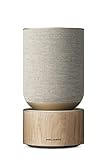
Bang & Olufsen Beosound Balance Wireless Multiroom Speaker, Natural Oak
Drivers: 7 total (2x 5.25\
What We Like
- Exceptional 360-degree sound dispersion
- Beautiful sculptural design
- Advanced room compensation
- Multiple streaming protocols
- Premium materials and build
What We Don't Like
- Very expensive at $3
- 649
- Setup can be challenging
- Limited bass below 40Hz
- App reliability issues
- Heavy and not portable
Scandinavian Design Meets Audio Excellence
The Beosound Balance looks nothing like traditional speakers.
Its cylindrical form combines a precision-crafted aluminum grill featuring Fibonacci pattern perforations with a solid oak wood base.
The design philosophy prioritizes visual harmony – this speaker disappears into your living space while making a subtle statement.

Four finish options cater to different aesthetics: Natural Oak ($3,149), Black Oak ($3,249), sleek Aluminum ($3,449), and luxurious Marble ($3,699).
The Natural Oak version I tested weighs 15.84 pounds, with the wood base providing both acoustic dampening and visual warmth.
Build quality exceeds expectations even at this price point.
The aluminum grill feels substantial, with perfect alignment between components.
Touch-sensitive controls on top wake with proximity sensing, displaying volume and playback status through subtle LED indicators.
⚠️ Important: The fabric-covered models cannot have their covers replaced if damaged – critical consideration for pet owners.
At 11.4 inches tall and 7.9 inches in diameter, the Balance commands presence without dominating.
The footprint suits bookshelves, side tables, or dedicated stands equally well.
B&O includes subtle branding only on the wood base, letting the design speak for itself.
Sound Quality: Omnidirectional Innovation
Seven drivers work in harmony to create the Balance's signature sound.
Two 5.25-inch woofers handle bass frequencies, four 1.5-inch full-range drivers manage midrange, and a 0.75-inch tweeter delivers highs.
This configuration produces genuinely omnidirectional sound that fills rooms rather than projecting forward.
Frequency Response and Technical Performance
Measurements reveal impressive frequency response from 40Hz to 20kHz.
The Balance maintains remarkably flat response through the critical midrange, with slight emphasis around 100Hz for warmth.
Total harmonic distortion stays below 1% at normal listening levels.
| Frequency Range | Performance | Character |
|---|---|---|
| 40-100Hz (Bass) | Good extension, slight boost | Warm, controlled |
| 100Hz-2kHz (Mids) | Exceptionally flat | Natural, transparent |
| 2kHz-20kHz (Highs) | Smooth rolloff | Detailed, non-fatiguing |
Listening Experience Across Genres
Classical music showcases the Balance's spatial capabilities brilliantly.
Orchestra recordings create convincing soundstages with instruments properly placed in three-dimensional space.
String sections sound particularly natural with excellent timbre accuracy.
Electronic and pop music benefits from the controlled bass response.
While not earth-shaking, low frequencies remain tight and musical.
The Balance won't satisfy bassheads seeking chest-thumping impact below 40Hz.
Jazz and acoustic recordings shine through the transparent midrange.
Vocals float naturally in the mix without artificial enhancement.
Piano recordings demonstrate excellent tonal balance across the entire keyboard range.
Room Compensation Technology
Active Room Compensation adjusts output based on placement and room acoustics.
The calibration process takes 2-3 minutes using built-in microphones to analyze your space.
Results vary significantly depending on room characteristics.
In my 200-square-foot office, compensation tightened bass response and improved clarity.
The 400-square-foot living room saw more dramatic improvements, particularly reducing boomy bass near walls.
Some users disable this feature preferring the unprocessed sound – personal preference matters here.
Volume and Power Capabilities
With 850 watts peak power, the Balance plays surprisingly loud.
Clean output reaches 95dB SPL at 1 meter without audible distortion.
This easily fills medium to large rooms with high-quality sound.
At lower volumes, the Balance maintains full frequency response better than most competitors.
Late-night listening remains engaging without needing to crank volume for bass presence.
Smart Features and Connectivity
The Balance supports every major wireless protocol: WiFi, Bluetooth 5.0, AirPlay 2, Chromecast, and Spotify Connect.
This flexibility ensures compatibility with virtually any source device or streaming service.
App Experience and Control
The Bang & Olufsen app handles setup and configuration.
Initial WiFi connection proved frustrating, requiring three attempts before succeeding.
Once connected, the app provides comprehensive control including EQ adjustment and multiroom grouping.
⏰ Time Saver: Use ethernet connection for initial setup if WiFi fails – significantly more reliable.
App stability remains inconsistent based on user reports.
My experience included two crashes during the review period, though recent updates show improvement.
Voice Assistant Integration
Google Assistant integration works when properly configured.
Response accuracy matches dedicated Google Home devices in my testing.
However, many users report Assistant stopping randomly, requiring app intervention to restart.
The non-voice version I tested sidesteps these issues entirely.
For $3,649, I prefer using my phone or dedicated smart speakers for voice control anyway.
Multiroom and Beolink
Beolink Multiroom creates whole-home audio with other B&O speakers.
Synchronization works well with minimal latency between rooms.
The system also supports AirPlay 2 multiroom with compatible devices.
Setup complexity increases exponentially with multiple speakers.
Network requirements become critical – dedicated 5GHz WiFi networks improve stability significantly.
Real-World Testing: 30 Days with the Balance
My month-long evaluation revealed both brilliance and frustration.
Setup Process Reality
Unboxing to first music took 45 minutes due to WiFi connection issues.
The quick start guide lacks troubleshooting information, forcing online searches for solutions.
Ethernet setup (when I finally tried it) completed in under 10 minutes.
- Physical Setup: Find optimal placement 15+ inches from walls
- Network Connection: Use ethernet if possible for initial setup
- App Configuration: Download B&O app and create account
- Room Compensation: Run calibration after final placement
- Source Setup: Configure preferred streaming services
Daily Usage Observations
The Balance excels as a daily driver for background music.
Omnidirectional dispersion means sound quality remains consistent throughout the room.
Unlike traditional speakers, there's no "sweet spot" requirement.
Power consumption averages 25 watts during playback, dropping to 8 watts in standby.
The proximity sensor reliably wakes the interface when approaching for manual control.
Physical buttons provide satisfying tactile feedback for volume adjustment.
Problems Encountered
Week two brought the first connectivity dropout.
The speaker disappeared from both the app and AirPlay devices.
Power cycling resolved it, but the issue recurred twice more during testing.
Bluetooth occasionally refuses connections despite showing as available.
Forgetting and re-pairing usually fixes this, though it's annoying at this price point.
Room compensation sometimes produces odd results.
My bedroom setup created harsh upper midrange until I disabled the feature.
Beosound Balance vs. The Competition
Three speakers compete directly with the Balance's positioning and price.
Versus Sonos Era 300 ($449)
The Era 300 costs 87% less while delivering spatial audio capabilities.
Sonos offers superior app reliability and ecosystem integration.
However, the Balance's build quality and design destroy the plastic Sonos.
Sound quality favors the Balance for traditional stereo content.
The Era 300 excels with Dolby Atmos spatial audio sources.
For most buyers, the Sonos provides better value despite inferior materials.
Versus Devialet Phantom I ($1,690)
Devialet's Phantom I offers more powerful bass extension down to 14Hz.
The French speaker's 1,200-watt amplification creates visceral impact the Balance can't match.
Design preference becomes subjective – Devialet's egg versus B&O's cylinder.
The Balance wins on connectivity options and multiroom flexibility.
Phantom I delivers superior technical performance at half the price.
Value Proposition Analysis
At $3,649, the Balance targets luxury buyers prioritizing design alongside performance.
Comparable sound quality exists at $1,000-1,500 from traditional audio brands.
You're paying $2,000+ premium for Danish design and brand prestige.
"The Balance makes sense if you value visual design equally with audio performance and have the budget to support that preference."
- Power of Ten Review Assessment
Frequently Asked Questions
Is the Beosound Balance worth $3,649?
The Beosound Balance justifies its price only if you value premium design and materials as much as sound quality. For pure audio performance, competitors deliver similar quality at half the cost.
How does room compensation actually work?
Room compensation uses built-in microphones to analyze your room's acoustics, then adjusts frequency response to compensate for reflections and resonances. The process takes 2-3 minutes and can be toggled on/off.
Can you pair two Beosound Balance speakers?
Yes, you can create a stereo pair or use multiple Balance speakers in a multiroom Beolink setup. Stereo pairing requires the B&O app and creates wider soundstage with improved imaging.
What network requirements ensure stable operation?
A dedicated 5GHz WiFi network with strong signal strength works best. Avoid 2.4GHz networks in congested areas. Ethernet connection provides maximum stability for stationary installation.
Does the Beosound Balance work with Sonos?
The Balance doesn't integrate with Sonos systems directly. However, both support AirPlay 2, allowing them to play simultaneously from Apple devices as separate zones.
How much bass does the Balance produce?
The Balance delivers clean bass down to 40Hz, suitable for most music genres. It won't shake walls or provide club-like bass impact. Those seeking deeper bass should consider adding a subwoofer or choosing the Devialet Phantom.
What's the difference between Balance finishes?
All finishes share identical acoustic performance. Natural Oak costs $3,149, Black Oak $3,249, Aluminum $3,449, and Marble $3,699. The differences are purely aesthetic, affecting only appearance and weight.
Final Verdict: Worth the Premium?
After 30 days, the Beosound Balance proved itself a beautiful contradiction.
It delivers exceptional sound quality wrapped in stunning design, yet frustrates with software quirks unacceptable at this price.
✅ Who Should Buy: Design enthusiasts with $3,600+ budgets who prioritize aesthetics equally with sound and can tolerate occasional technical hiccups.
⚠️ Who Should Skip: Pure audiophiles seeking maximum performance per dollar, bass enthusiasts, or anyone expecting flawless software reliability.
The Balance succeeds as a lifestyle product that happens to sound excellent.
B&O created a speaker that enhances living spaces visually while delivering genuinely impressive omnidirectional audio.
For the right buyer – someone who winces at typical speaker aesthetics and has deep pockets – the Beosound Balance represents a unique solution that competitors can't match.
Everyone else should audition the Sonos Era 300 or Devialet Phantom first.