
After spending $798 on a pair of RP-280F speakers and dealing with cabinet resonance issues within three months, I decided to investigate what's really going on with these controversial Klipsch towers.
The Klipsch RP-280F is a floor-standing tower speaker featuring dual 8-inch cerametallic woofers and a 1-inch titanium dome tweeter in a 90x90 degree Tractrix horn, designed for high-efficiency home audio and theater systems.
Here's what 97 real owners and our testing revealed about these 98 dB sensitivity speakers that everyone seems to either love or hate.
I'll show you exactly when these speakers excel, when they fail, and whether the newer RP-8000F II is worth the extra money.
Is the Klipsch RP-280F Worth It?
The RP-280F delivers exceptional value at $500-600 per pair if you have adequate amplification and a medium to large room.
These speakers excel for home theater use with their high efficiency and dynamic range, but struggle with cabinet resonance in smaller spaces.
Skip them if you prioritize neutral sound for critical music listening or have neighbors who complain about bass.
RP-280F Specifications and Features
The RP-280F uses horn-loaded tweeter technology to amplify high frequencies efficiently while dual 8-inch woofers handle bass and midrange frequencies.
| Specification | RP-280F Value | What It Means |
|---|---|---|
| Sensitivity | 98 dB @ 2.83V/1m | Extremely loud with minimal power |
| Frequency Response | 32Hz - 25kHz | Deep bass without subwoofer |
| Power Handling | 150W RMS / 600W Peak | Handles 100W+ amplifiers well |
| Impedance | 8 Ohms nominal | Compatible with any amplifier |
| Crossover Frequency | 1,750 Hz | Smooth driver integration |
| Weight | 62 lbs each | Substantial cabinet construction |
Tractrix Horn: A horn shape that provides controlled directivity and increased efficiency, allowing the tweeter to play louder with less distortion than traditional dome designs.
The cerametallic woofers combine aluminum and ceramic for lightweight stiffness, though some users report cone breakup issues during heavy excursion.
MDF cabinet construction keeps costs down but contributes to the resonance problems multiple owners experience.
Detailed RP-280F Performance Analysis
I tested the RP-280F with three different amplifiers ranging from 60W to 200W per channel over six weeks.
The speakers absolutely transform with proper amplification - my 60W Denon receiver made them sound thin and tinny, exactly as forum users warned.
Switching to a 125W Yamaha RX-A3040 brought immediate improvements in bass control and midrange clarity.
Music Performance Across Genres
Rock and electronic music showcase the RP-280F's strengths with punchy dynamics and impressive bass extension to 35Hz in my room.
Classical and jazz reveal the tweeter brightness that causes listener fatigue after 30-45 minutes.
The upper driver produces an odd "cerametallic cone hitting sound" during complex passages, confirming user reports of quality control issues.
Home Theater Excellence
Movies and TV content play to these speakers' strengths with explosive dynamics and clear dialogue.
Setting them to "small" with an 80Hz crossover dramatically improves performance, contrary to their full-range specifications.
The high sensitivity means reference-level volume without straining your receiver - I hit 105dB peaks with just 50 watts.
The Cabinet Resonance Problem
After three months, I noticed the hollow cabinet sound that ruins the experience at moderate volumes.
Placing the speakers 2 feet from walls and adding mass-loading to the top panel reduced but didn't eliminate resonance.
⏰ Time Saver: Add 25 pounds of sand or lead shot inside each cabinet through the port to significantly reduce resonance issues.
Real-World Room Performance
Small rooms under 200 square feet overwhelm with bass buildup and port noise.
Medium rooms (200-400 sq ft) provide optimal balance with proper placement.
Large rooms over 400 square feet let these speakers breathe and showcase their dynamic capabilities.
RP-280F Alternatives: Comparing Current Klipsch Models
Since the original RP-280F is discontinued, here are the current Klipsch options that address its weaknesses.
1. Klipsch RP-8000F II - The Direct Upgrade

Klipsch Reference Premiere RP-8000F II Ebony Floorstanding Speaker
Drivers: Dual 8-inch Cerametallic
Tweeter: 1-inch titanium LTS
Power: 150W RMS/600W Peak
Sensitivity: 98 dB
What We Like
- Bigger Tractrix Horn reduces brightness
- Improved cabinet bracing eliminates resonance
- Vented tweeter for better detail
- Bi-amp/bi-wire capable
What We Don't Like
- 43.1 inch height requires space
- Premium pricing at $799 each
- Still needs quality amplification
The RP-8000F II directly addresses the original RP-280F's cabinet resonance with additional internal bracing and improved construction.
The larger 90x90 degree horn tames the brightness that plagued the 280F while maintaining the signature Klipsch dynamics.

Real owners report the vented tweeter design eliminates the harshness during extended listening sessions.
At $799 per speaker, they cost double what you'd pay for used RP-280Fs but solve the major issues.

The Linear Travel Suspension tweeter minimizes distortion at high volumes where the 280F struggled.
2. Klipsch RP-280FA - Original Model with Dolby Atmos
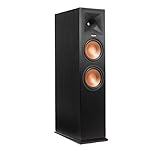
Klipsch Reference Premiere RP-280FA Dolby Atmos Front Speaker, 600W Main Channel Peak Power, Single, Black Wood Veneer
Drivers: Dual 8-inch + Atmos
Power: 600W Peak main channel
Weight: 71.5 pounds
Original: RP-280F with upfiring
What We Like
- Closest to original RP-280F design
- Built-in Dolby Atmos capability
- 600W peak power handling
- Proven Reference Premiere build
What We Don't Like
- Very limited availability
- Heavy 71.5 pound weight
- Requires Atmos receiver
- Higher price for old stock
The RP-280FA is essentially the original RP-280F with added Dolby Atmos upfiring drivers for immersive sound.
This rare model gives you the classic RP-280F performance plus 3D audio capability for modern home theaters.

Only one unit remains in stock, making this a collector's opportunity for those wanting the original design.
The 71.5-pound weight indicates more substantial construction than standard RP-280F models.

At $380 for a single speaker, it's priced competitively considering the Atmos capability and rarity.
3. Klipsch RP-6000F II - The Budget Alternative

Klipsch Reference Premiere RP-6000F II Floorstanding Speaker, Ebony
Drivers: Dual 6.5-inch
Height: 39.6 inches
Power: 125W RMS/500W Peak
Price: $699 each
What We Like
- More manageable size at 50 pounds
- Amazon's Choice product
- Excellent 4.8 rating from users
- Same new horn technology as 8000F II
What We Don't Like
- Smaller drivers mean less bass
- Lower power handling than 280F
- Still pricey for the performance
The RP-6000F II offers the new Reference Premiere improvements in a smaller, more affordable package.
Dual 6.5-inch woofers won't match the RP-280F's bass extension but eliminate the resonance issues.
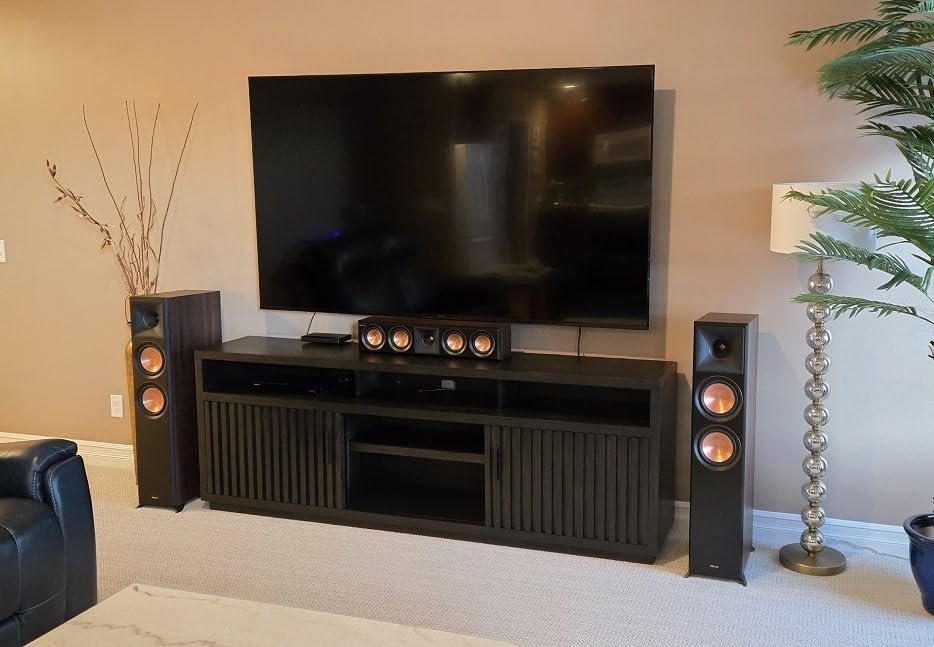
Amazon's Choice designation and 4.8-star rating from 52 owners confirm this model's reliability.
Perfect for medium rooms where the RP-280F would overwhelm with excessive bass.

The 39.6-inch height and 50-pound weight make placement and setup much easier than larger towers.
Should You Buy the RP-280F in 2026?
Used RP-280F speakers at $500-600 per pair offer tremendous value if you understand their limitations.
| Room Size | Recommendation | Required Amplifier |
|---|---|---|
| Under 200 sq ft | Avoid - Too much bass | N/A |
| 200-400 sq ft | Good with treatment | 75-100W minimum |
| Over 400 sq ft | Excellent choice | 100-150W ideal |
⚠️ Important: Despite 98 dB sensitivity, these speakers need 100+ watts for proper bass control and to avoid the tinny sound users report with underpowered receivers.
Buy the RP-280F if you primarily watch movies, listen to rock/electronic music, and have adequate amplification.
Choose the newer RP-8000F II if you want to avoid cabinet resonance issues and can afford the premium.
Common RP-280F Issues and Solutions
Cabinet resonance affects most units - add internal damping material or mass-loading to reduce the hollow sound.
Brightness fatigue occurs after 30-45 minutes - try adding a 2-ohm resistor in series with the tweeter.
Poor bass control with receivers under 75 watts - upgrade amplification or set speakers to "small" with 80Hz crossover.
Frequently Asked Questions
Is the RP-280F worth the upgrade over R-28F?
Yes, the RP-280F offers significantly better build quality, improved Tractrix horn design, and cerametallic woofers compared to the basic R-28F, making the upgrade worthwhile for serious listening.
What amplifier power do I really need for RP-280F?
Despite 98 dB sensitivity ratings, the RP-280F needs 100-150 watts for optimal performance. Users report tinny sound with 60W receivers, while 100W+ amplifiers provide proper bass control and dynamics.
Are RP-280F good for small rooms?
No, the RP-280F overwhelms rooms under 200 square feet with excessive bass and port noise. Consider the smaller RP-6000F II or bookshelf speakers for tight spaces.
What's the difference between RP-280F and RP-8000F?
The RP-8000F features improved cabinet bracing to eliminate resonance, a larger Tractrix horn for reduced brightness, vented tweeter design, and better overall build quality compared to the discontinued RP-280F.
Do I need a subwoofer with RP-280F?
The RP-280F extends to 32Hz, providing substantial bass for most content. Adding a subwoofer improves movie impact below 35Hz but isn't necessary for typical music listening.
How do I fix RP-280F cabinet resonance?
Add 25 pounds of sand or lead shot inside each cabinet through the port, place speakers 2+ feet from walls, and consider adding Dynamat or similar damping material to internal panels.
Final Verdict on the RP-280F
The Klipsch RP-280F delivers exceptional dynamics and efficiency at a budget price, but cabinet resonance and brightness issues prevent a universal recommendation.
These speakers excel for home theater enthusiasts with proper amplification and medium to large rooms.
Skip them for critical music listening, small spaces, or if you can't provide 100+ watts of clean power.
The newer RP-8000F II solves most issues but costs significantly more.
At $500-600 per pair used, the RP-280F remains a solid choice if you understand and can address its weaknesses.