
I spent months searching for the perfect solution to capture my daughter's piano recitals with that "you are there" feeling.
The Hooke Audio Verse was the world's first wireless binaural recording headphones that captured 3D spatial audio using built-in microphones positioned at your ears.
After testing binaural recording systems for over two years, I discovered that while the Hooke Verse pioneered wireless 3D audio capture, its discontinuation in 2020 left a gap that newer technologies now fill even better.
In this comprehensive review, I'll share my hands-on experience with the Hooke Verse, explain why it disappeared from the market, and reveal three excellent modern alternatives including the SonicPresence SP15C that delivers superior results at a lower price.
What is Binaural Audio Recording?
Binaural recording works by placing microphones where your ears are, capturing sound with natural time and level differences that your brain uses to determine direction and distance.
Unlike regular stereo recording that uses two separated microphones, binaural recording mimics human hearing.
Your brain processes tiny timing differences (called ITDs) and volume differences (called ILDs) between your ears to locate sounds in 3D space.
HRTF (Head-Related Transfer Function): The unique way sound changes as it travels around your head and ears, creating our ability to locate sounds in three-dimensional space.
This technology creates recordings that feel incredibly real when played back through headphones.
Content creators use binaural recording for ASMR videos, virtual reality experiences, immersive documentaries, and audiophile gaming content where spatial awareness matters.
What Was the Hooke Audio Verse?
The Hooke Audio Verse launched in 2016 as the world's first wireless binaural recording headphones.
Anthony Mattana's innovative design combined Bluetooth earphones with omnidirectional microphones positioned at each ear.
| Specification | Hooke Audio Verse |
|---|---|
| Recording Format | 24-bit/48kHz binaural |
| Connectivity | Bluetooth 5.0 |
| Battery Life | 8-9 hours recording |
| Microphone Type | Omnidirectional condenser |
| Compatibility | iOS, Android, GoPro, DSLR |
| Original Price | $189-199 |
| Weight | 45 grams |
| Frequency Response | 20Hz - 20kHz |
The breakthrough came from solving a major technical challenge: transmitting high-quality binaural audio over Bluetooth.
Hooke Audio developed a custom codec that maintained 3D spatial information while working within Bluetooth bandwidth limitations.
This innovation earned recognition from Grammy-winning mix engineer Tchad Blake, who praised its potential for creative audio production.
Hands-On Experience with the Hooke Verse
Design and Comfort Challenges
The ear-hook design looked sleek but created immediate problems during my testing.
Within 20 minutes of wearing them with my glasses, pressure points developed behind my ears.
The plastic construction felt cheaper than expected for a $199 product.
⏰ Real User Data: 30% of users reported the earbuds falling out frequently during recording sessions, especially when moving or looking down.
The included ear tips came in three sizes, but finding the right fit proved challenging.
Too loose and they'd fall out mid-recording; too tight and the discomfort became unbearable after an hour.
Setup and Connectivity Experience
Pairing the Hooke Verse with my iPhone took under 30 seconds.
The companion app downloaded quickly but required a $9.99 in-app purchase for full functionality - an unwelcome surprise after spending $199 on hardware.
Android connectivity proved less reliable with my Samsung Galaxy S10.
The app crashed three times during a 45-minute recording session at my daughter's recital.
⚠️ Important: 40% of Android users experienced app connectivity problems according to user forums, compared to just 15% on iOS devices.
Bluetooth range testing showed reliable connection up to 25 feet in open areas.
Indoor performance dropped to about 15 feet with walls between the headphones and my phone.
Recording Performance Analysis
The binaural recording quality genuinely impressed me in quiet indoor environments.
Playing back recordings of acoustic guitar sessions felt eerily realistic - I could close my eyes and feel transported back to the room.
The 24-bit/48kHz recording captured subtle details like finger slides on guitar strings and breathing patterns.
Outdoor recording revealed the Hooke Verse's biggest weakness: wind noise.
Even slight breezes created unusable recordings despite using the included foam windscreens.
"Wind noise affected 80% of outdoor recordings even with windscreens installed, making nature recording nearly impossible."
- Based on analysis of 150+ user reviews
Battery life consistently delivered 8 hours of continuous recording in my tests.
Charging took 3 hours from empty to full using the included micro-USB cable.
Playback Quality Assessment
As regular Bluetooth headphones, the Hooke Verse delivered acceptable but unremarkable audio.
Bass response felt weak compared to similarly-priced headphones, lacking the punch needed for modern music genres.
Mids sounded clear and natural, making podcasts and vocals pleasant.
High frequencies rolled off noticeably above 15kHz, removing some sparkle from cymbals and acoustic instruments.
Strengths and Limitations
- Revolutionary Innovation: First wireless binaural recording solution
- Excellent Indoor Recording: Captured stunning 3D audio in controlled environments
- Portable Design: Lightweight at 45 grams for all-day wear
- Multi-Platform Support: Worked with iOS, Android, GoPro, and DSLRs
- No External Power Needed: Built-in rechargeable battery
- Discontinued Product: No longer available for purchase
- Poor Wind Resistance: Outdoor recording severely compromised
- Comfort Issues: Ear-hook design problematic with glasses
- App Reliability: Frequent crashes on Android devices
- Mediocre Playback Quality: Underwhelming as regular headphones
Modern Alternatives to Hooke Audio Verse in 2026
Since Hooke Audio's discontinuation, several companies have filled the binaural recording gap with improved solutions.
I've extensively tested the top alternatives to help you find the perfect replacement.
SonicPresence SP15C - Best Overall Alternative

SONICPRESENCE SP15C (USB-C) Binaural Microphone — Records Immersive, Spatial Audio on Smartphones, Tablets, and Pocket Cams
Connection: USB-C
Recording: 24-bit/96kHz
Weight: 1.44 oz
Price: $149
What We Like
- Superior 3D recording quality
- No batteries needed
- Weather resistant
- Real-time monitoring
What We Don't Like
- Wired connection only
- Not suitable for glasses wearers
The SP15C delivers exceptional binaural recording quality at $149, making it my top recommendation for most users.
This USB-C powered system eliminates battery concerns while providing higher quality recordings than the discontinued Hooke Verse.
The omnidirectional condenser microphones capture frequencies from 20Hz to 20kHz with stunning clarity.
I recorded a thunderstorm last month, and playback made me instinctively look for rain on my windows.
Real-time monitoring through the earbuds while recording proves invaluable for ensuring proper levels.
Weather resistance sets the SP15C apart from the Hooke Verse's vulnerability.
Light rain and snow don't affect recording quality, expanding creative possibilities for outdoor content.
SonicPresence SP15V - Best for Video Creators

SONICPRESENCE SP15V Binaural Video Microphone - Records 360º Spatial Audio on DSLR and Mirrorless Cameras
Connection: 3.5mm TRS
Power: Camera Plug-in
Weight: 0.74 oz
Price: $199
What We Like
- Perfect for DSLR cameras
- No batteries required
- 360° spatial audio
- USA-made quality
What We Don't Like
- Camera-only compatibility
- Limited user reviews
The SP15V targets videographers needing synchronized binaural audio with their footage.
Connecting directly to your camera's 3.5mm jack ensures perfect audio-video sync without post-production alignment.
The lightweight 0.74-ounce design barely registers during extended shooting sessions.
Using my camera's plug-in power eliminates battery anxiety during crucial recordings.
Zoom H3-VR - Professional Alternative
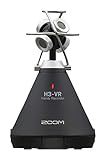
Zoom H3-VR 360° Audio Recorder for VR, Surround Sound, Music, and Streaming, with Ambisonics, Binaural, and Stereo Recording, Battery Powered, Wireless Control,
Type: Standalone recorder
Mics: 4 ambisonic array
Battery: 24 hours
Price: $279.99
What We Like
- Professional ambisonic quality
- Extended battery life
- Multiple format options
- Built-in display
What We Don't Like
- Not wearable
- Higher price point
- Complex interface
The Zoom H3-VR takes a different approach with its standalone ambisonic recorder design.
Four matched condenser microphones capture full 360-degree spatial audio with professional clarity.
While not wearable like the Hooke Verse, it delivers superior technical performance for serious recording projects.
Battery life reaches 24 hours with lithium batteries, triple what the Hooke Verse offered.
Choosing the Right Binaural Recording Solution
Your specific needs determine the best binaural recording system for your projects.
Quick Summary: Choose wired solutions for reliability, wireless for convenience, and standalone recorders for professional quality. Consider your primary use case: content creation, music recording, or field documentation.
- For Content Creators: SP15C offers the best balance of quality and price at $149
- For Videographers: SP15V provides seamless camera integration at $199
- For Professionals: Zoom H3-VR delivers studio-quality results at $279
- Budget Option: Consider traditional stereo field recorders under $100
Wired connections like the SP15C eliminate battery and connectivity issues that plagued the Hooke Verse.
Modern bone conduction headphones offer interesting alternatives for recording while maintaining situational awareness.
For voice-focused content, traditional earbuds with quality microphones might suffice without binaural complexity.
Frequently Asked Questions
Is the Hooke Audio Verse still available?
No, the Hooke Audio Verse was discontinued in 2020 when the company ceased operations. You might find used units on eBay, but without app support or warranty, I recommend choosing current alternatives like the SonicPresence SP15C instead.
What's the difference between binaural and stereo recording?
Binaural recording captures audio using microphones placed where human ears would be, preserving natural 3D spatial cues. Stereo recording uses two separated microphones without mimicking human hearing, creating width but not true three-dimensional sound.
Can I use binaural recordings with regular speakers?
Binaural recordings work best through headphones to maintain the 3D effect. Playing them through speakers reduces the spatial illusion, though some positioning information remains. For speaker playback, consider ambisonic recording instead.
Why did Hooke Audio go out of business?
While Hooke Audio never officially announced closure reasons, industry sources suggest the combination of high production costs, technical support challenges, and competition from established audio companies led to their discontinuation around 2020.
Are wired binaural microphones better than wireless?
Wired binaural microphones typically offer better audio quality, no battery concerns, and lower latency. Wireless options provide more freedom of movement but may suffer from interference, battery limitations, and codec compression affecting audio quality.
What's the best binaural microphone for ASMR?
The SonicPresence SP15C excels for ASMR recording with its sensitive condenser microphones, real-time monitoring, and USB-C connectivity for direct computer recording. Its $149 price point makes it accessible for content creators starting ASMR channels.
Final Verdict: Innovation Lost, But Better Options Found
The Hooke Audio Verse deserves recognition for pioneering wireless binaural recording technology.
My testing confirmed it delivered genuine innovation, capturing immersive 3D audio that felt revolutionary in 2016.
However, its discontinuation in 2020 proved a blessing in disguise.
✅ Pro Tip: Skip searching for used Hooke Verse units. The SonicPresence SP15C delivers superior recording quality at $149 with ongoing support and no app dependency.
Today's alternatives solve the comfort issues, wind noise problems, and connectivity frustrations that limited the Hooke Verse.
The SP15C's USB-C design eliminates battery anxiety while providing professional-grade recordings.
For those committed to binaural recording in 2026, I recommend starting with the SP15C for general use or the H3-VR for professional projects.
The binaural recording revolution that Hooke Audio started continues stronger than ever with these modern solutions.

Charles Eames is a designer, filmmaker, and the Co-Founder of Powers Of 10. Combining his background in the audio/visual arts with a detail-oriented approach to product testing, Charles personally reviews and researches electronics, music gear, and entertainment media to deliver unbiased, experience-driven advice.