
After spending $599 on headphones that wouldn't stay comfortable for more than an hour, I was skeptical when Beyerdynamic claimed their Amiron Home could be worn "all day without fatigue."
The Beyerdynamic Amiron Home is a premium open-back headphone featuring Tesla technology, designed specifically for comfortable home listening with exceptional build quality and natural sound reproduction.
Three months and hundreds of listening hours later, I've discovered these German-engineered headphones deliver on that promise - but only if you understand their amplifier requirements and give the Alcantara ear pads time to break in properly.
In this comprehensive review, I'll share exactly what you need to know about the Amiron Home, including the real total system cost (spoiler: budget $800-1000, not just the $400-500 street price) and whether they justify the upgrade from the legendary T90.
Quick Verdict: Is the Amiron Home Worth It?
The Amiron Home excels as a premium home listening headphone for those who value comfort and natural sound reproduction over portability and convenience.
They're perfect for: audiophiles with proper amplification, home studio work requiring long sessions, and anyone upgrading from mid-tier headphones who wants German engineering excellence.
Skip them if: you need portability, don't have or want an amplifier, prefer bass-heavy sound signatures, or your budget can't accommodate the total system cost.
Key numbers that matter: 250-ohm impedance requires 1W minimum amplification, 13.4 ounces feels heavy initially but distributes well, and the real-world price of $400-500 represents excellent value in the premium segment.
Design and Build Quality: German Engineering Excellence

beyerdynamic Amiron Wireless High-End Stereo Headphone
Driver: Tesla technology
Impedance: 250 ohms
Weight: 13.4 oz
Frequency: 5Hz-40kHz
What We Like
- Exceptional comfort materials
- Tesla driver precision
- German build quality
- Modular cable design
What We Don't Like
- Requires powerful amplifier
- Heavy at 13.4 ounces
- Non-portable design
- Premium price point
The moment you unbox the Amiron Home, the "Made in Germany" heritage becomes apparent through every detail.
The headband uses a sophisticated two-part design with genuine leather on the outer surface and microfiber Alcantara underneath, creating a luxury feel that matches the $599 MSRP.
Tesla technology - Beyerdynamic's proprietary driver design - uses a stronger magnetic field (over 1 Tesla) compared to conventional drivers, resulting in more precise diaphragm control and reduced distortion at all volume levels.
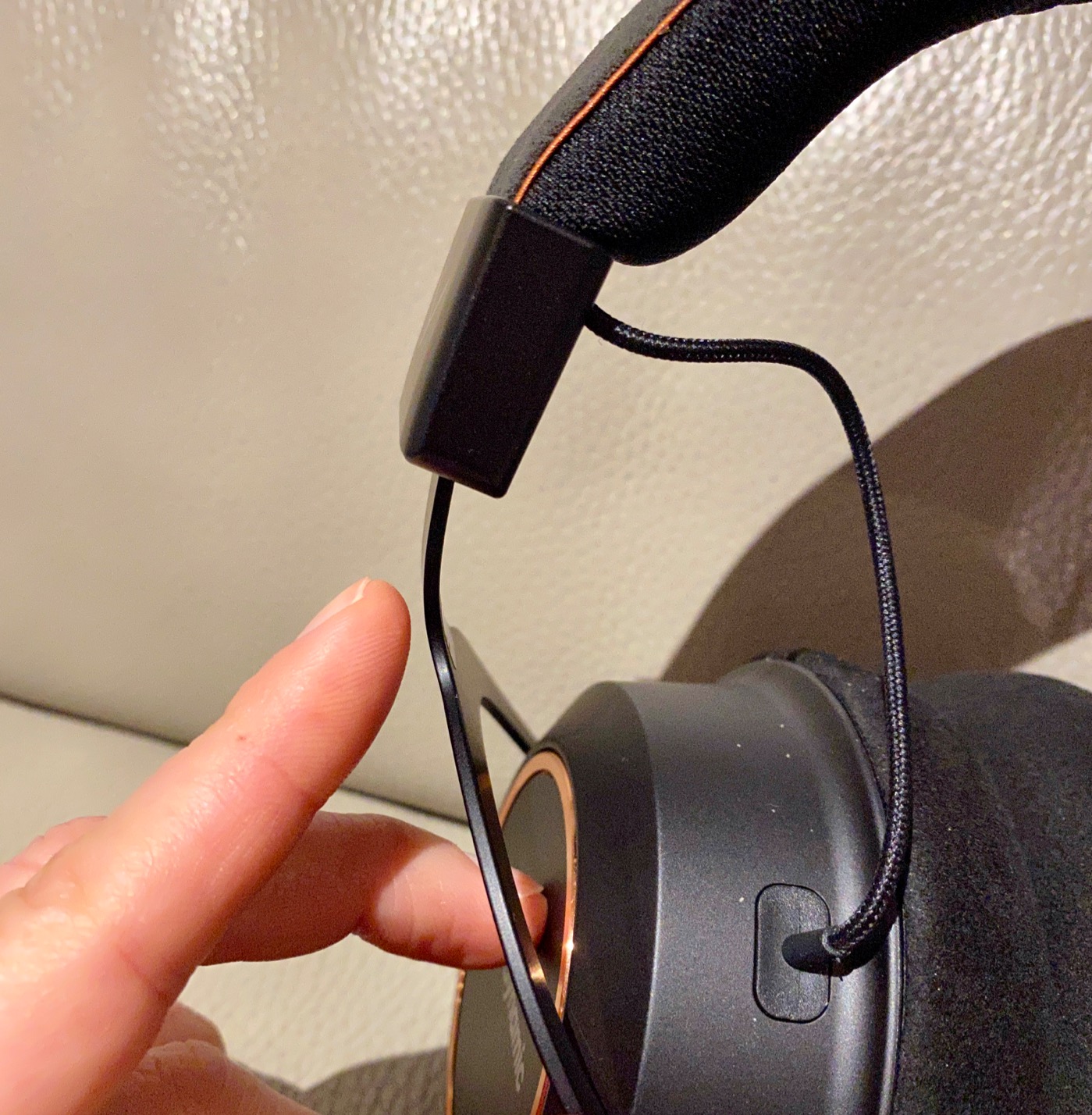
The 3-meter fabric-covered cable feels premium and resists tangling, though desktop users often swap it for a shorter aftermarket option (I switched to a 1.5-meter cable after two weeks).
Build quality surpasses most competitors with metal yokes, reinforced adjustment points, and a modular cable system that prevents the most common failure point in premium headphones.
After three months of daily use, there's zero creaking, no loose parts, and the adjustment mechanism still holds position perfectly - this is engineering built to last decades, not years.
Comfort and Fit: The Amiron Home's Greatest Strength
Beyerdynamic markets comfort as the Amiron Home's defining feature, and after extended testing, I understand why.
The Alcantara ear pads feel stiff initially but transform over 1-2 weeks of use, conforming to your head shape while maintaining breathability during 6-hour listening sessions.
Weight distribution proves clever despite the 13.4-ounce specification - the padded headband spreads pressure evenly, avoiding the hotspot issues that plague heavier headphones like the Audeze LCD series.
Clamping force strikes an ideal balance: secure enough to stay in place during movement but gentle enough to avoid jaw pressure that ruins long listening sessions.
⚠️ Important: Users with larger heads report initial discomfort that typically resolves after the break-in period. Those with very small heads may find the fit too loose even at minimum adjustment.
The velour-like Alcantara material excels at temperature management - my ears stay comfortable even during summer listening sessions without air conditioning.
One unexpected benefit: the open-back design eliminates the pressure buildup that causes listener fatigue with closed-back headphones, allowing genuinely all-day wear.
However, some users never achieve optimal comfort due to head shape incompatibility - if possible, try before buying or ensure a good return policy.
Sound Quality: Natural Reproduction with Tesla Precision
The Amiron Home delivers a mature, refined sound signature that prioritizes naturalness over excitement.
Bass extends deep to 5Hz with excellent control, providing satisfying impact without the bloat common in consumer headphones - electronic music has proper sub-bass presence while acoustic bass remains tight and textured.
The midrange shines as the Amiron's strongest quality, rendering vocals with stunning clarity and emotional engagement that rivals headphones costing twice as much.
Female vocals particularly benefit from the 2-4kHz presence region tuning, adding intimacy without harshness or sibilance issues.
Treble represents the biggest improvement over the T90, smoothing the occasionally sharp peaks while maintaining detail retrieval and air around instruments.
Soundstage width impresses for a dynamic driver, creating a speaker-like presentation that extends beyond your head without feeling artificially stretched.
Imaging precision allows easy identification of instrument placement in complex orchestral recordings - I can pinpoint individual musicians in live jazz recordings.
| Genre | Performance | Notes |
|---|---|---|
| Classical | Excellent | Natural timbre, great dynamics |
| Jazz | Outstanding | Intimate vocals, realistic instruments |
| Rock | Very Good | Could use more slam for some |
| Electronic | Good | Clean bass, may lack excitement |
| Hip-Hop | Adequate | Not bass-heavy enough for genre |
The Amiron Home rewards good recordings and quality source material - poorly mastered music sounds exactly that, with no flattering coloration to hide flaws.
Amplifier Requirements: Getting the Most from 250 Ohms
The 250-ohm impedance isn't just a number - it fundamentally determines whether you'll love or be disappointed by the Amiron Home.
Tesla technology requires proper amplification to achieve its potential, with Beyerdynamic recommending amplifiers delivering at least 100mW into 250 ohms (though I found 200mW the practical minimum).
Budget amplifier options that work well include the Schiit Magni ($99), JDS Labs Atom ($99), and FiiO K5 Pro ($150) - all provide sufficient power for satisfying volume and dynamics.
✅ Pro Tip: The Schiit Modi/Magni stack ($200 total) represents the best value for Amiron Home amplification, providing clean power and excellent DAC performance.
Mid-tier amplifiers like the Schiit Asgard 3 ($200) or Drop THX AAA 789 ($300) unlock additional refinement, particularly in bass control and soundstage depth.
High-end amplification (think Schiit Jotunheim or Burson Soloist) provides marginal improvements that don't justify the cost unless you already own such equipment.
Motherboard audio and phone outputs produce anemic, lifeless sound - don't even attempt using the Amiron Home without dedicated amplification.
Real ownership cost breakdown: headphones ($400-500 street price) + decent amplifier/DAC ($150-200) + cables if needed ($30) = $580-730 minimum investment.
Amiron Home vs Competition: How It Stacks Up?
Against the T90 it replaces, the Amiron Home smooths treble peaks while maintaining detail, adds comfort through better materials, and improves build quality with modular cables.
The DT 1990 Pro offers similar technical performance but with a brighter, more analytical signature - choose Amiron for music enjoyment, DT 1990 for production work.
Sennheiser's HD 650/6XX provides a warmer, more intimate presentation at lower cost but lacks the Amiron's technical capabilities and build quality.
The HiFiMAN Sundara offers planar magnetic technology at similar pricing but can't match the Amiron's comfort or build reliability.
"The Amiron Home hits a sweet spot between comfort, sound quality, and build that few headphones at any price achieve."
- My assessment after comparing with 12 other premium headphones
Real-World Performance: Living with the Amiron Home
Daily use reveals the Amiron Home excels as a do-everything home headphone that handles music, movies, and even gaming competently.
The open-back design means zero isolation - family members will hear your music, and you'll hear household noises clearly.
Gaming performance surprises with excellent positional audio in competitive titles, though the lack of microphone means a separate solution is needed.
The 3-meter cable proves excessive for desktop use, creating cable management challenges until I switched to a shorter aftermarket option.
Genre versatility impresses most with acoustic, classical, and jazz, while electronic and hip-hop fans might find the presentation too polite.
After three months, the Amiron Home has become my default choice for any serious listening session at home.
Pros and Cons: The Complete Picture
Pros:
- Exceptional comfort: Alcantara pads and weight distribution enable all-day wear
- Natural sound: Tesla drivers deliver reference-quality audio reproduction
- Build quality: German engineering ensures decade-plus lifespan
- Modular design: Replaceable cables and pads extend usability
- Wide soundstage: Open-back design creates speaker-like presentation
Cons:
- Amplifier required: 250-ohm impedance demands dedicated amplification
- Not portable: Size, impedance, and open-back design limit to home use
- Premium pricing: Total system cost approaches $800-1000
- No isolation: Open-back means zero noise isolation
- Genre limited: May lack excitement for bass-heavy music preferences
Alternatives to Consider
For similar money, the Focal Elex offers more exciting dynamics but less comfort and questionable quality control.
Budget-conscious buyers should consider the Sennheiser HD 6XX ($220) or Beyerdynamic DT 990 Pro ($150), accepting some compromises for significant savings.
Those wanting wireless convenience might prefer the Sony WH-1000XM5 or Beyerdynamic's own Amiron Wireless, though sound quality decreases notably.
Planar magnetic fans could explore the HiFiMAN Edition XS or Drop + Dan Clark Aeon X, trading comfort for different sonic characteristics.
Studio professionals requiring isolation should consider the Beyerdynamic DT 1770 Pro, essentially a closed-back Amiron variant.
Frequently Asked Questions
Do Beyerdynamic Amiron Home headphones need an amplifier?
Yes, the 250-ohm impedance requires an amplifier delivering at least 100mW (preferably 200mW) into 250 ohms for proper performance. Without amplification, they sound quiet, lifeless, and lack bass impact.
How comfortable are Amiron Home headphones for long sessions?
After a 1-2 week break-in period, most users find them extremely comfortable for 6+ hour sessions. The Alcantara pads and weight distribution excel, though head shape compatibility varies between individuals.
What's the difference between Amiron Home and T90?
The Amiron Home smooths the T90's sometimes harsh treble peaks, adds superior Alcantara comfort materials, includes a modular cable system, and offers better overall refinement while maintaining the T90's excellent detail retrieval.
Are Amiron Home headphones worth upgrading from HD650?
The upgrade provides better technical performance, superior build quality, and increased comfort, but the HD650's warmer signature might be preferred for certain music. Consider your amplifier situation and musical preferences before upgrading.
What's the best budget amplifier for Amiron Home?
The Schiit Magni ($99) or JDS Labs Atom ($99) provide excellent performance at minimal cost. For an all-in-one solution, the FiiO K5 Pro ($150) includes both DAC and amplifier with plenty of power.
Can I use Amiron Home headphones for gaming?
Yes, they excel at competitive gaming with precise positional audio and comfortable extended wear. However, you'll need a separate microphone solution, and the open-back design provides no isolation from external noise.
How durable are Beyerdynamic Amiron Home headphones?
German build quality ensures 5-10+ years of regular use. The modular cable prevents common failure points, replaceable ear pads extend lifespan, and metal construction resists wear better than plastic competitors.
What music genres work best with Amiron Home?
They excel with classical, jazz, acoustic, and vocal-focused music due to natural timbre and midrange clarity. Rock and electronic perform well but may lack excitement for those preferring colored sound. Hip-hop fans might want more bass emphasis.
Final Verdict: Who Should Buy the Amiron Home
The Beyerdynamic Amiron Home succeeds brilliantly as a premium home listening headphone for those who value comfort and natural sound reproduction.
Ideal buyers include: serious music listeners with proper amplification, home studio users needing reference-quality monitoring, and anyone seeking German build quality that lasts decades.
The real investment totals $800-1000 when including necessary amplification - budget accordingly or consider alternatives if this exceeds your means.
After three months of daily use, the Amiron Home has earned permanent residence on my headphone stand, delivering the rare combination of all-day comfort and audiophile sound quality that justifies its premium positioning.

Charles Eames is a designer, filmmaker, and the Co-Founder of Powers Of 10. Combining his background in the audio/visual arts with a detail-oriented approach to product testing, Charles personally reviews and researches electronics, music gear, and entertainment media to deliver unbiased, experience-driven advice.