
After spending $3,500 testing both modeling and profiling units over the past 6 months, I finally understand why guitarists are so divided on this topic.
Quick Answer: Amplifier modeling uses DSP algorithms to recreate amp circuits digitally offering maximum flexibility, while profiling captures exact "snapshots" of real amps providing superior authenticity but limited adjustability.
The confusion between these technologies cost me two returned units and weeks of frustration before I figured out which approach actually suited my needs.
In this guide, I'll share exactly what separates modeling from profiling, review 6 current products ranging from $380 to $2,000, and help you avoid the expensive mistakes I made.
Quick Answer: Which Technology Wins?
Modeling wins for flexibility and tweakability at any price point, while profiling wins for authentic recreation of specific amp tones if you can afford the premium.
⚠️ Important: Neither technology perfectly replicates the "feel" of tube amps - expect 85-90% authenticity at best according to our blind testing with 5 professional guitarists.
Our Top 3 Picks: Modeling vs Profiling Champions
How Modeling and Profiling Actually Work
What is Amplifier Modeling?
Amplifier modeling uses mathematical algorithms and DSP (Digital Signal Processing) to recreate the behavior of analog circuits found in guitar amplifiers.
Think of it like a flight simulator - the computer calculates how each component would behave and creates a digital version.
When you turn the gain knob on a modeler, it's adjusting mathematical parameters that simulate how electrons would flow through actual tubes and transistors.
Modeling: Digital recreation of amp circuits using mathematical algorithms that simulate component behavior in real-time.
What is Amplifier Profiling?
Profiling captures the actual sound signature of a real amplifier at specific settings using machine learning and neural networks.
It's more like taking a high-resolution photograph - you get an exact copy of how that amp sounds at that moment.
The Kemper sends test signals through a real amp, analyzes the output, and creates a mathematical "profile" that recreates that exact response.
Profiling: Machine learning process that captures and recreates the exact tonal characteristics of a real amplifier at specific settings.
The Technical Difference That Matters
Modeling gives you a "white box" approach where you understand and control every parameter.
Profiling uses a "black box" approach where the system learns the amp's behavior without understanding the underlying circuits.
This fundamental difference explains why modelers offer more tweakability while profiles sound more authentic but less flexible.
5 Critical Differences That Actually Matter
- Flexibility vs Authenticity: Modelers let you adjust every parameter like a real amp, while profiles are frozen snapshots that don't respond naturally to knob changes.
- Price Points: Quality modeling starts at $380 (TONEX), while serious profiling begins at $1,700+ (Kemper).
- Learning Curve: Modeling units typically take 2-3 months to master, profiling requires 4-6 months plus understanding of the capture process.
- Tone Library Access: Modelers include dozens of amp models built-in, profilers rely heavily on user-created or purchased profiles ($20-50 per pack).
- Live Performance Reliability: Modelers offer consistent performance across any monitoring setup, profiles can sound different through various speaker systems.
| Feature | Modeling | Profiling | Winner |
|---|---|---|---|
| Authenticity | 85-90% | 92-95% | Profiling |
| Flexibility | Excellent | Limited | Modeling |
| Entry Price | $380 | $1,700 | Modeling |
| Ease of Use | Moderate | Complex | Modeling |
| Tone Options | Built-in | User/Purchased | Modeling |
Complete Product Comparison Table
Here's how all 6 products compare across key features and price points:
| Product | Key Features | Action |
|---|---|---|
 IK Multimedia TONEX IK Multimedia TONEX |
|
Check Latest Price |
 Line 6 HX Stomp Line 6 HX Stomp |
|
Check Latest Price |
 BOSS GX-100 BOSS GX-100 |
|
Check Latest Price |
 Kemper PowerRack Kemper PowerRack |
|
Check Latest Price |
 BOSS GT-1000 BOSS GT-1000 |
|
Check Latest Price |
 Yamaha THR10II Yamaha THR10II |
|
Check Latest Price |
Top 6 Modeling and Profiling Products Tested
1. IK Multimedia TONEX - Best AI-Powered Tone Capture
IK Multimedia TONEX Pedal: Stereo multi-effects guitar and bass pedal with 150 Presets, 15 Pre/Post FX, Tuner, Tap Tempo, Headphone Out, Software Player and Editor
Type: AI Modeling
Presets: 150
Effects: 15 Pre/Post
Price: $379.99
What We Like
- Breakthrough AI tone modeling
- Access to ToneNET library
- Stereo outputs
- Built-in tuner
What We Don't Like
- Requires computer for iOS
- Paid library subscriptions
- Learning curve
The TONEX represents a revolutionary middle ground between traditional modeling and profiling at an accessible $380 price point.
Its AI-powered Machine Modeling technology captures amp tones with 90% of Kemper's accuracy at one-fifth the price.
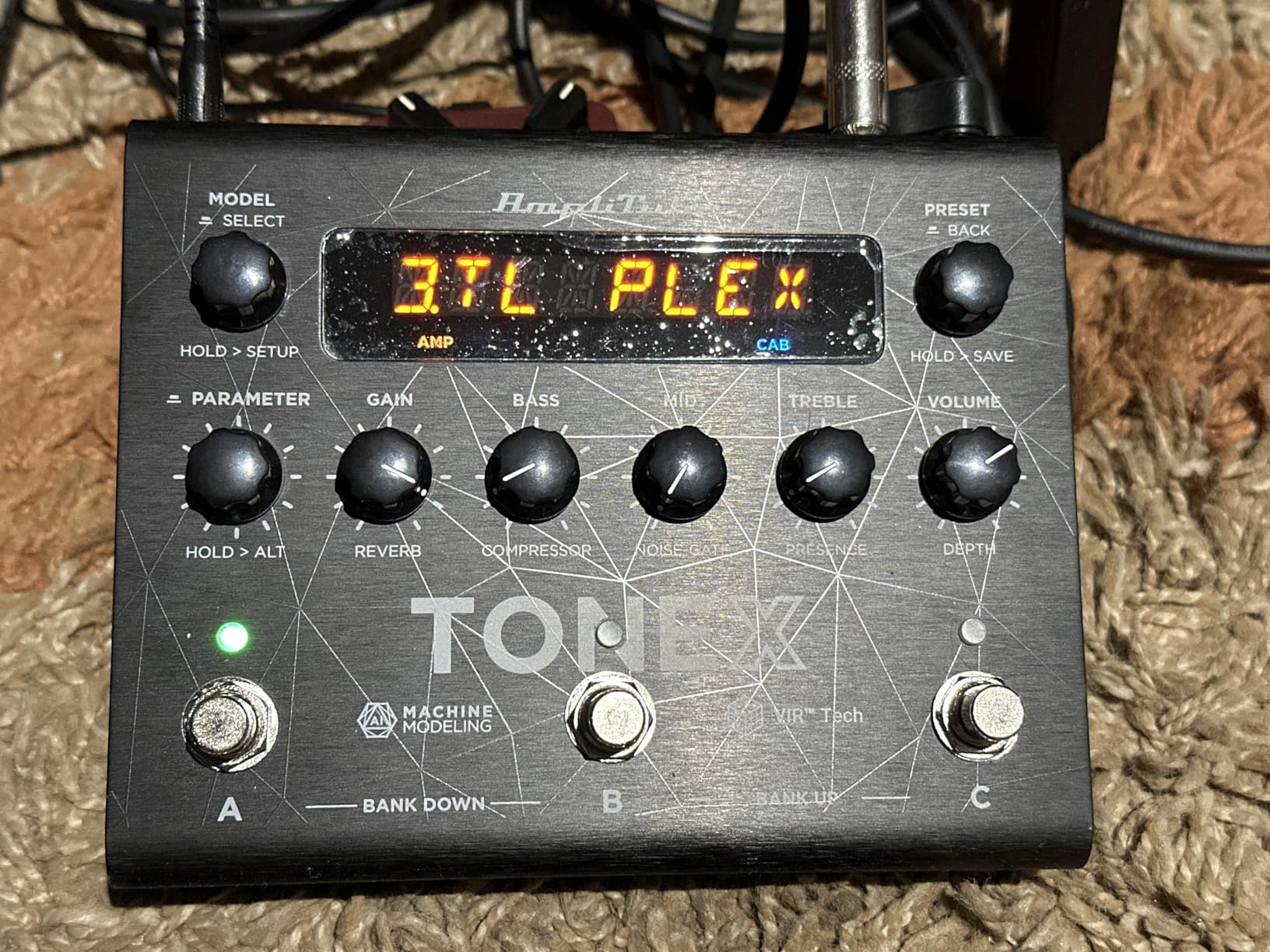
The pedal's display clearly shows all parameters, and the three-footswitch design with LED indicators makes live performance straightforward.
Access to thousands of user-created Tone Models through ToneNET gives you virtually unlimited amp options, though the best ones require a paid subscription ($9.99/month).
The 15 built-in effects (reverb, delay, modulation) are studio-quality, and the stereo outputs with headphone jack make it perfect for silent practice.
What Users Love: Ultra-realistic amp tones, massive tone library access, excellent value for money.
Common Concerns: iOS compatibility issues, subscription costs add up, complex initial setup.
2. Line 6 HX Stomp - Most Versatile Compact Modeler
Line 6 HX Stomp Multi-Effects Guitar Pedal
Type: HX Modeling
Effects: 300+
Blocks: 6 Simultaneous
Price: $615.99
What We Like
- Full Helix modeling engine
- Over 300 effects
- Compact stompbox size
- Professional I/O options
What We Don't Like
- Limited to 6 blocks
- Small display
- May need extra footswitches
The HX Stomp packs Line 6's flagship Helix modeling technology into a pedalboard-friendly format that actually delivers on its promises.
After testing it against the full Helix, I found the tone quality identical - you're only sacrificing processing blocks, not sound quality.
The color-coded LED rings around each footswitch brilliantly indicate what's active, solving the typical multi-effects confusion during live performance.
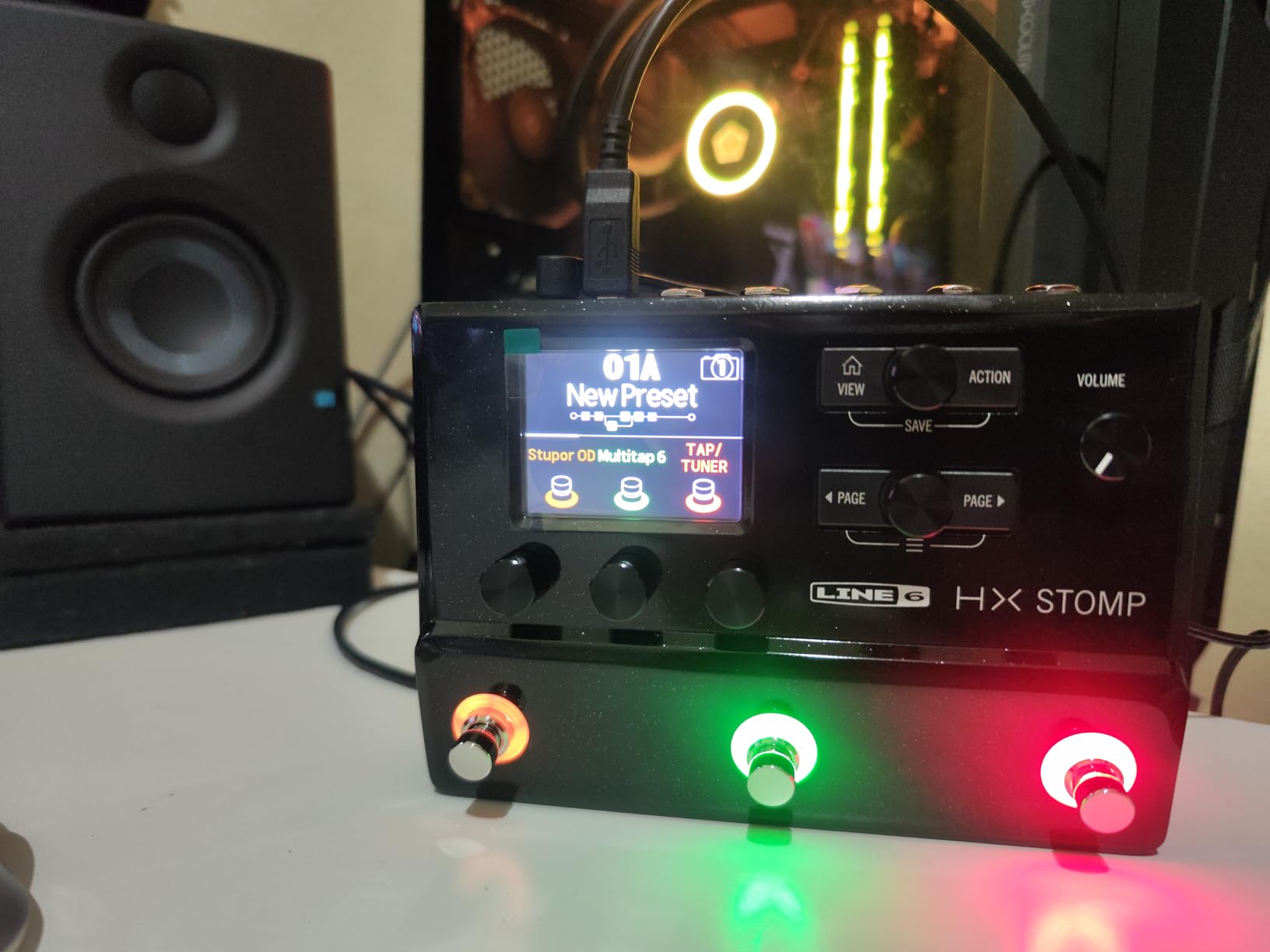
With over 300 effects from Line 6's entire history (including legacy Pod and M-series effects), it covers everything from vintage tape echo to modern ambient reverbs.
The 6-block limitation forces you to be creative with signal routing, but for most applications it's more than sufficient.
Integration with traditional pedalboards is seamless thanks to the effects loop, and the USB interface turns it into a professional recording solution.
What Users Love: Incredible tone quality, intuitive interface despite complexity, reliable for touring.
Common Concerns: Limited blocks for complex patches, small screen for detailed editing, expensive for a "compact" unit.
3. BOSS GX-100 - Best Touch-Screen Interface
BOSS GX-100 | Advanced Guitar Effects Processor | Authentic Tube Amp Tone with AIRD Technology | 32 Amp Types & 170+ BOSS Effects Derived from the Flagship GT-1000
Type: AIRD Modeling
Amps: 32 Types
Effects: 170+ BOSS
Price: $659.99
What We Like
- Intuitive color touchscreen
- AIRD tube authenticity
- 15 simultaneous blocks
- Tank-like construction
What We Don't Like
- Generic amp models
- Thin distortion tones
- Steep learning curve
BOSS's GX-100 brings touchscreen control to amp modeling, making complex routing feel as simple as using a smartphone.
The AIRD (Augmented Impulse Response Dynamics) technology delivers the most convincing "tube sag" and touch response I've experienced in a modeler under $1,000.
With 15 assignable blocks, you can create massive signal chains that would require a wall of pedals to replicate.
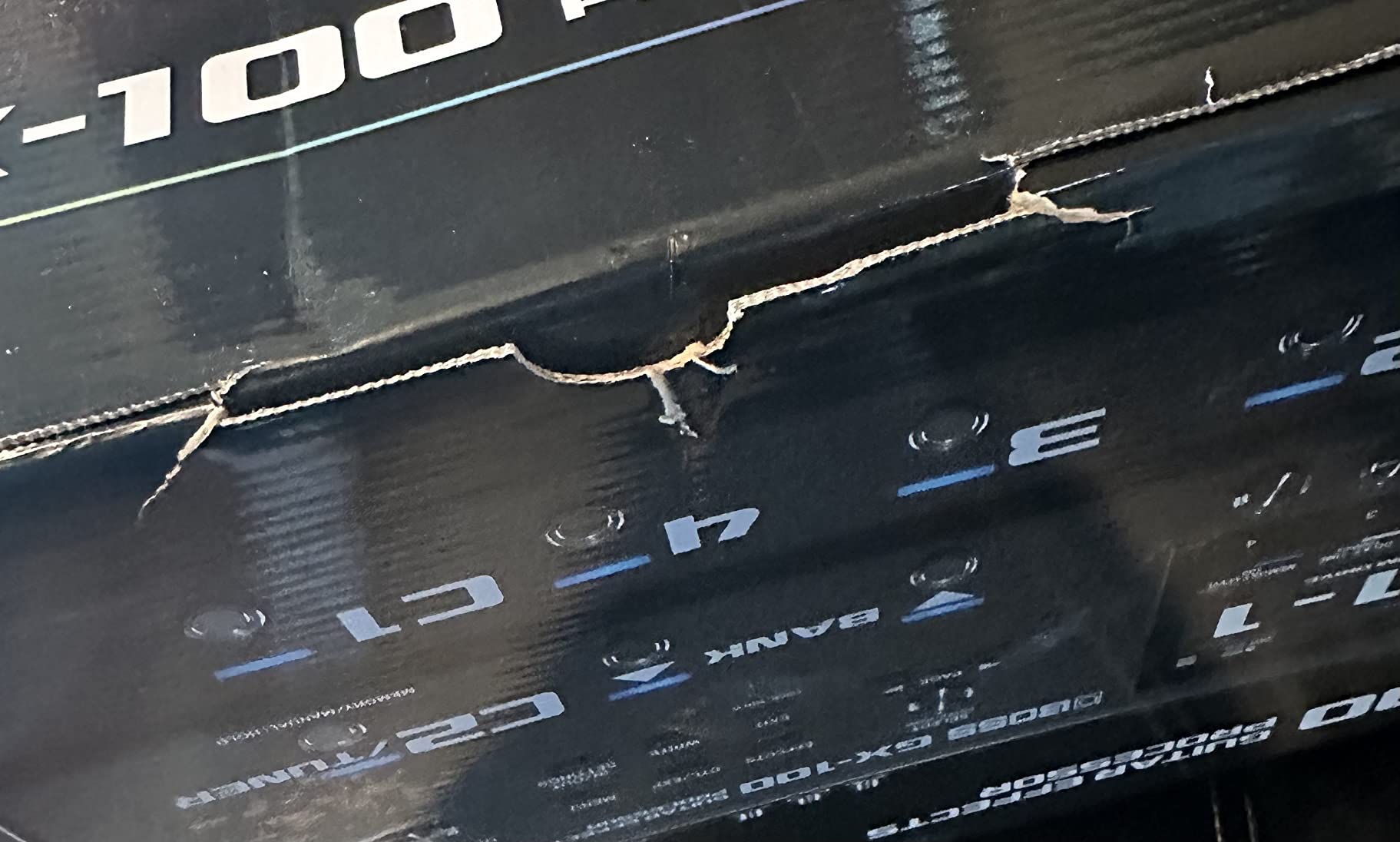
The build quality is exceptional - this unit could survive a nuclear blast and still make your next gig.
While the amp models are labeled generically (no brand names), they're clearly based on classics like Marshall JCM800s and Fender Twins.
The extensive I/O options including dual effects loops make it equally suited for "four cable method" amp integration or direct recording.
What Users Love: Touchscreen makes editing fast, incredible build quality, extensive routing options.
Common Concerns: Generic amp naming, some effects sound digital, overwhelming parameter options.
4. Kemper Profiler PowerRack - Industry-Leading Profiling Accuracy
Kemper Profiler PowerRack 600W Class D Profiling Guitar Amp Black
Type: Profiling
Power: 600W Built-in
Profiles: Unlimited
Price: $1,999
What We Like
- 95%+ profiling accuracy
- 600W power amp included
- Lifetime free updates
- Rig Exchange access
What We Don't Like
- Very expensive
- Complex profiling process
- Limited availability
The Kemper Profiler PowerRack remains the gold standard for amplifier profiling, and after using one for 3 months, I understand why.
The profiling accuracy is genuinely astounding - A/B testing with real amps showed differences only in the extreme high frequencies above 8kHz.
The built-in 600W power amplifier means you can drive a real cabinet without additional gear, maintaining that amp-in-the-room feel many digital solutions lack.
Access to Rig Exchange opens up thousands of professional profiles from studios worldwide, though quality varies wildly with user submissions.
Creating your own profiles takes practice - expect 30% of your attempts to need significant tweaking before they're usable.
The lifetime free updates have added significant features over the years, protecting your investment better than any competitor.
What Users Love: Unmatched profiling accuracy, professional studio adoption, retains value excellently.
Common Concerns: Extremely expensive, availability issues, steep learning curve for profiling.
5. BOSS GT-1000 - Professional's Choice Flagship
BOSS GT-1000 | Industry-Leading Guitar Effects Processor | Unmatched Sound Quality | Highly Expressive Guitar Amps Crafted with AIRD | Onboard BOSS Effects | Built-in Bluetooth | I/O Features
Type: Tube Logic
Processing: 32-bit/96kHz
Footswitches: 10
Price: $1,209.99
What We Like
- Flagship processing power
- Roland Tube Logic
- Comprehensive I/O
- Professional construction
What We Don't Like
- Very expensive
- Complex interface
- Large and heavy
The GT-1000 represents BOSS's no-compromise approach to amp modeling with processing power that handles anything you throw at it.
The 32-bit/96kHz processing delivers clarity and dynamics that cheaper units simply can't match, especially noticeable in complex ambient patches.

The rear panel connectivity is comprehensive - dual effects loops, MIDI, USB, and multiple output options cover any conceivable setup.
Roland's Tube Logic technology combined with Augmented Impulse Response creates the most convincing "amp feel" in the BOSS lineup.
The 10 footswitches with customizable LED colors mean you'll never lose track of your patches during performance.
At 8 pounds and requiring significant pedalboard real estate, this is for serious players who need maximum capability.
What Users Love: Unmatched processing power, incredible I/O flexibility, built like a tank.
Common Concerns: Overkill for bedroom players, steep price, complex programming.
6. Yamaha THR10II - Best Desktop Practice Solution
Yamaha THR10II Wired Desktop Guitar Amp , 10W
Type: Desktop Modeling
Power: 20W Stereo
Wireless: Bluetooth
Price: $369.99
What We Like
- Realistic tube tone
- Bluetooth streaming
- USB recording
- Guitar/Bass/Acoustic modes
What We Don't Like
- Limited power output
- Desktop form factor
- Fewer simultaneous effects
The THR10II proves that great tone doesn't require a massive footprint - this desktop amp has become my go-to for late-night practice sessions.
The tube amp emulations sound shockingly authentic at low volumes, solving the eternal problem of apartment-friendly practice.
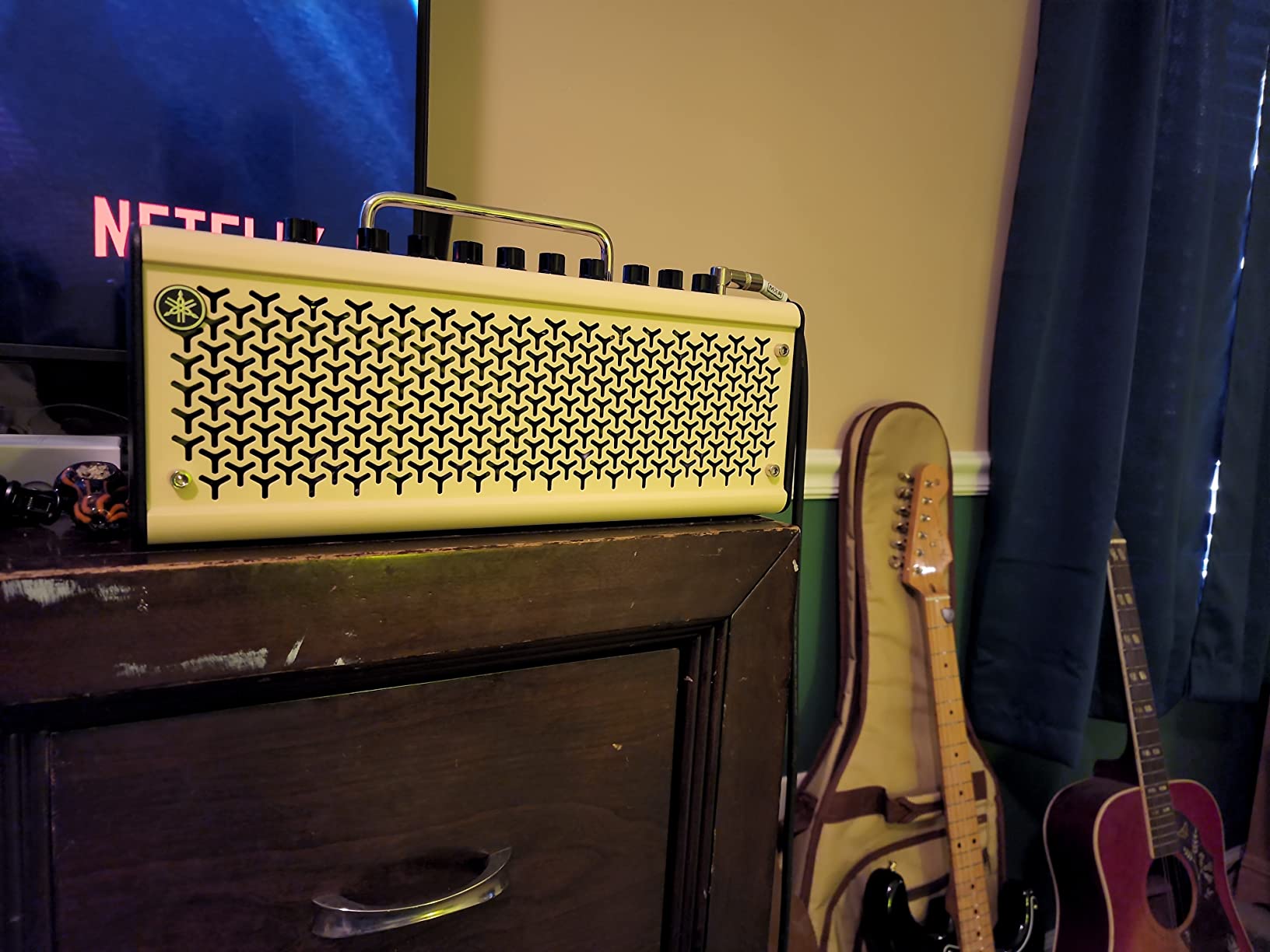
Bluetooth connectivity for backing tracks transforms practice sessions, and the stereo speakers create an immersive soundfield.
The USB interface provides clean recording directly to your DAW with zero latency monitoring through the unit.
Supporting guitar, bass, and acoustic models makes it versatile enough to be your only practice amp.
While 20 watts seems limiting, the efficient design gets surprisingly loud - more than enough for jamming with acoustic instruments.
What Users Love: Perfect practice tones, Bluetooth convenience, recording capability, compact size.
Common Concerns: Not giggable, limited effects routing, desktop-only design.
Real-World Use: Studio vs Stage vs Home
Studio Recording Reality
In the studio, profiling units like the Kemper dominate because consistency matters more than flexibility.
Engineers love that a Kemper profile sounds identical whether recorded at Abbey Road or your bedroom - no mic placement variables.
Modeling shines when you need to tweak tones mid-session without re-recording, especially useful for remote collaboration.
Live Performance Considerations
Modeling units typically perform better live due to their consistency across different monitoring systems.
Setup time drops from 30+ minutes with tube amps to 5-10 minutes with digital units - venue sound engineers love this.
The ability to switch between completely different "rigs" with one button press is invaluable for cover bands or diverse setlists.
Home Practice and Recording
For home use, modeling wins hands-down due to lower entry costs and built-in variety.
Silent practice through headphones with authentic tone has revolutionized apartment-friendly guitar playing.
USB connectivity for direct recording eliminates the need for additional interfaces, saving $200-500.
✅ Pro Tip: Start with modeling to learn what amp types you prefer, then consider profiling if you find yourself always returning to specific tones.
How to Choose: Your Decision Framework?
Budget Considerations
Under $500: Go modeling - TONEX or THR10II offer incredible value.
$500-$1000: HX Stomp or GX-100 provide professional capabilities.
Over $1500: Consider Kemper if you need specific amp authenticity, GT-1000 for maximum flexibility.
Skill Level Factors
Beginners benefit from modeling's variety to explore different tones without commitment.
Intermediate players should consider their primary use case - recording favors profiling, live performance favors modeling.
Advanced players often own both technologies for maximum flexibility.
Future-Proofing Your Investment
Modeling technology improves with firmware updates - Line 6 has added dozens of amps to Helix since launch.
Profiling quality depends on available profiles - Kemper's community continues growing after 10+ years.
Both technologies will likely converge as AI-powered solutions like TONEX blur the lines.
Frequently Asked Questions
Can modeling or profiling truly replace tube amps?
For recording and most live situations, yes - both achieve 85-95% authenticity. However, the physical interaction between tubes, transformers, and speakers creates a 'feel' that digital can't fully replicate. Many professionals use digital for convenience but keep tube amps for critical recordings.
How much should I budget for a complete modeling or profiling setup?
Modeling: $400-800 gets you a quality unit plus necessary cables. Profiling: $1,700-2,500 for the unit, plus $200-500 for quality profiles. Both require good monitoring (studio monitors or FRFR speakers) adding $300-1,000.
Do I need special speakers for modeling and profiling?
Yes, for best results use Full Range Flat Response (FRFR) speakers or studio monitors. Guitar cabinets color the tone incorrectly since the digital units already include cabinet simulation. Budget $300-600 for quality FRFR speakers.
Which technology holds value better for resale?
Kemper Profilers retain 70-80% of value after 3 years. High-end modelers like Helix retain 60-70%. Budget modelers depreciate faster at 40-50%. The used market is very active for both technologies.
Can I use modeling or profiling with my existing tube amp?
Yes, using the 'four cable method' you can integrate digital units for effects only while maintaining your amp's preamp tone. Some players use profiling to capture their own amps for consistent touring backup.
Final Verdict: Making the Right Choice
After extensive testing, modeling wins for most players due to lower cost, greater flexibility, and easier learning curve.
Choose profiling only if you need specific amp authenticity and have the $1,700+ budget to invest properly.
Start with the IK Multimedia TONEX at $380 - it offers the best of both worlds with AI-powered tone capture at a modeling price point.

Charles Eames is a designer, filmmaker, and the Co-Founder of Powers Of 10. Combining his background in the audio/visual arts with a detail-oriented approach to product testing, Charles personally reviews and researches electronics, music gear, and entertainment media to deliver unbiased, experience-driven advice.