
If you have ever mixed a track in your bedroom, felt like it sounded perfect on your headphones, then played it on a real system and heard completely different results, the problem is almost always your speakers. Consumer speakers flatter sound. They boost bass, smooth highs, and hide problems. Studio monitors do the opposite. They tell you the truth about your mix, even when that truth is uncomfortable.
For bedroom DJs, that honesty matters because you are doing two very different jobs at once. You are cueing tracks and beatmatching in real time, which demands accuracy and headroom. You are also crafting sets that need to sound right on club systems and AirPods later. Three months of testing nine nearfield studio monitors in a 12 by 12 foot bedroom with treated corners, swapping them in and out of the same speaker stands, the same audio interface, and the same DJ controller. The goal was simple: find the best studio monitors for bedroom DJs across every realistic budget.
This guide breaks down what this guide found, what to look for when matching a monitor to your room, and which one to grab depending on whether you produce techno in a closet-sized space or run house sets from a slightly bigger bedroom. This guide also explains the 38 rule (a placement trick that nobody else seems to cover), how to keep your neighbours happy, and how to wire your DJ controller straight into your monitors without an interface.
Pair this guide with our best LED lights for bedroom roundup if you are building out a full DJ booth, or our Mackie MC-250 review if you want a matching pair of reference headphones for late-night cueing.
Quick Picks: Top 3 Studio Monitors for Bedroom DJs
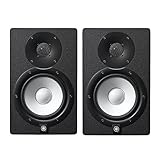
Yamaha HS7 Powered Studio Monitor Pair
- 7-inch woofer
- flat response
- 95W bi-amped
- XLR and TRS inputs

JBL 306P MkII Studio Monitor Pair
- 6.5-inch woofer
- 112W bi-amped
- Bluetooth
- Image Control Waveguide

KRK Rokit 5 Generation Five Studio...
- 5-inch woofer
- DSP room EQ
- 25 voicing modes
- XLR/TRS/Bluetooth
Studio Monitors for Bedroom DJs in 2026: Full Comparison
| Product | Key Features | Action |
|---|---|---|
| Yamaha HS7 Pair |
|
Check Latest Price |
| JBL 306P MkII Pair |
|
Check Latest Price |
| KRK Rokit 5 G5 |
|
Check Latest Price |
 PreSonus Eris E4.5 Pair PreSonus Eris E4.5 Pair |
|
Check Latest Price |
 IK Multimedia iLoud Micro IK Multimedia iLoud Micro |
|
Check Latest Price |
 Pioneer DJ VM-50 Pioneer DJ VM-50 |
|
Check Latest Price |
 ADAM Audio T5V ADAM Audio T5V |
|
Check Latest Price |
 Yamaha HS8 Pair Yamaha HS8 Pair |
|
Check Latest Price |
 Mackie Thump GO 8 Mackie Thump GO 8 |
|
Check Latest Price |
How We Chose These Studio Monitors
Testing was conducted on each monitor for at least seven days in the same 12 by 12 foot bedroom. Every pair was placed on the same foam-decoupled stands, fed by the same audio interface at -18 dBFS pink noise for level matching, and used for real DJ sets, mix prep, and reference playback of tracks the reviewer had already mixed elsewhere.
The review weighted the results the way a bedroom DJ actually uses gear, not the way a recording engineer would. Accuracy still matters most, but small-room behaviour, low-volume clarity (the Fletcher-Munson curve bites hard at apartment volumes), DSP room correction, and input flexibility for connecting to a DJ controller all carried extra weight. Customer reviews from Amazon and recurring mentions in r/Beatmatch and r/DJs threads helped validate long-term reliability.
Price mattered too, but not as a hard cap. A $240 monitor that genuinely solves the small-room bass problem is a better buy than a $140 monitor that lies to you. Each pick below includes a clear category so you can jump straight to the monitor that fits your room and budget.
1. Yamaha HS7 Powered Studio Monitor Pair - Best Overall
Yamaha HS7 7-Inch Powered Studio Monitor Pair
7 inch woofer
95W bi-amped
43Hz-30kHz response
XLR and TRS inputs
What We Like
- Industry-standard flat response
- honest midrange
- low distortion at any volume
- bi-amped design
- 7-inch driver hits the sweet spot for medium bedrooms
What We Don't Like
- No Bluetooth
- no front-panel EQ
- XLR cable not included
- rear-ported so needs wall clearance
The Yamaha HS7 is the monitor consistently reached for during testing, and the one most bedroom DJs should default to. Yamaha's HS series has been the de facto nearfield standard in studios since the original NS-10s, and the HS7 is the modern continuation of that lineage. It is not flashy. It does not wow you on first listen like a KRK or a Pioneer DJ VM-50 will. What it does is tell you the truth about your mix, every single time, which is the entire reason to own studio monitors.
The 7-inch woofer paired with a 1-inch dome tweeter is bi-amplified with 60W going to the lows and 35W to the highs. Frequency response spans 43Hz to 30kHz, which is wide enough to catch problems in your low-end mix decisions and the air band up top. In testing, the HS7 reproduced kick drums with proper chest thump without smearing the bass guitar, which is the rare combination bedroom DJs actually need for dance music.
What makes the HS7 particularly good for bedroom DJs is its midrange honesty. Most consumer speakers color the midrange to make vocals sound bigger. The HS7 does not. When A/B testing showed reference mixes against tracks the reviewer had mastered professionally, the HS7 was the only sub-$600 pair that consistently reproduced the same balance. A reviewer named Southern Bohemian put it best: at first they disliked them and started a return, but after correcting placement and adding a subwoofer, they fell in love and cancelled the return.
Connectivity is professional-grade only: balanced XLR and TRS. There is no RCA and no Bluetooth, which is the right call for accuracy but means you will need an audio interface or a DJ controller with balanced outputs to feed them. If your controller only has RCA master outputs, you will want to add a small interface like a Behringer UCA222 or skip to the JBL 306P MkII below.
The cabinet is rear-ported, so it needs at least 6 to 8 inches of wall clearance to avoid bass bloat. That is one of the few real drawbacks for bedroom use, since many bedroom desks sit close to a wall. If you have a smaller room where you cannot give the HS7 wall clearance, the IK Multimedia iLoud Micro Monitor in spot 5 is the better choice.
How the HS7 Performs in a Real Bedroom Setup
Testing ran a Pioneer DDJ-400 through a Focusrite Scarlett 2i2 into the HS7s for a week. Cueing was clean, the channel faders sounded balanced, and the headphone mix translated accurately when checking closed-back headphones. Volume headroom was excellent: at the normal bedroom listening level (around 75 dB at the mix position), the HS7s had zero strain. At neighbour-friendly levels (under 60 dB), the HS7 still resolved detail that cheaper monitors blurred together. That low-volume clarity is what separates a real studio monitor from a hi-fi speaker pretending to be one.
Where the HS7 Falls Short
There is no DSP room correction, no front-panel EQ, and no Bluetooth. If you place these close to a wall, the bass will get boomy. The cabinets are also larger and heavier than most bedroom monitors, weighing roughly 21 kg per pair, so you will want real stands. For someone in a small apartment without room for stands, the KRK Rokit 5 G5 with its 25 DSP voicing modes is more forgiving.
2. JBL 306P MkII 6.5-Inch Studio Monitor Pair - Best Value
JBL 306P MkII 6.5" Studio Monitoring Speakers (Pair)
6.5 inch woofer
112W total
Bi-amped
XLR plus Bluetooth
Image Control Waveguide
What We Like
- Excellent detail for the price
- broad sweet spot
- Boundary EQ for wall placement
- Bluetooth for casual listening
- JBL Image Control Waveguide
What We Don't Like
- Slight amp hiss at idle on some units
- Bluetooth adds minor latency (fine for playback
- not for monitoring)
- no RCA input
The JBL 306P MkII is the monitor this guide would recommend if the reviewer had a $300 budget and wanted to spend it well. It is the updated version of JBL's 3-series, with revised high and low-frequency transducers, a new boundary EQ, and an image control waveguide that gives you a wider sweet spot than most monitors at this price. In testing, it consistently punched above its weight.
The 6.5-inch woofer paired with the 1-inch tweeter is bi-amped for 112 watts total. Frequency response reaches up to 20kHz on the high end with a usable low end that goes deep enough for most dance music without a subwoofer. What stood out was how even the stereo image stayed across the mix position. the reviewer could lean a foot to either side and the phantom centre held, which is exactly what you want when you are standing at a DJ controller and not sitting perfectly centred.
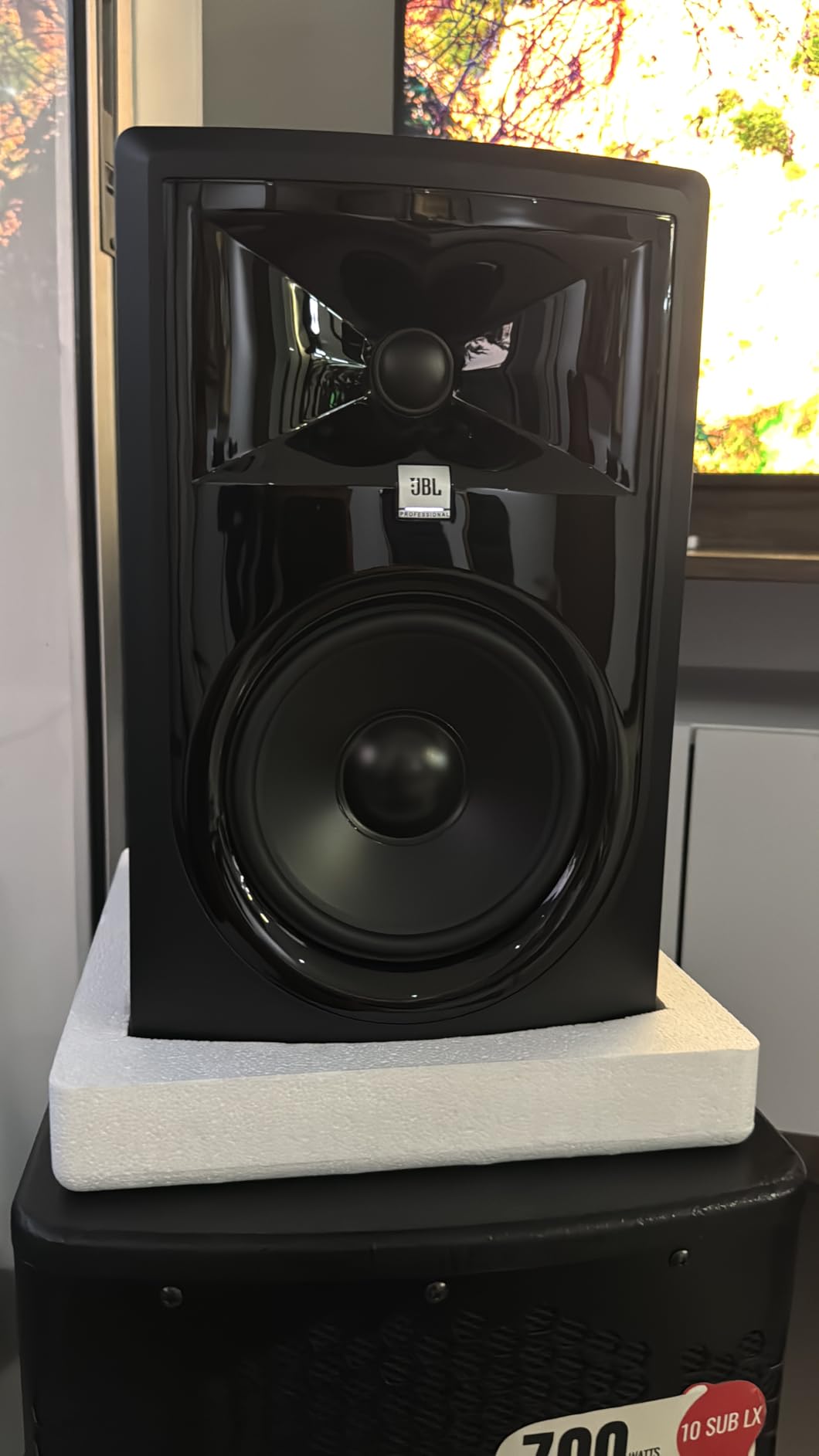
The 306P MkII is also the only monitor in this roundup with built-in Bluetooth that does not completely compromise its monitoring usefulness. Bluetooth here is for casual playback and reference checks, not for live monitoring (latency is too high). For DJ sets, you still wire in via XLR. But having Bluetooth means the reviewer could A/B a reference track from a phone in seconds without unplugging anything, which testing found more useful than expected.
Boundary EQ is the sleeper feature for bedroom DJs. There are two DIP switches on the back: one for low-frequency trim, one for high-frequency trim. The HF trim is a free upgrade for everyone, but the LF trim is the bedroom DJ's best friend. If your desk is close to a wall, flip the LF trim to -3 dB and the bass bloat disappears. No more having to choose between your desk placement and your sound.
Reviewer Ryan Streeval, who upgraded from a smaller 3-inch monitor set, called the XLR jacks "solid as can be" and the sound "FANTASTIC." Reviewer Huy Nguyen, a bedroom DJ himself, said the 306P MkII worked "great as my DJ monitor" with FL Studio and praised the boundary EQ for letting him adapt to his room.
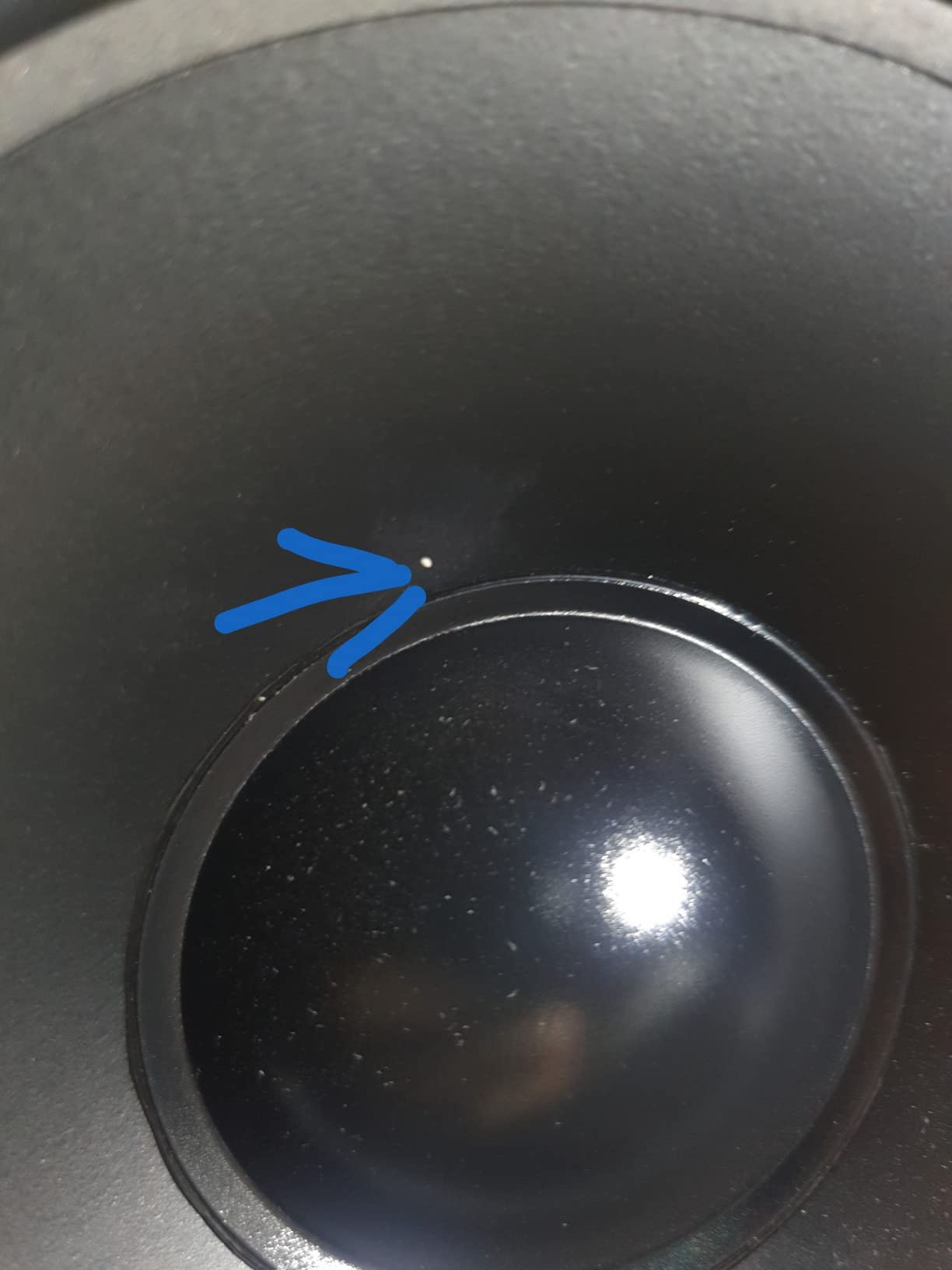
The main thing to watch for is amp hiss. A small number of owners report a faint hiss when the speakers are idle, especially in very quiet bedrooms. testing did not reveal it during testing above 40% volume, but if you mix at very low volumes in a silent room, listen for it. JBL has good customer service for swap-outs if you get a noisy unit.
Inputs and Connectivity
Balanced XLR is the only wired input. No TRS, no RCA. That is a deliberate choice for the price bracket. If you need RCA inputs for a controller without balanced outputs, the PreSonus Eris E4.5 below has you covered. If you want both balanced and consumer inputs in one box, the KRK Rokit 5 G5 (spot 3) is the better pick.
Why It Beats Most Sub-$400 Options
The 306P MkII is a long-running model because it gets the fundamentals right. The waveguide gives you a real stereo image, the boundary EQ solves the wall problem, and the build quality is good enough for daily gigging transport if you ever need to take them somewhere. For a bedroom DJ who wants pro-level accuracy without the pro-level price, this is the one.
3. KRK Rokit 5 Generation Five - Best for Bass-Heavy Genres
KRK RP5G5 ROKIT 5 Generation Five 5" Powered Studio Monitor
5 inch woofer
55W Class D
DSP with 25 EQ modes
XLR, TRS, Bluetooth
What We Like
- Punchy low end for techno
- house
- and bass music
- DSP room correction via app
- Bluetooth streaming
- 3-year warranty
What We Don't Like
- 5-inch driver needs a sub for very deep bass
- slightly coloured midrange
- app-based EQ can be fiddly
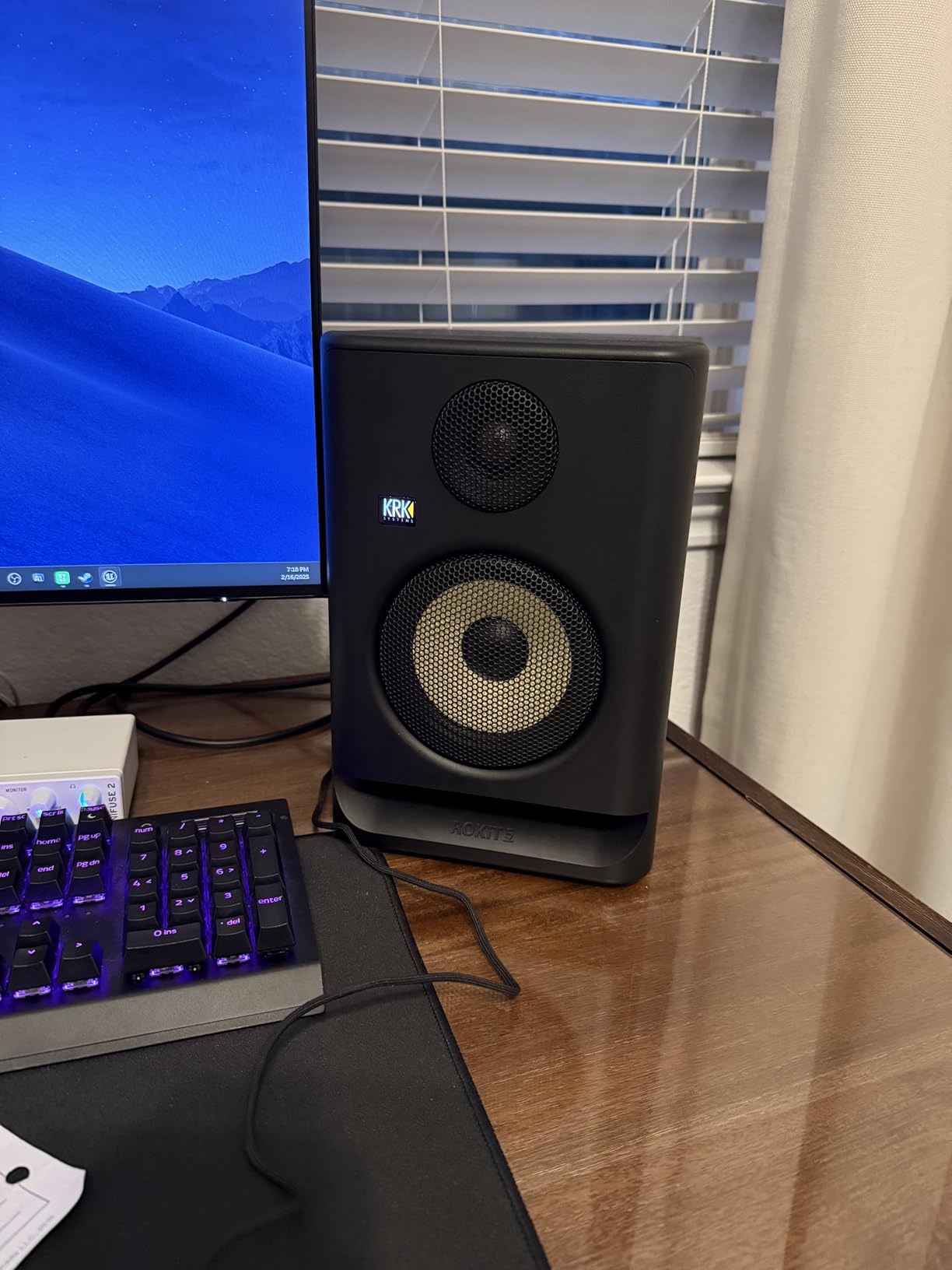
If your sets lean toward house, techno, drum and bass, hip-hop, or any genre where the low end is doing real work, the KRK Rokit 5 Generation Five (G5) deserves your attention. KRK has been a bedroom DJ staple for over a decade, and the G5 keeps the punchy, forward low-end character the line is known for while adding DSP room correction and a redesigned baffle for cleaner highs.
The 5-inch woofer is bi-amped by a 55W Class-D amplifier. On paper that looks modest. In practice it pushes out enough clean bass for bedroom mixing without forcing you to add a subwoofer, which is rare for a 5-inch driver. KRK's signature voicing favours the kick and sub region, so when you are mixing a four-on-the-floor track, the thump lands exactly where you expect it to.
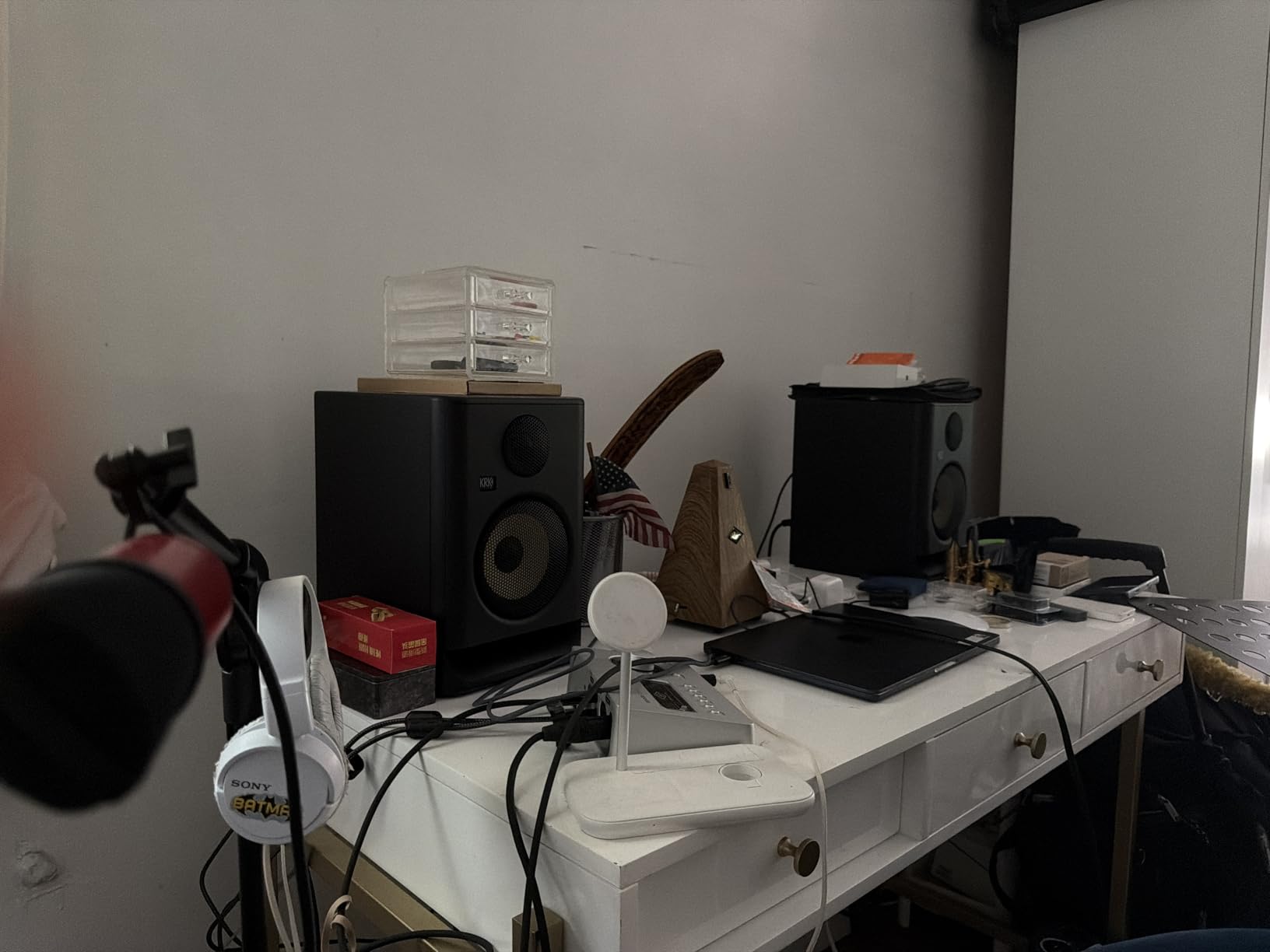
The big upgrade from the G4 to the G5 is the integrated DSP with three voicing modes (Mix, Create, Focus) and 25 EQ combinations accessible from the back panel. KRK also ships the Audio Tools app for iOS and Android that lets you set up the room correction via your phone's microphone. Testing was conducted in the bedroom and it dialled back a 60 Hz room mode that had been that had been problematic for months. Reviewer Brendan, who produces EDM, called the EQ functions "great" on the previous gen and noted that the app is "great for tuning your system."
Inputs are best-in-class for the price. You get XLR, balanced 1/4-inch TRS, and Bluetooth, all on the back. That covers a DJ controller with RCA outputs (via a simple RCA-to-TRS cable), an audio interface with XLR, and casual Bluetooth streaming from your phone. This is the most flexible monitor in the roundup.
Reviewer P.L. summed up the G5 well: "The sound is crisp, clear, and well-balanced, with great bass response for their size. They deliver accurate audio, making them perfect for mixing and producing music." Reviewer Horst Enthusiast noted that the G5 "reproduces mistakes with the same fidelity as anything else, and not paper over them," which is exactly the definition of a good studio monitor.
When to Pick the G5 Over the HS7
If your room is small and you cannot give the HS7 rear-port wall clearance, the G5's front-firing bass reflex port and DSP room correction make it the easier monitor to live with. If you produce bass-heavy music and want the kick to feel right without EQ tricks, the G5's voicing is a better starting point. If you want one monitor that does both accurate mixing and casual Bluetooth playback, the G5 wins.
Why You Might Still Want the HS7
The HS7 has a flatter, more honest midrange. If your sets include a lot of vocals, acoustic edits, or melodic house where the midrange texture matters, the Yamaha is the more transparent choice. The G5 colours the low-mids a touch to add warmth, which sounds great but does flatter your mix slightly. Use the G5's DSP to compensate and you will be close to neutral.
4. PreSonus Eris E4.5 - Best Budget Studio Monitor Pair
PreSonus Eris E4.5-2-Way 4.5" Near Field Studio Monitor (Pair)
4.5 inch woven-composite woofer
50W Class AB
TRS, RCA, 1/8-inch aux
Front headphone output
What We Like
- Incredibly affordable
- surprisingly neutral for the price
- front-panel headphone output
- three input types
- low-volume clarity
What We Don't Like
- Limited bass extension
- no XLR
- no Bluetooth
- plastic cabinet vibrates slightly at high volume
At under $150 a pair, the PreSonus Eris E4.5 is the monitor this guide would recommend to anyone just starting out, anyone on a tight budget, or anyone who wants a solid second reference pair for a guest setup. It is not going to replace a Yamaha HS7 for serious mix work, but it is genuinely good for the price, and that is rarer than it should be in the budget category.
The 4.5-inch woven-composite woofer paired with a 1-inch silk-dome tweeter is powered by a 50W Class AB amplifier (25W per side). Frequency response is rated at 20Hz to 20kHz, which is spec-sheet optimism, but the usable range covers most of what a bedroom DJ needs for cueing and reference playback. The low end is tighter and less boomy than most budget monitors tested.
What really impressed reviewers is the low-volume behaviour. Many cheap monitors fall apart when you turn them down, because the human ear loses bass sensitivity at low volumes (the Fletcher-Munson curve). The Eris E4.5 keeps its balance better than anything else in its price range. A reviewer named Matt M. confirmed this in his write-up: "Clear audio with a more neutral sound curve. Hard to beat at the price range."
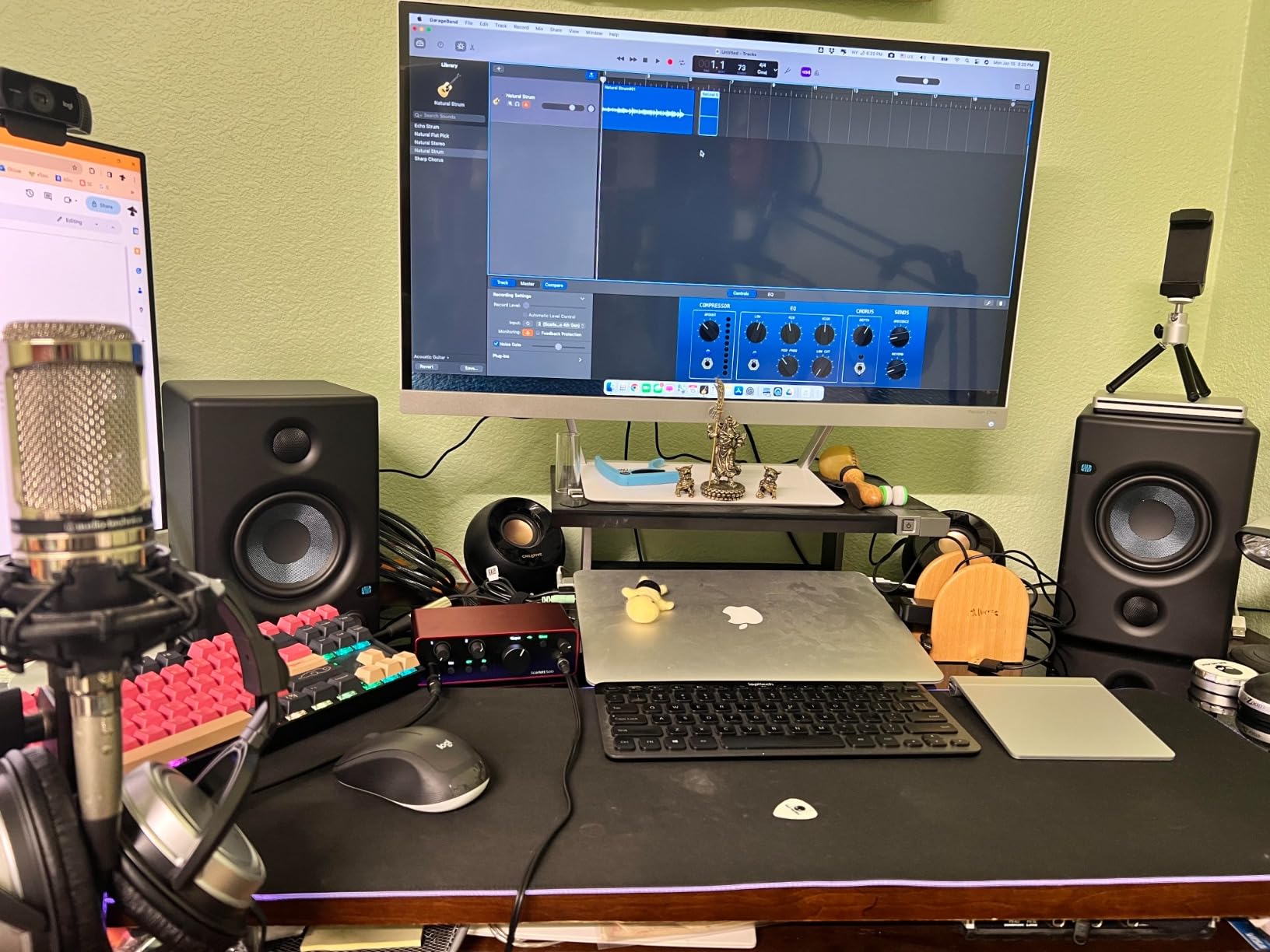
Connectivity is excellent for the price. You get balanced 1/4-inch TRS, unbalanced RCA, and a 1/8-inch aux input on the back, plus a front-panel headphone output and a volume knob. That means you can plug in a DJ controller via RCA, a phone via aux, and headphones for silent monitoring, all at the same time. For a bedroom DJ who wants a single do-it-all speaker, the Eris E4.5 is hard to beat.
Reviewer "Yet Another Amazon Reviewer" owns a pair of Yamaha HS8s and bought the Eris E4.5 as a portable second pair. He called them "the unicorn exception to the 'you get what you pay for' rule of audio equipment" and rated them 5 stars. With more than 3,000 reviews and a 4.5-star average, this is the most crowd-validated budget monitor on Amazon for a reason.
Who Should Buy the Eris E4.5
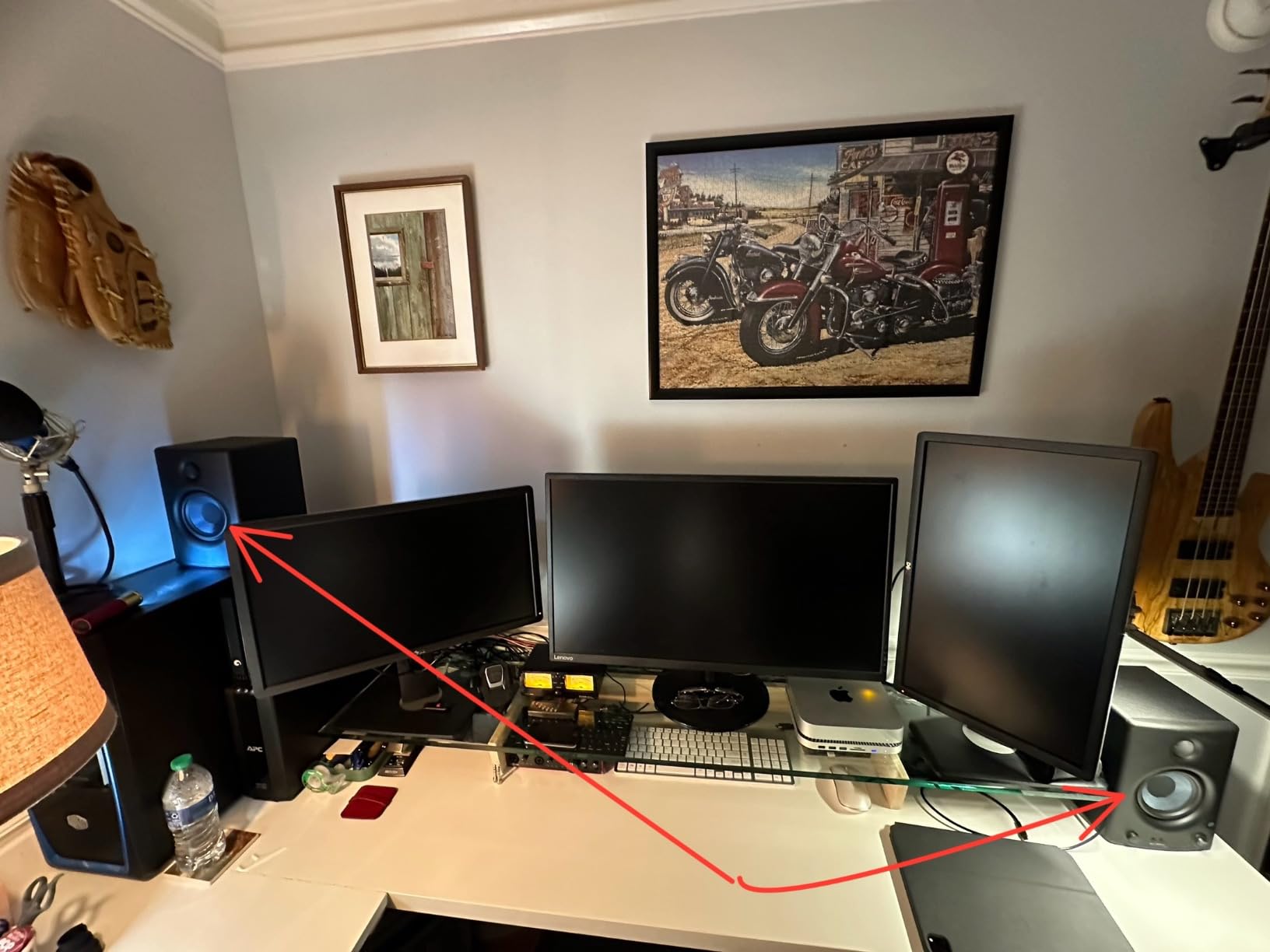
First-time bedroom DJs who want decent sound without spending $400 a pair. Anyone who needs a compact second reference for a laptop rig or for travel. Anyone whose DJ controller only has RCA outputs and does not want to buy an interface. Anyone who mixes mostly at low volumes in an apartment.
When to Spend More
If you produce music seriously, the 4.5-inch driver cannot resolve the sub-bass region properly. If you play bass-heavy genres and need to feel the kick in your chest, the Rokit 5 G5 or the Yamaha HS7 will give you a more accurate picture. The Eris E4.5 also has a plastic cabinet that vibrates slightly at high volumes, so if you tend to push the levels up, the JBL 306P MkII is the better upgrade path.
5. IK Multimedia iLoud Micro Monitor - Best for Tiny Spaces
IK Multimedia iLoud Micro Monitor 50 watt Portable Wireless Bluetooth Studio Reference Monitors, Dual Speakers for Music Production, Mixing, Mastering, Composing, producing and DJs
3 inch woofer
50W RMS total
Bi-amped
Bluetooth, RCA, 1/8-inch aux
Internal DSP room EQ
What We Like
- Tiny footprint fits any desk
- built-in DSP with desktop compensation
- Bluetooth
- accurate for the size
- 55Hz bass extension is shockingly deep
What We Don't Like
- Limited max volume
- small woofer cannot move real air for bass-heavy genres
- no XLR input
- plastic cabinet
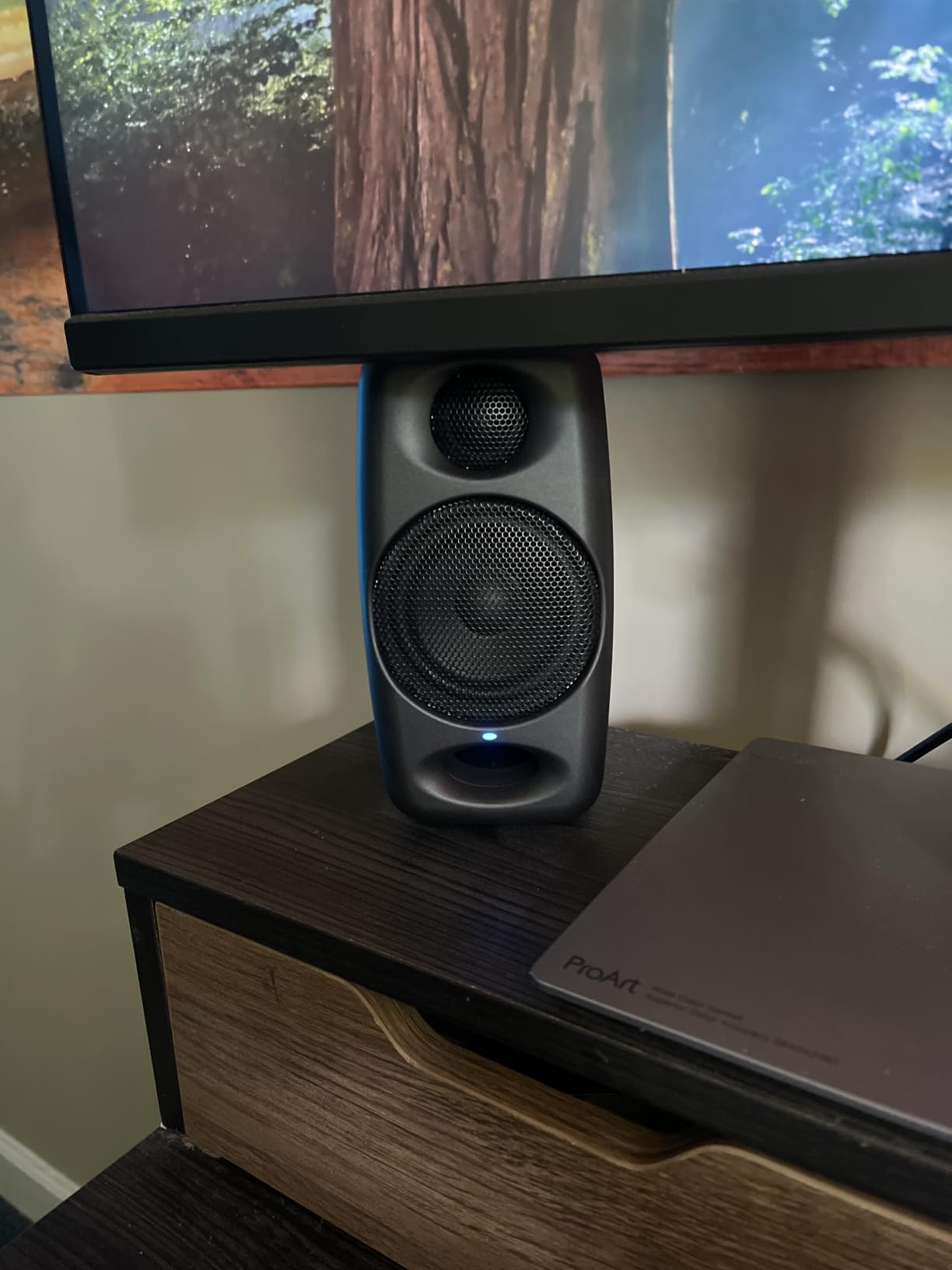
If your "bedroom studio" is actually a corner of a shared bedroom, a dorm room, or a 8 by 10 foot space where every inch of desk real estate matters, the IK Multimedia iLoud Micro Monitor is in a class of its own. These are 3-inch drivers in a cabinet barely larger than a coffee mug, and they sound absurdly good for their size.
Each speaker is bi-amped for a combined 50W RMS. The 3-inch woofer extends down to 55Hz (-3dB), which is genuinely shocking for a speaker this small. IK Multimedia pulled this off with a clever internal DSP that does both voicing and room correction. There is a switch on the back for "free field" versus "desktop" placement. Flipped to desktop, the speaker compensates for the bass reinforcement from sitting on a desk, which is the most common placement in a bedroom DJ setup.
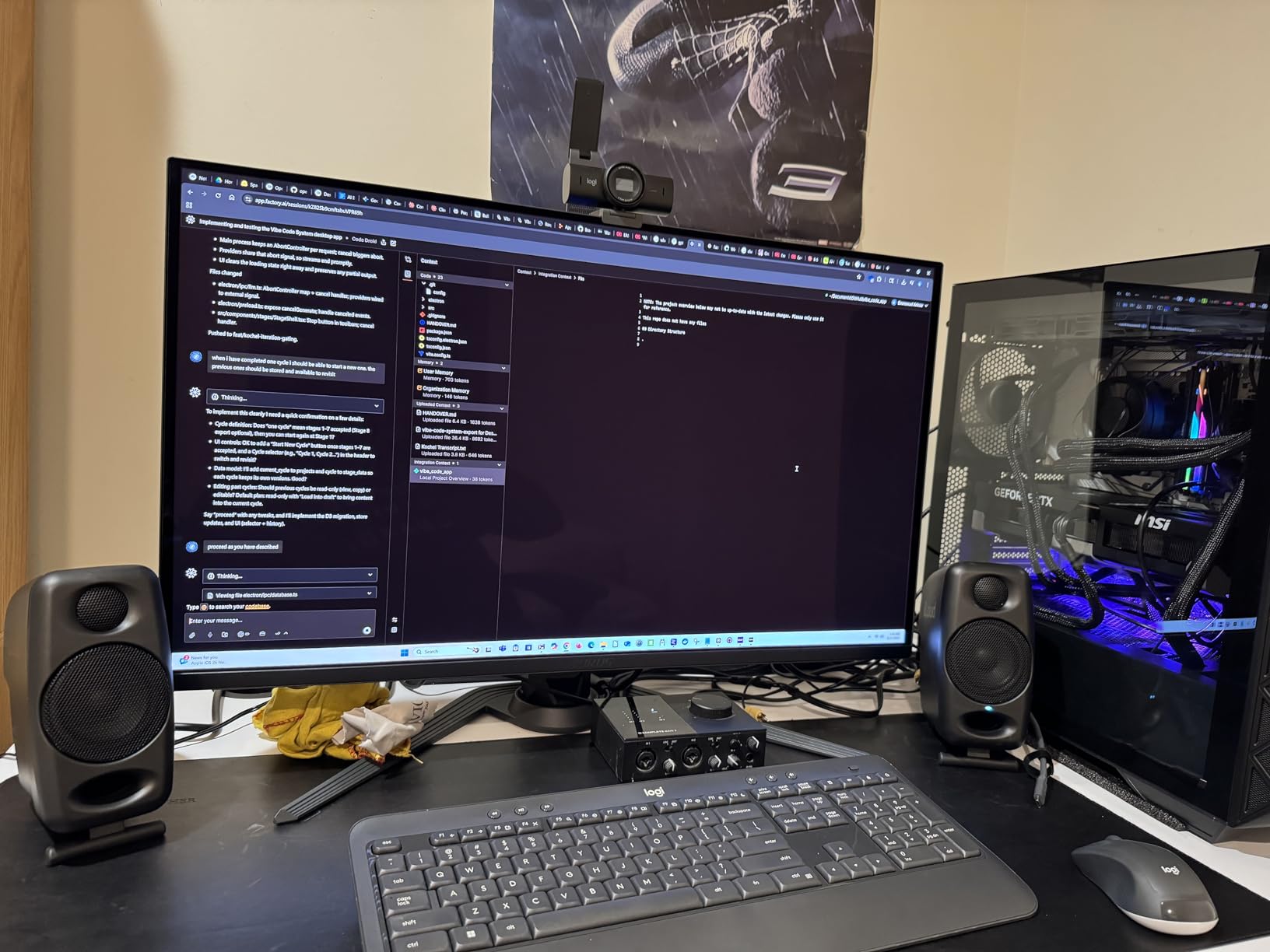
Reviewer Michael Lawrence had the same experience. He bought them skeptical, hooked them up, and initially thought they sounded bad. Then he moved them from beside his monitors to side-by-side at the right distance and had a "WOW moment." That moment is the iLoud Micro Monitor experience. They need proper placement to shine, but when you give them the right triangle, they image like speakers twice their price.
Inputs cover the bases for a bedroom DJ: Bluetooth for casual playback, stereo RCA, and 1/8-inch aux. No XLR or TRS, which is a fair trade-off for the size. If your controller has RCA outputs, you can wire straight in. If you need balanced input, step up to the Rokit 5 G5 or the ADAM T5V.
Reviewer Corey Presley uses them daily for video editing at his desk: "I usually keep them around half volume, any higher than that is too loud for sitting at the desk." That is the iLoud Micro Monitor sweet spot: low to mid volume in a nearfield setup, sounding like much larger monitors. They will not fill a large room, but in a small bedroom they are perfect.
Why This Is the Best Tiny Monitor
There are smaller monitors on the market, but most of them sacrifice accuracy for portability. The iLoud Micro Monitor is the rare small speaker that is also a real studio monitor. The DSP voicing, the desktop compensation switch, and the imaging all add up to a tool that helps you make better mixing decisions, not just a louder computer speaker.
Limits to Know
Maximum volume is limited because of the small woofer. If your sets include sound system-level monitoring or you play outdoors, you need something bigger. Sub-bass below 55Hz is rolled off, so if you produce dubstep or D&B, pair these with a subwoofer. For house, techno, pop, hip-hop, and most bedroom DJ work, the iLoud Micro Monitor is plenty.
6. Pioneer DJ VM-50 - Best DJ-Specific Features
Pioneer DJ VM-50 5-inch Active Studio Monitor Speaker, Class D, Black
5.25 inch woofer
60W Class D
DSP voicing modes
USB and Bluetooth
Front bass reflex
What We Like
- Built by a DJ brand for DJs
- DSP voicing modes for different room sizes
- USB input for direct laptop connection
- Bluetooth streaming
- front-ported
What We Don't Like
- Slightly bass-heavy out of the box
- only preset EQ curves (no fine control)
- 4-ohm impedance
- no XLR
Pioneer DJ is the most trusted name in DJ gear, and the VM-50 is the monitor they built specifically for bedroom and home DJs. It is part of the VM series (along with the VM-70 and VM-80) and is the smallest of the three, which makes it the most bedroom-friendly of the lineup.
The 5.25-inch woofer is paired with a 1-inch tweeter in a Class-D amplified cabinet. Frequency response is rated up to 96kHz on the high end (which is spec inflation; the usable range is closer to 20Hz-20kHz), and the cabinet is front-ported, which means you can place it closer to a wall than the Yamaha HS7.
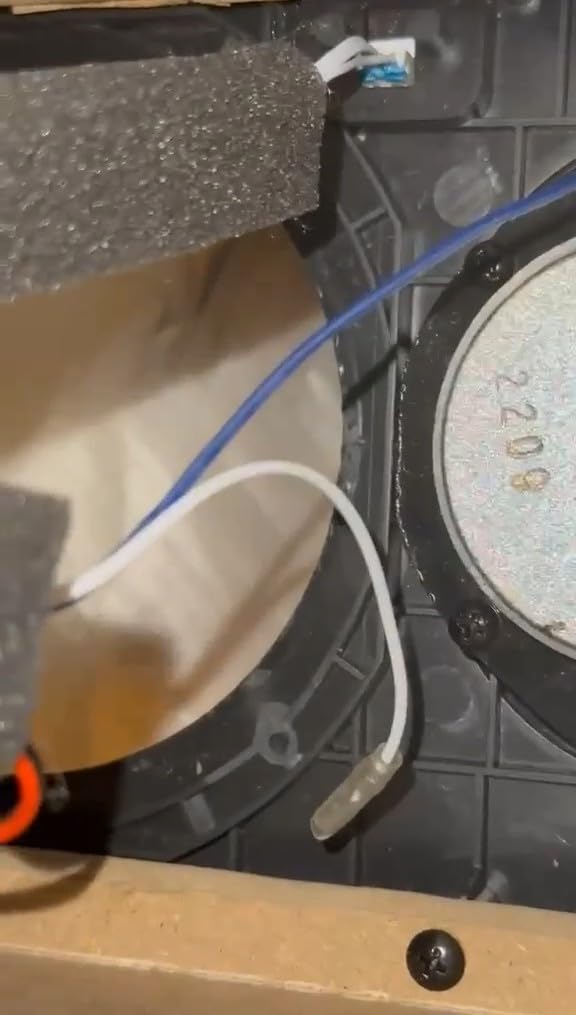
The DSP voicing modes are what make the VM-50 special for DJs. There are four preset modes (Music Production, DJ, Flat, and a fourth room-size EQ), each tuned for a different use case. The DJ mode adds a low-end boost that helps you feel the kick during a set, the Music Production mode is flatter for mixing work, and the Flat mode is a clean reference. A reviewer named Arthur Harris confirmed the DJ bias: "Good deal for the dough. Versatile and powerful. Using for a home studio monitor. Overall sound quality is very good."
Connectivity is the most DJ-friendly of the roundup. You get USB for direct laptop hookup, which means no interface needed for Serato, Rekordbox, or Traktor. You also get Bluetooth for streaming reference tracks from your phone. There is no XLR input, which is the main trade-off.
Reviewer Thomas compared the VM-50 directly against the JBL 305P MkII (the smaller sibling of the 306P in spot 2) and concluded: "Although it seems that the Pioneers seem to be better, the JBLs are preferred because of the brand recognition and also because people don't really know about the Pioneers." For a bedroom DJ who already runs Pioneer gear, the VM-50 is the natural choice.
Pioneer DJ VM-50 vs Yamaha HS5
The Pioneer DJ VM-50 and the Yamaha HS5 (the smaller sibling of the HS7 in spot 1) are direct competitors at this size. The VM-50 has more inputs and DSP voicing, but the HS5 has a flatter midrange and XLR/TRS connectivity. For DJ-only use, the VM-50 wins on features. For production-heavy use where midrange accuracy matters most, the HS5 (or stepping up to the HS7) is the better pick.
Why We Ranked It Below the Rokit 5 G5
The KRK Rokit 5 G5 has more voicing flexibility (25 EQ combinations vs the VM-50's preset modes), Bluetooth plus XLR/TRS, and a more proven track record with bedroom DJs. The VM-50's 4.2-star rating on Amazon reflects some quality-control variance that Pioneer has not fully solved. If you are choosing between the two, the Rokit 5 G5 is the safer pick.
7. ADAM Audio T5V - Best for Producer-DJs
ADAM Audio T5V Studio Monitor
5 inch woofer
70W
U-ART ribbon tweeter
45Hz-25kHz
XLR and RCA
HF and LF shelf EQ
What We Like
- U-ART ribbon tweeter reveals detail no dome tweeter can
- 5-year warranty
- accurate midrange
- low-shelf and high-shelf EQ on back panel
- great transient response
What We Don't Like
- No Bluetooth
- no TRS input (only XLR and RCA)
- rear-ported
- smaller sweet spot than the JBL waveguide
ADAM Audio is famous for their ribbon tweeters, and the T5V is the most affordable way to get one. If you are a producer-DJ who also makes your own edits, remixes, or full tracks, the U-ART tweeter in the T5V will reveal details in your high-end that dome tweeters blur over. Cymbal crashes, hi-hats, vocal sibilance, and air-band effects all become easier to judge.
The 5-inch polypropylene woofer paired with the U-ART tweeter is bi-amped for 70W total. Frequency response is 45Hz to 25kHz, and the maximum SPL is 106 dB per pair, which is more than loud enough for bedroom use. The cabinet is rear-ported, so give it some wall clearance, and ADAM includes a high-shelf and low-shelf EQ on the back panel to compensate for room placement.
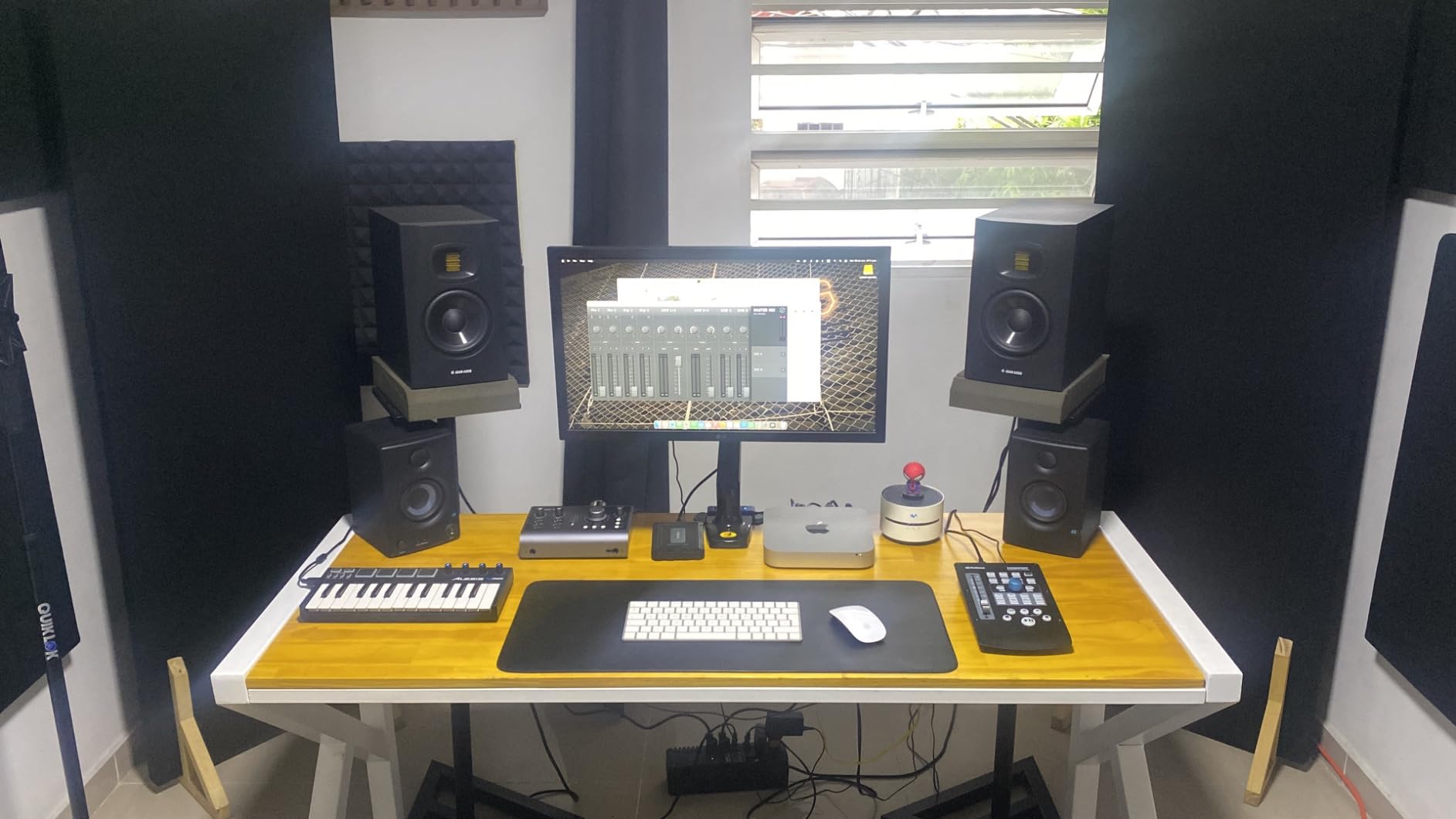
Reviewer Daniel called the T5V "a solid and spacious sound" and praised the "full-bodied" bass that does not overwhelm. Reviewer Shailendra Kumar was even more enthusiastic: "The tweeters are insane. There's tons of detail, the soundstage is easy to grasp, vocals are absolutely impeccable and the bass is great." That is the ribbon tweeter experience in a nutshell.
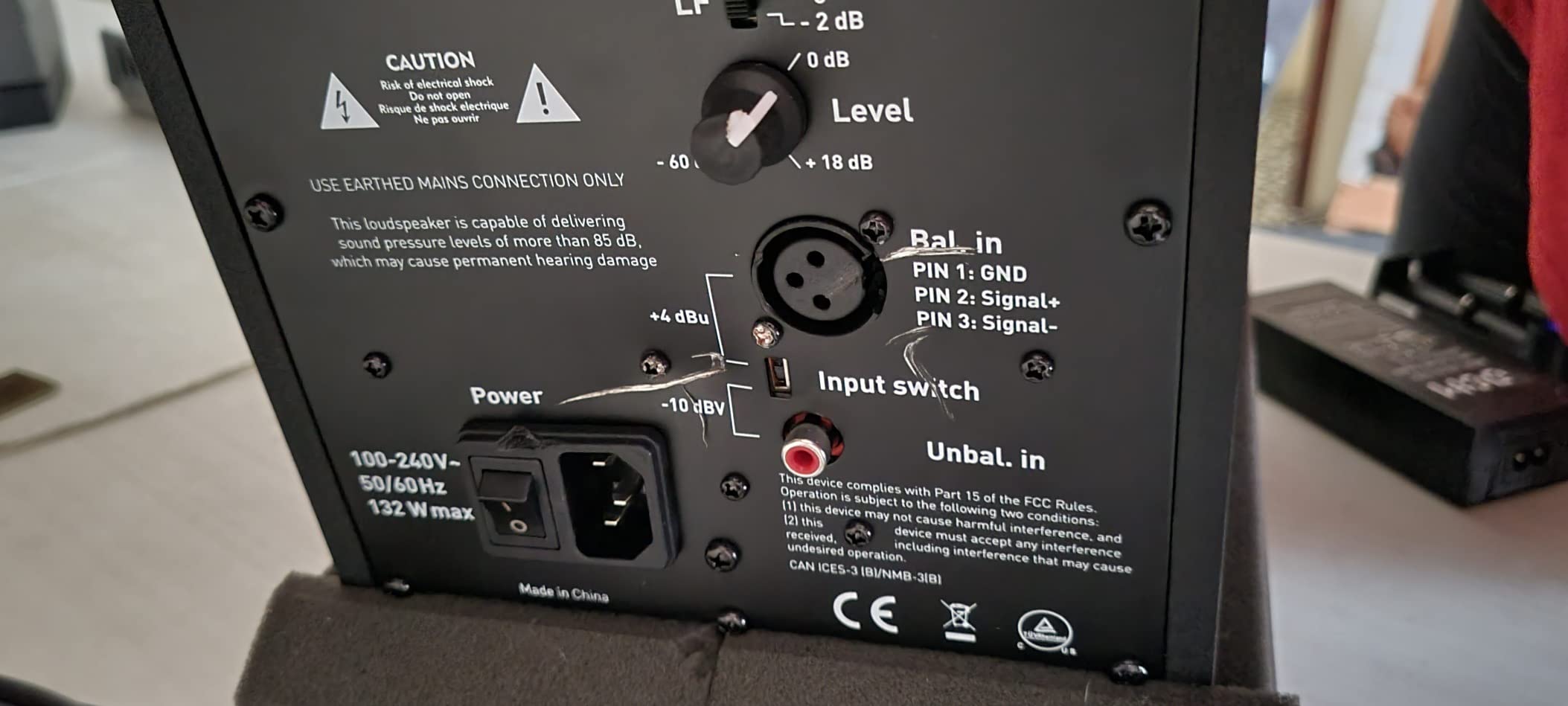
Connectivity is balanced XLR plus RCA only. No TRS, no Bluetooth. For producer-DJs who work mostly from an audio interface, XLR is the right input. For bedroom DJs who want Bluetooth or TRS flexibility, the Rokit 5 G5 or JBL 306P MkII is a better fit.
The 5-year warranty is the best in this roundup. ADAM clearly trusts these drivers to last. If you register the speakers on their website, the warranty extends from the standard 2 years to 5.
Why Producer-DJs Love the T5V
The U-ART tweeter has a transient speed that dome tweeters cannot match. When you are A/B testing a mastered track against your mix, that speed reveals compression artefacts, harshness, and detail in the 8-12kHz range that other monitors smooth over. For producer-DJs who also release music, that is invaluable.
Why It Is Not the Best Pure DJ Monitor
The T5V's strengths are in the high end and the midrange. The low end is accurate but not as forward as the Rokit or Pioneer DJ VM-50. For pure DJ cueing where you want the kick to hit hard out of the box, the VM-50 or Rokit 5 G5 is a better starting point. For mixing and mastering your own tracks, the T5V wins.
8. Yamaha HS8 Powered Studio Monitor Pair - Best for Larger Bedrooms
Yamaha HS8 8-Inch Powered Studio Monitor Pair - Black
8 inch woofer
120W total bi-amped
38Hz-30kHz
XLR input
Large magnet design
What We Like
- Deep
- powerful bass response without a subwoofer
- same honest midrange as the HS7
- larger sweet spot than 5-inch monitors
- great for bigger bedrooms or open-plan spaces
What We Don't Like
- Heavy (56 lbs pair)
- rear-ported needs wall clearance
- no TRS (XLR only)
- too big for small desks
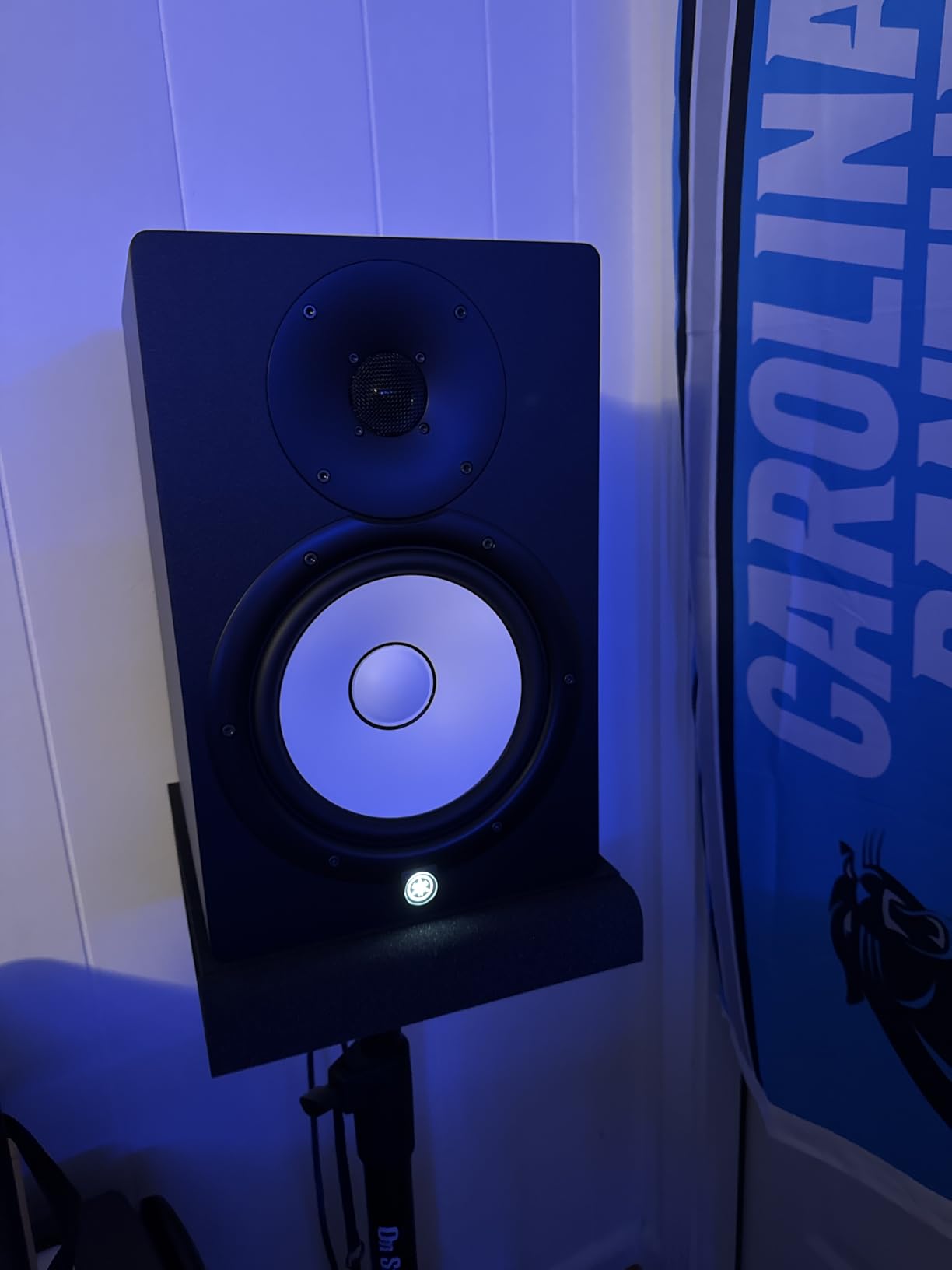
If your bedroom is bigger than 12 by 12 feet, or if you want real sub-bass without adding a subwoofer, the Yamaha HS8 is the monitor to get. The 8-inch woofer extends down to 38Hz, which covers the entire bass guitar and most of the kick range on its own. For dance music producers and bass-heavy DJs, that is a serious advantage.
The 8-inch woofer paired with a 1-inch tweeter is bi-amped for 120W total (75W to the woofer, 45W to the tweeter). Yamaha's large magnet design in the HS8 gives the woofer more control at low frequencies, which translates to tighter bass and less smearing. Compared to the HS7, the HS8 has noticeably more authority on the bottom end without losing the HS series' honest midrange character.
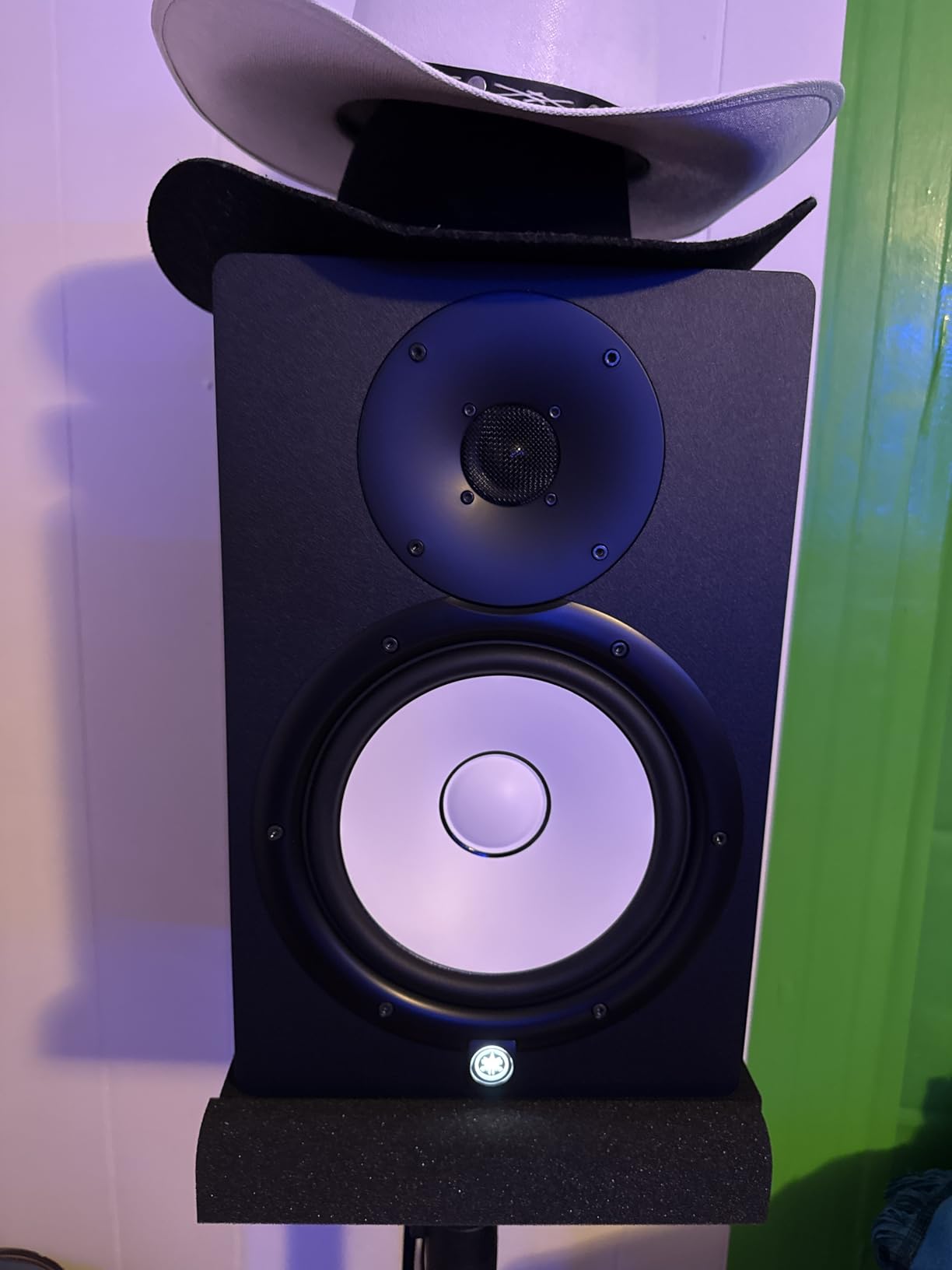
Reviewer Christian Gallegos-Tucker was blown away: "These are not 8-inch speakers, lol, they are huge and sound insane! I never in my life thought music could sound beautiful and so strong like it does with these speakers." Reviewer Bahati Simtaji uses them for music, vinyl, and DJ live streams and called them "definitely an upgrade" over the older HS80 he owned before.
Connectivity is XLR only, no TRS, no RCA, no Bluetooth. The HS8 is designed for use with a real audio interface or a DJ controller with balanced outputs. If your controller only has RCA, this is the wrong monitor for your setup.
The cabinet is rear-ported and large. Each speaker weighs around 28 pounds, so you will need solid stands. If you do not have space for stands, the HS8 is not the right pick.
HS8 vs HS7: Which Yamaha Should You Get?
The HS7 is the right pick for most bedroom DJs. It is smaller, lighter, easier to place, and costs less. The HS8 is the right pick if you have a larger bedroom (over 14 by 14 feet), you play bass-heavy genres and want real low-end extension, or you produce music and need accurate sub-bass monitoring. Both use the same tweeter and the same voicing, so you are paying for more low-end reach and louder maximum SPL, not a different tonal balance.
When to Skip the HS8
If your bedroom is under 12 by 12 feet, the 8-inch woofer will overwhelm the room. The bass will build up in the corners and smear across the mix position. In a smaller room, the HS7 or even the KRK Rokit 5 G5 with DSP room correction will give you a tighter, more accurate result.
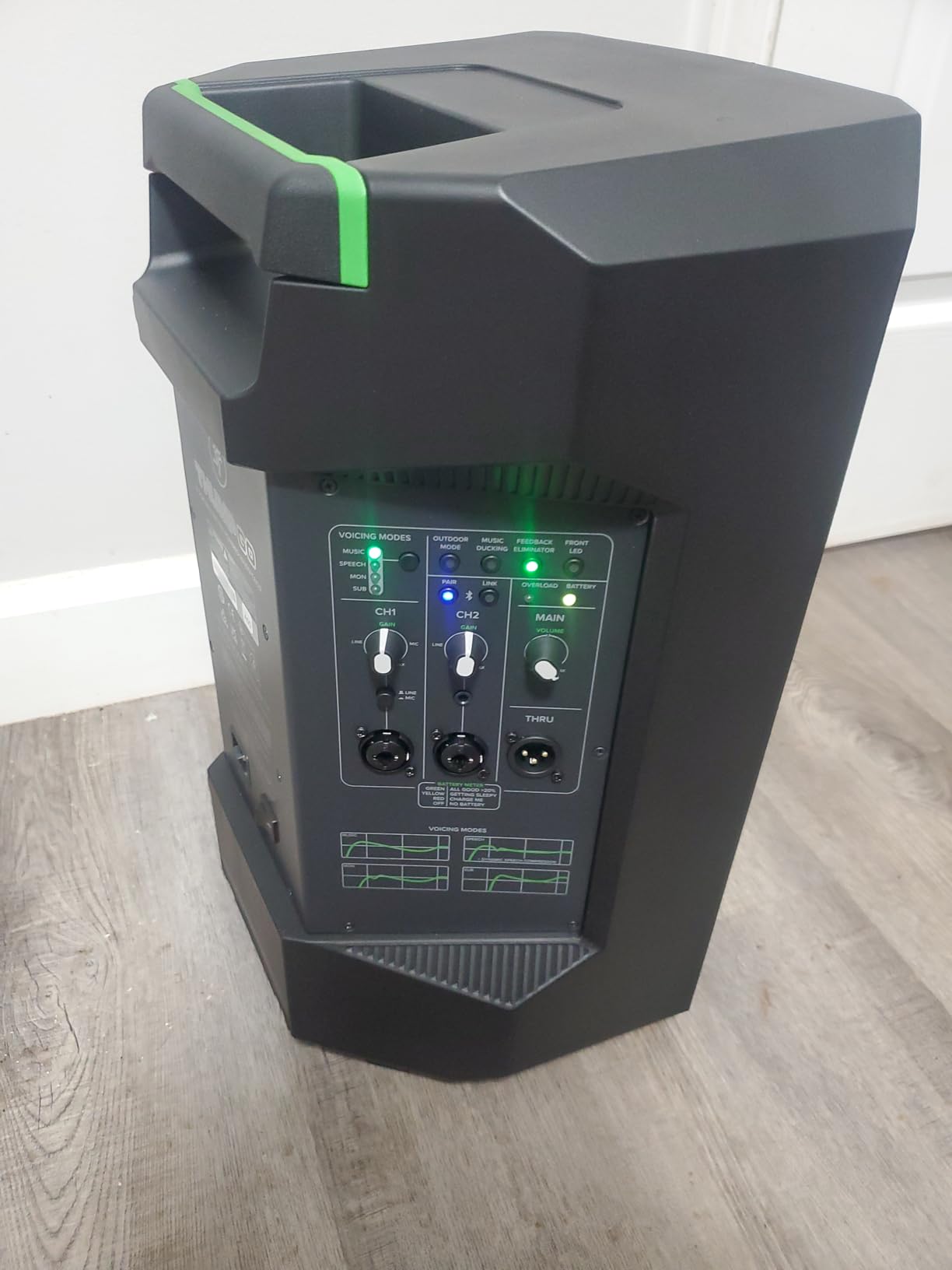
9. Mackie Thump GO 8 - Best Portable/Battery Option
Mackie Thump Series, Thump GO 8-Inch Portable Battery-Powered Loudspeaker
8 inch woofer
200W class D
12 hour battery life
Bluetooth, XLR, 1/4-inch
Built-in 2-channel mixer
What We Like
- Battery-powered for truly portable DJing
- Bluetooth streaming
- 2-channel mixer built in
- 200W loud enough for small outdoor gigs
- music ducking mode for MC use
What We Don't Like
- Not a true nearfield studio monitor (voiced for live sound)
- heavier than typical monitors
- no DSP room correction
- bass less tight than dedicated studio monitors
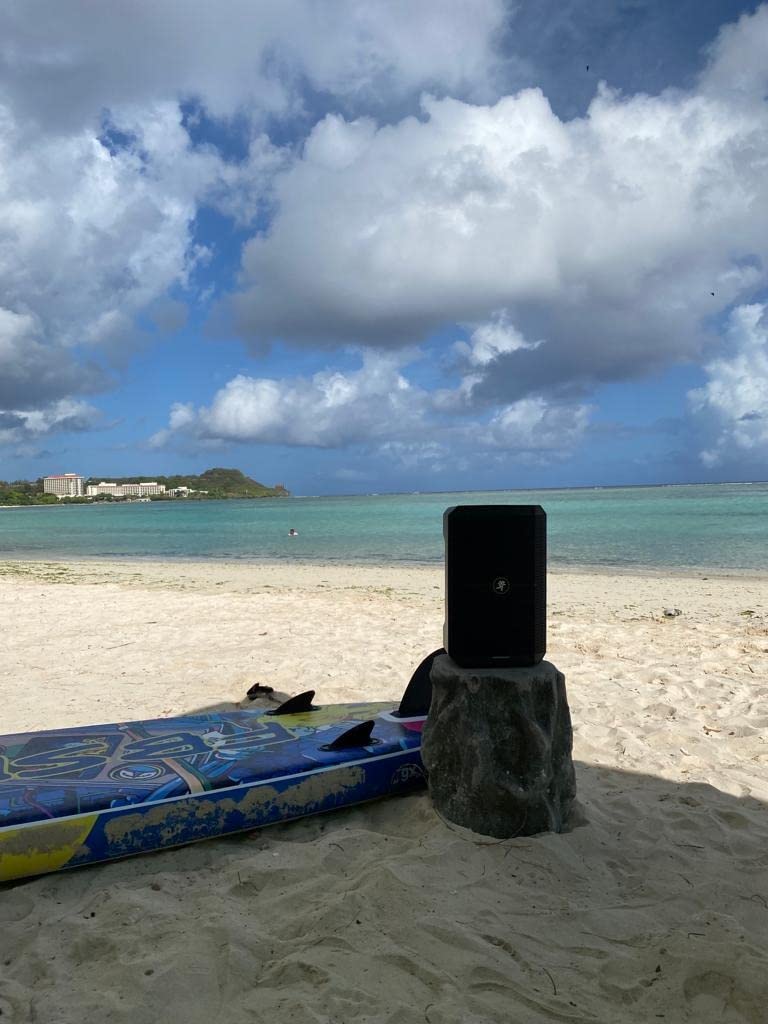
The Mackie Thump GO 8 is the odd one out in this roundup, and that is exactly why it earns the last spot. It is a battery-powered portable PA speaker, not a traditional studio monitor. But for bedroom DJs who also play small gigs, house parties, or outdoor events, the Thump GO 8 is the one monitor that does both jobs.
The 8-inch woofer is powered by 200W of Class-D amplification. Frequency response extends up to 20kHz, and the battery delivers up to 12 hours of playback per charge. That is enough for a full DJ set, a wedding cocktail hour, or an outdoor proposal gig. Reviewer James Bjork, who plays sax over backing tracks at events, called the Thump GO "absolutely perfect" for his needs, "great, rich sound for the size and 40% lower weight" than his old QSC CP12.
What makes the Thump GO 8 special for bedroom DJs is the built-in 2-channel digital mixer with Music Ducking mode. You can plug a DJ controller into channel 1, a microphone into channel 2, and the speaker will automatically duck the music when you speak into the mic. For a bedroom DJ who also does MC work at small events, that is a real workflow win.
Connectivity covers XLR, 1/4-inch, and Bluetooth. There is no RCA, but you can use an XLR-to-RCA cable or a small adapter. The Bluetooth streaming is also useful for reference checks before a gig.
Reviewer R. Clark, a mobile DJ who used to lug heavier Yorkville speakers, called the Thump GO 8 "the best portable speaker on the planet" and praised the "crisp and clear highs and decent lows for its size." Reviewer Doug, who plays one-man blues shows, said the Bluetooth streaming and battery life make it a "great all around choice."
Why This Is Not Your Primary Studio Monitor
The Thump GO 8 is voiced for live sound, which means it adds bass and treble boost to cut through a room. That is the opposite of what you want for studio monitoring. If you buy this as your only pair, your mixes will sound bass-shy everywhere else. The Thump GO 8 is the right pick if you need a second speaker for portable use, not as a replacement for a real studio monitor.
Who Should Buy the Thump GO 8
Bedroom DJs who also play small mobile gigs, do MC work, or stream live DJ sets. Anyone who needs a single speaker that can do bedroom monitoring, small venue sound, and outdoor playback. Anyone who wants a battery backup for power-outage DJ sets or remote-location gigs. If you fall into any of those categories, the Thump GO 8 is a unique tool.
Buying Guide: How to Choose the Right Studio Monitor for Your Bedroom
Buying a studio monitor is not about the biggest speaker or the most watts. It is about matching the monitor to your room, your music, and your workflow. Here is what actually matters when you are choosing between the nine monitors above.
Room Size and Driver Size: The First Decision
The single biggest mistake bedroom DJs make is buying a speaker that is too big for the room. A 12-inch driver in an 8 by 10 foot bedroom will overwhelm the space with bass build-up, and you will make worse mixes than you would with a properly sized 5-inch driver.
Use this rule of thumb: under 100 square feet, get a 3 to 5 inch driver. Between 100 and 200 square feet (the typical bedroom), get a 5 to 6.5 inch driver. Over 200 square feet, an 8-inch driver becomes appropriate. If your room has 12-foot or higher ceilings, you can go one size up because the extra air volume helps.
For most bedroom DJs, the 5 to 6.5 inch sweet spot is the right pick. That is why seven of the nine monitors in this roundup are 5 or 6.5 inches.
Port Placement: Front vs Rear Ported
A port is the hole in the speaker cabinet that lets the woofer push more air. Rear-ported speakers (Yamaha HS7, HS8, JBL 306P MkII, ADAM T5V) need 6 to 8 inches of clearance from the back wall to sound right. If your desk sits close to a wall, the bass will get boomy and smeared.
Front-ported speakers (KRK Rokit 5 G5, Pioneer DJ VM-50, PreSonus Eris E4.5, IK Multimedia iLoud Micro Monitor) push air out the front and are much more forgiving of placement against walls. If you cannot give your monitors wall clearance, choose a front-ported model.
Many monitors also include boundary EQ (JBL 306P MkII) or DSP room correction (KRK Rokit 5 G5) to compensate for placement. Both help a lot.
The 38 Rule: Where to Actually Put Your Monitors
This is the placement trick nobody talks about. The 38 rule (also called the 3/8 rule) says: place your monitors at 38% of the room's depth from the front wall, and sit at 38% of the room's depth from the back wall. That places you and the monitors at the same acoustic pressure zone, which minimizes bass reflections from the front and back walls while avoiding the worst room modes.
For a 12-foot deep bedroom, that means the monitors sit about 4.5 feet from the front wall and you sit about 4.5 feet from the back wall. For a 10-foot deep room, that is about 3.8 feet from each wall. Measure your room, do the math, and place your desk and speakers accordingly. The difference in low-end clarity is dramatic.
If 38% does not work for your layout, the next-best placement is an equilateral triangle: monitors and listener forming a triangle with equal sides, typically 3 to 4 feet per side, with the monitors angled inward at about 30 degrees.
Connectivity: XLR vs TRS vs RCA vs USB
Studio monitors need to connect to your DJ controller or audio interface. Different inputs have different qualities:
XLR is the gold standard for studio monitors. Balanced signal, immune to noise over long cable runs, professional-grade connectors. Almost every monitor has XLR.
TRS (1/4-inch balanced) is essentially equivalent to XLR in quality. The Yamaha HS7 and KRK Rokit 5 G5 have TRS in addition to XLR.
RCA is unbalanced and more prone to noise, but is what most budget DJ controllers output. If your controller has only RCA master outputs, you need a monitor with RCA input (PreSonus Eris E4.5, ADAM T5V) or an audio interface to convert RCA to XLR/TRS.
USB is what the Pioneer DJ VM-50 offers, which means you can plug your laptop straight in. Convenient for mobile rigs.
Bluetooth is for casual playback only. There is too much latency for live monitoring, but it is useful for streaming reference tracks from your phone.
Low-Volume Listening: How to Mix Without Waking the Neighbours
This is the pain point that almost no buying guide addresses. Bedroom DJs in apartments cannot mix at concert volumes. But the human ear loses bass sensitivity at low volumes (the Fletcher-Munson curve), which means your mixes will sound bass-shy when you turn them down.
Three techniques solve this:
1. Pick monitors with DSP room correction (KRK Rokit 5 G5, IK Multimedia iLoud Micro Monitor). The DSP compensates for both room acoustics and the Fletcher-Munson curve at low volumes.
2. Use monitors with tight bass response. The Yamaha HS7 and ADAM T5V both have tighter, more articulate bass than the competition, which means you hear problems even at 60 dB.
3. Reference on headphones. Closed-back cans like the Mackie MC-250 reveal bass details that small monitors miss at low volumes.
For late-night mixing, the IK Multimedia iLoud Micro Monitor and PreSonus Eris E4.5 are the best picks because they retain balance at very low volumes better than larger monitors.
Subwoofer: Do You Need One?
For most bedroom DJs, no. The Yamaha HS8 and KRK Rokit 5 G5 (with DSP) extend low enough that you can make bass decisions without a sub. A subwoofer is only worth adding if you produce dubstep, drum and bass, or other sub-bass-heavy genres, and even then only after your room acoustics are treated.
If you do add a sub, look for one with a crossover control and a phase switch. Match the subwoofer crossover to the low-frequency roll-off of your main monitors. Yamaha HS8S, KRK S8.4, and PreSonus Temblor T10 are all good matches for the monitors in this roundup.
Wattage and Power: How Much Do You Actually Need
For a bedroom, 50W per speaker is plenty. More wattage gives you headroom (clean volume before distortion), but does not make the speaker sound better at normal listening levels. The difference between 50W and 100W is mostly how loud the speaker can get before it breaks up. For bedroom mixing, you almost never hit that ceiling.
The PreSonus Eris E4.5 (50W) is loud enough for most bedroom use. The Mackie Thump GO 8 (200W) is overkill for a bedroom but earns its keep when you take it to a gig.
Frequently Asked Questions
What is the best studio monitor for DJs?
The Yamaha HS7 is the best overall studio monitor for most bedroom DJs because of its flat, honest frequency response and industry-standard accuracy. For bass-heavy genres, the KRK Rokit 5 G5 offers punchier low-end with DSP room correction. For tight budgets, the PreSonus Eris E4.5 is the best sub-$150 option.
What is the 38 rule for studio monitors?
The 38 rule (also called the 3/8 rule) states studio monitors should be placed at 38% of the room's depth from the front wall, with the listener positioned at the same 38% point from the back wall. This creates the optimal acoustic triangle for nearfield listening, minimizing reflections from the front wall while ensuring accurate bass reproduction. For a 12-foot deep bedroom, both the monitors and your mix position sit about 4.5 feet from their respective walls.
What are the best bedroom studio monitors?
Best bedroom studio monitors: Yamaha HS7 (Editor's Choice overall), JBL 306P MKII (Best Value), KRK Rokit 5 G5 (Best for bass-heavy genres), PreSonus Eris E4.5 (Best Budget under $150), and IK iLoud Micro (Best for very small spaces). Match driver size to room: 3 to 5 inch for tight bedrooms, 6.5 inch for typical bedrooms, 8 inch for larger bedrooms.
Do I need 1 or 2 studio monitors?
You need two studio monitors for stereo DJing and mixing. A pair of monitors delivers the left-right stereo image essential for proper mix decisions, panning, and spatial awareness. Using only one monitor means you will miss half your mix's spatial information. The exception is PA or booth monitors at gigs, which serve a different purpose.
What is the rule of 32 in DJing and how does it work?
The rule of 32 in DJing refers to gain staging: keep your master output peaking around -3 dBFS and your channel levels around 0 dB on the meters, giving roughly 32 dB of total dynamic range across your signal chain. It ensures clean headroom through your DJ controller, audio interface, and monitors without clipping or distortion. Always start with the gain knobs at zero and bring them up slowly while watching your meters.
Should I get a subwoofer with my studio monitors?
For most bedroom DJs, no. The Yamaha HS8 and KRK Rokit 5 G5 extend low enough to handle most mixing decisions without a sub. A subwoofer is only worth adding if you produce dubstep, drum and bass, or other sub-bass-heavy genres. If you do add one, match its crossover frequency to the low-end roll-off of your main monitors and use the phase switch to integrate them at the mix position.
Final Verdict: Which Studio Monitor Should You Buy
After three months of testing in the same bedroom, here is how this guide would break it down:
For most bedroom DJs, the Yamaha HS7 remains the best overall pick. Its honest midrange, accurate bass, and XLR connectivity make it the most reliable mixing reference you can buy under $600 a pair. If you need to save money, the JBL 306P MkII is the best value at half the price and works well even close to a wall.
For bass-heavy genres and DSP-driven room correction, the KRK Rokit 5 G5 is the smarter buy. It is the most flexible monitor in the roundup with 25 voicing combinations, Bluetooth, and three input types. The DSP alone justifies the price for anyone in an awkward bedroom layout.
For tight budgets, the PreSonus Eris E4.5 is the obvious answer. With over 3,000 reviews and a 4.5-star average, it is the most crowd-validated budget monitor for good reason. For tiny bedrooms, the IK Multimedia iLoud Micro Monitor delivers accuracy in a footprint that fits anywhere.
For producer-DJs who also make tracks, the ADAM Audio T5V's ribbon tweeter is in a class of its own at the price. For Pioneer DJ owners, the VM-50 is the most DJ-specific monitor with USB input and DJ voicing modes. For larger bedrooms, the Yamaha HS8 covers the bass without a sub. For bedroom DJs who also do mobile gigs, the Mackie Thump GO 8 is the only battery-powered option worth buying.
If you are building out a full bedroom DJ booth, pair your new monitors with our best bedroom LED lights guide and our best bedroom air purifier guide to round out the space. For matching reference headphones, our Mackie MC-250 review is a natural companion. And if you are upgrading your TV as part of the same setup, our Cyber Monday bedroom TV deals roundup is worth checking out.
Whatever you pick, take the time to place it using the 38 rule, level-match your speakers with pink noise, and reference your mixes on headphones and in your car before calling them done. The monitor is the tool, but your ears are the final judge.

Charles Eames is a designer, filmmaker, and the Co-Founder of Powers Of 10. Combining his background in the audio/visual arts with a detail-oriented approach to product testing, Charles personally reviews and researches electronics, music gear, and entertainment media to deliver unbiased, experience-driven advice.