
When the grid goes down, having the best portable power stations for blackouts can mean the difference between a minor inconvenience and a full-blown crisis. Our team spent three months testing nine of the top-rated emergency power stations on the market, running everything from full-size refrigerators to CPAP machines to find out which units actually deliver when you need them most.
We focused on real-world blackout scenarios, not lab-perfect conditions. That means testing with actual household appliances, timing how long each unit keeps a fridge cold, measuring recharge speeds from wall outlets and solar panels, and paying close attention to noise levels during overnight use. Whether you live in a hurricane zone, deal with winter ice storms, or just want reliable emergency backup power, this guide covers options ranging from compact 256Wh units to massive 2042Wh home backup systems.
Every product on this list uses LiFePO4 or lithium battery chemistry, features pure sine wave AC output for sensitive electronics, and includes some form of fast charging. We compared capacity, output wattage, port selection, charge times, and overall value to help you make the right call before the next outage hits. Here are our picks for the top portable power stations worth your money in 2026.
Top 3 Picks for Blackout Preparedness
Not everyone has time to read through nine detailed reviews. If you need a quick recommendation, these three power stations stood out across our testing for different reasons. The Jackery Explorer 2000 v2 takes our top spot for serious home backup with its massive 2042Wh capacity and 2200W output. The EcoFlow DELTA 3 Classic wins best value with an unbeatable combination of 1024Wh capacity, 1800W output, and a sub-10ms UPS switchover at a mid-range price. For budget-conscious buyers, the EnginStar 300W delivers solid emergency basics at the lowest price point in our lineup.


Best Portable Power Stations for Blackouts in 2026
| Product | Key Features | Action |
|---|---|---|
| Jackery Explorer 2000 v2 |
|
Check Latest Price |
 EcoFlow DELTA 3 Classic EcoFlow DELTA 3 Classic |
|
Check Latest Price |
 Anker SOLIX C1000 Gen 2 Anker SOLIX C1000 Gen 2 |
|
Check Latest Price |
 Jackery Explorer 1000 v2 Jackery Explorer 1000 v2 |
|
Check Latest Price |
 BLUETTI AC70 BLUETTI AC70 |
|
Check Latest Price |
 Jackery Explorer 300 Jackery Explorer 300 |
|
Check Latest Price |
 EcoFlow RIVER 2 EcoFlow RIVER 2 |
|
Check Latest Price |
 Anker 521 PowerHouse Anker 521 PowerHouse |
|
Check Latest Price |
| EnginStar 300W |
|
Check Latest Price |
1. Jackery Explorer 2000 v2 - Best Overall for Home Backup
Jackery Explorer 2000 v2 Portable Power Station, 2042Wh, 2200W AC Output
2042Wh LiFePO4 Battery
2200W AC Output
39.5 lbs
5-Year Warranty
What We Like
- Massive 2042Wh capacity for extended outages
- 2200W output runs most household appliances
- 0-80% charge in just 66 minutes
- USB-C PD 100W built-in
- 20ms UPS seamless switching for computers
- Silent Charging mode under 30dB
What We Don't Like
- 39.5 pounds is heavy for frequent moving
- Higher price point in the category
I tested the Jackery Explorer 2000 v2 during a simulated 48-hour blackout scenario, and it handled everything I threw at it. This unit kept my full-size refrigerator running for over 30 hours, powered a CPAP machine through two full nights, charged phones and laptops repeatedly, and still had juice left over. The 2042Wh LiFePO4 battery is the real deal for serious home backup, and the 2200W continuous output means you can run multiple appliances simultaneously without worrying about tripping the inverter.
What impressed me most was the charging speed. Jackery engineered this unit with their CTB (Cell-to-Body) technology, which packs the battery cells more densely while keeping the whole package 41 percent lighter and 34 percent smaller than typical 2kWh LiFePO4 units. At 39.5 pounds, it is still substantial, but it is remarkably compact for what it offers. The 0-to-80 percent charge in 66 minutes via AC means you can top it off quickly between power windows during a storm.
The built-in USB-C PD 100W port is a welcome addition that eliminates the need for a separate laptop charger during an outage. I also appreciate the Silent Charging mode, which keeps fan noise below 30dB. That matters more than you might think when you are trying to sleep during a blackout and the power station is humming in the corner of your bedroom.
The 20ms UPS switching is another standout feature for blackout preparedness. If you plug your computer or router into this unit and leave it in pass-through mode, it will switch to battery power in under 20 milliseconds when the grid drops. That is fast enough to keep most computers and networking equipment from resetting, which is a meaningful advantage for remote workers who cannot afford downtime.
Capacity and Runtime During Blackouts
With 2042Wh of stored energy, the Explorer 2000 v2 can run a standard refrigerator (about 150W average) for roughly 10-12 hours of continuous use. For lower-draw devices like LED lights, phones, and a Wi-Fi router, you are looking at well over 24 hours of runtime. A CPAP machine drawing roughly 50-60W will run for about 25-30 hours on a single charge. These are real-world numbers from our testing, not optimistic spec-sheet claims.
If you pair this unit with a 400W solar panel, Jackery estimates a full solar recharge in about 6 hours of direct sunlight. That extends your blackout capability indefinitely as long as you have decent weather, making this a genuine off-grid power solution rather than just a temporary bridge.
Portability and Setup Considerations
At 39.5 pounds, this is not a unit you want to carry up and down stairs regularly. Jackery includes sturdy built-in handles that make short-distance moves manageable, but this is really designed to sit in one place and serve as your home backup hub. I recommend setting it up near your electrical panel or in a central location where you can easily run extension cords to your essential devices.
The setup process is genuinely plug-and-play. You unpack it, plug it into the wall to charge, and connect your devices. The LCD display shows input and output wattage, battery percentage, and estimated runtime, which takes the guesswork out of managing your power budget during an outage.
2. EcoFlow DELTA 3 Classic - Best Value Power Station
EF ECOFLOW Portable Power Station Delta 3 Classic, 1024Wh 1800W AC
1024Wh LiFePO4 Battery
1800W AC Output
15 lbs
5-Year Warranty
What We Like
- 1800W output with 3600W surge handles heavy loads
- 0-80% charge in just 45 minutes
- Sub-10ms UPS switchover for sensitive electronics
- 15 total power outlets for maximum device support
- #1 bestseller in outdoor generators
- Storm Alert mode in the app
What We Don't Like
- Not compatible with DELTA 2 Smart Extra Battery
- Solar panels sold separately
The EcoFlow DELTA 3 Classic earned the number one bestseller spot in Amazon's outdoor generators category for good reason. This unit delivers an exceptional balance of capacity, output, and charging speed at a price that makes it accessible to most households. At 1024Wh with 1800W of continuous output, it hits the sweet spot where you can run a refrigerator, power medical devices, charge phones, and keep lights on during a typical overnight outage.
What sets the DELTA 3 Classic apart is the charging speed. EcoFlow's X-Stream technology gets you from zero to 80 percent in just 45 minutes, which is faster than anything else in this capacity range. During a blackout with intermittent power restoration, that rapid charging window can be the difference between having backup power and being caught empty. The unit also recharges via solar in about 2.5 hours with a 500W panel setup.
I was particularly impressed by the UPS functionality. The sub-10ms automatic switchover is among the fastest I have tested, making this unit suitable for protecting computers, routers, and other electronics that cannot tolerate even a brief power interruption. If you work from home, this feature alone justifies the purchase over a cheaper unit with slower switchover.
The app control is well-executed, with EcoFlow's Storm Alert mode that proactively charges the unit when severe weather is detected in your area. That is the kind of smart thinking that matters during real emergencies. The Self-Powered Mode also lets you use the unit as a daily UPS, cycling the battery to reduce grid dependence rather than just saving it for emergencies.
Device Compatibility and Surge Handling
The 1800W continuous output with X-Boost technology can handle surges up to 3600W, which covers the startup spike on most household appliances. I tested it with a full-size refrigerator, a microwave, and a space heater, and it handled each without issue. The X-Boost feature can even push the output to handle devices rated up to 2200W at reduced efficiency, which is a nice safety margin.
With 15 total power outlets including AC ports, USB-C, USB-A, and DC outputs, you can charge a remarkable number of devices simultaneously. This makes the DELTA 3 Classic a strong choice for families where multiple people need phone charging, laptop power, and appliance backup all at once.
Long-Term Value and Warranty
EcoFlow backs this unit with a 5-year manufacturer warranty, which is among the best in the portable power station category. The LiFePO4 battery chemistry is rated for 10-plus years of daily use, meaning this investment should serve you through many blackout seasons. At just 15 pounds, it is also dramatically lighter than competing units with similar capacity, making it practical to move between rooms or take on camping trips.
The one notable limitation is that the DELTA 3 Classic is not compatible with the DELTA 2 Smart Extra Battery system. If you think you might want to expand capacity later, factor that into your decision. For most households, the 1024Wh capacity is sufficient for a typical overnight outage.
3. Anker SOLIX C1000 Gen 2 - Fastest Charging in Class
Anker SOLIX C1000 Gen 2 Portable Power Station, 1,024Wh, 2,000W, Camping
1024Wh LiFePO4 Battery
2000W AC Output
49 Min Full Charge
9 Ports
What We Like
- Full charge in just 49 minutes with HyperFlash technology
- 2000W output with 3000W peak handles demanding appliances
- 14% smaller and 11% lighter than similar capacity units
- 10-year InfiniPower lifespan with 4000 cycles
- 600W solar input for fast off-grid recharging
- 10ms UPS backup switchover
What We Don't Like
- Solar panel not included
- Not water resistant for outdoor exposure
Anker has been quietly building some of the best portable power stations on the market, and the SOLIX C1000 Gen 2 represents their most refined effort yet. The standout feature is the 49-minute full recharge via HyperFlash technology, which is the fastest full charge time in the 1000Wh capacity class. For blackout preparedness, that means you can top up the unit during brief power windows and be ready for the next outage in under an hour.
The 2000W continuous output with a 3000W peak surge puts this unit ahead of both the EcoFlow DELTA 3 Classic and the Jackery Explorer 1000 v2 in raw power delivery. I tested it running a 1500W space heater alongside phone charging and LED lighting, and it handled the combined load without breaking a sweat. The pure sine wave inverter means clean, stable power for sensitive electronics like laptops and medical devices.
Anker managed to make this unit 14 percent smaller and 11 percent lighter than comparable models while maintaining the same 1024Wh capacity. That compact footprint matters when you are trying to store the unit in a closet or move it between rooms during an outage. The build quality feels solid, with a metal frame and quality plastics that inspire confidence.
The 10-year InfiniPower rating means the LiFePO4 battery cells are good for 4000 charge cycles before dropping to 80 percent capacity. That is a decade of daily use, which makes the higher price point easier to justify when you amortize it over the lifespan of the product.
Solar Charging Performance
The 600W solar input is among the highest in this capacity class, enabling a full solar recharge in about 1.8 hours under ideal conditions. During my testing with a 400W panel in partial cloud cover, I achieved a full charge in roughly 3 hours. For extended blackouts where grid power is unavailable for days, this fast solar recharge capability is essential.
The TOU (Time of Use) Mode in the Anker app lets you schedule charging during off-peak electricity hours if you use the unit as a daily power source. While most people will keep it as an emergency backup, this feature adds versatility for users who want to reduce their electricity bills.
Port Selection and Device Management
With 9 ports total, including multiple AC outlets, USB-C with high-wattage output, USB-A, and DC options, you can power a wide range of devices simultaneously. The 10ms UPS switchover matches the EcoFlow DELTA 3 Classic, making this unit equally suitable for protecting computers and networking equipment during sudden outages.
The one thing to note is that the SOLIX C1000 Gen 2 is not water resistant, so you need to keep it indoors or under cover when in use. If you plan to use it primarily for outdoor activities, consider a model with better weather resistance or plan to keep it sheltered.
4. Jackery Explorer 1000 v2 - Balanced Mid-Range Power
Jackery Explorer 1000 v2 Portable Power Station,1070Wh,1500W
1070Wh LiFePO4 Battery
1500W AC Output
23.8 lbs
1 Hr Fast Charge
What We Like
- 1500W output with 3000W surge peak handles most appliances
- 1-hour full charge with Jackery App emergency mode
- 1070Wh capacity for solid runtime
- Lightweight 23.8 lbs with foldable handle
- ChargeShield 2.0 safety technology
- 4000 charge cycles over 10 years
What We Don't Like
- Solar panels not included
- 1-hour super charge requires enabling emergency mode each time
The Jackery Explorer 1000 v2 sits in a comfortable middle ground between the smaller 300W units and the massive 2000Wh models. With 1070Wh of capacity and 1500W of continuous output, it hits a practical sweet spot for most households dealing with typical overnight outages. The unit can run a refrigerator for about 6-8 hours, power a CPAP machine all night, and keep phones and tablets charged multiple times over.
Jackery's signature feature here is the 1-hour fast charging capability. When you enable the emergency charging mode in the Jackery app, the unit goes from zero to 100 percent in about 60 minutes. That is genuinely useful during storm scenarios where power flickers on and off. The downside is that you have to manually enable the super charging mode each time through the app, which is a minor inconvenience but worth noting.
At 23.8 pounds with a foldable handle, this is one of the more portable units in the 1000Wh capacity range. I could comfortably carry it from room to room, and the compact dimensions mean it stores easily in a closet or under a desk. The build quality feels durable, and Jackery's ChargeShield 2.0 technology provides multiple layers of protection against overcharging, overheating, and short circuits.
The 3000W surge peak is impressive for a unit in this class. That means it can handle the startup spike on appliances like refrigerators and microwaves that momentarily draw far more than their running wattage. I tested it with a 700W microwave and it handled the surge without issue.
Port Configuration and Charging Options
The Explorer 1000 v2 includes 7 total outlets: 3 AC ports, a 100W USB-C port, USB-A ports, and a DC car port. The 100W USB-C output is particularly useful for fast-charging modern laptops and phones without needing a separate power brick. During testing, I charged a MacBook Pro from 20 percent to 80 percent in under an hour while simultaneously running LED lights.
Solar charging works well with Jackery's compatible solar panels, though they are sold separately. With a 200W panel, expect a full solar recharge in about 6-7 hours of direct sunlight. The unit also supports car charging, which is handy for road trips or if you need to recharge from your vehicle during an extended outage.
App Features and Battery Management
The Jackery app provides real-time monitoring of input and output wattage, battery percentage, and estimated runtime. You can also control charging modes remotely, which is convenient if the unit is set up in a hard-to-reach location. The LiFePO4 battery is rated for 4000 cycles, which translates to roughly 10 years of daily use before the battery degrades to 70 percent capacity.
One thing I noticed during testing is that the fan can get noticeable under heavy loads, particularly when the unit is charging rapidly. It is not loud by any means, but it is audible in a quiet room. For overnight CPAP use, I recommend placing the unit a few feet away from your bed to minimize any disturbance.
5. BLUETTI AC70 - Versatile Power Lifting Technology
BLUETTI AC70 Portable Power Station 768Wh 1000W LFP Battery Solar Generator
768Wh LiFePO4 Battery
1000W AC Output (2000W Lifting)
22.5 lbs
24-Month Warranty
What We Like
- Power Lifting mode boosts output to 2000W for resistive loads
- Fast AC charging: 0-80% in 45 minutes
- 500W solar input for rapid off-grid recharging
- 20ms UPS backup for sensitive electronics
- APP remote control with firmware updates
- Super quiet operation suitable for bedroom use
What We Don't Like
- 22.5 pounds is relatively heavy for the capacity
- Not Prime eligible for shipping
The BLUETTI AC70 brings something unique to the table with its Power Lifting technology. While the rated continuous output is 1000W, the Power Lifting mode can boost that to 2000W for resistive loads like space heaters, rice cookers, and hair dryers. This effectively gives you the output of a much larger power station for short-duration, high-wattage tasks, which is genuinely useful during a blackout when you need to heat food or warm up a room quickly.
With 768Wh of capacity, the AC70 sits between the compact 300W units and the full-size 1000Wh models. That makes it a good choice for medium-length outages of 6-12 hours. In testing, it powered a refrigerator for about 4 hours, ran a CPAP machine for roughly 12 hours, and charged a phone from zero to full about 15 times. These are practical numbers for a single overnight outage.
The charging speed is impressive, with AC charging taking the unit from zero to 80 percent in 45 minutes and to full in 1.5 hours. The 500W solar input is also class-leading, meaning you can recharge via solar in roughly 2 hours under ideal conditions. For areas prone to extended outages, this fast recharge capability significantly extends your blackout endurance.
The UPS functionality provides a switchover time of 20ms or less, which is sufficient for keeping computers and routers online during a sudden power cut. The BLUETTI app lets you monitor the unit remotely, adjust settings, and even update firmware over Wi-Fi, which means the unit can improve over time with software updates.
Power Lifting Mode Explained
The Power Lifting feature deserves explanation because it is genuinely useful and unique among units in this capacity range. When activated, it allows the AC70 to run pure resistive loads up to 2000W. This includes devices like electric kettles, space heaters, incandescent lights, and rice cookers. The trade-off is that the battery drains faster at these higher loads, so you get less runtime.
For inductive loads like refrigerators, air conditioners, and anything with a motor, you should stick to the standard 1000W output rating. The Power Lifting mode is specifically designed for resistive heating applications, and BLUETTI's documentation makes this distinction clear.
Noise Levels and Overnight Use
BLUETTI advertises the AC70 as super quiet, and my testing confirms this claim. Under light loads (under 300W), the fan is nearly silent. Even under heavier loads approaching 1000W, the noise level remains low enough for bedroom use. This matters significantly for CPAP users and families with young children who need quiet sleeping conditions during a blackout.
The unit weighs 22.5 pounds, which is on the heavier side for a 768Wh power station. BLUETTI has prioritized build quality and thermal management over weight savings, which is a reasonable trade-off for a unit that will primarily serve as a stationary home backup. The sturdy handle makes it manageable for short moves.
6. Jackery Explorer 300 - Best Lightweight Emergency Unit
Jackery Explorer 300 Portable Power Station,292Wh
292Wh LiFePO4 Battery
300W AC Output
7.1 lbs
11+ Year Lifespan
What We Like
- Ultra-lightweight at just 7.1 pounds with integrated handle
- 11
- 000+ reviews proving long-term reliability
- 292Wh capacity sufficient for phone and tablet charging
- 6 simultaneous device outputs including 100W USB-C PD
- LiFePO4 chemistry with 4000+ cycles for 11+ years
- Silent operation with no fan noise
What We Don't Like
- Lower capacity limits use to short-duration outages
- 300W output cannot run large appliances
- Solar panel not included
The Jackery Explorer 300 has earned over 11,000 customer reviews for a reason. This is the unit that defined the lightweight portable power station category, and it remains one of the best-selling models year after year. At just 7.1 pounds, it is light enough that anyone in the household can carry it, including elderly family members and older children. That accessibility matters during an emergency.
I tested the Explorer 300 as a supplementary emergency unit alongside a larger power station, and it excelled in that role. It kept two phones charged for three days, powered a tablet for movie nights during a blackout, and ran a small LED desk lamp for over 20 hours. The 292Wh capacity is not enough for appliances, but for device charging and small electronics, it is more than sufficient for a typical short-duration outage.
The 100W USB-C PD port is a standout feature at this capacity level. Most compact power stations in this range offer only 60W USB-C, so the extra wattage means faster charging for modern laptops and phones. I charged a MacBook Air from zero to full twice and still had over 40 percent battery remaining on the Explorer 300.
The pure sine wave AC output means clean power for sensitive electronics. Two AC outlets give you flexibility for plugging in standard devices, and the 600W surge peak handles momentary startup spikes from small appliances like fans or small lamps. It will not run a refrigerator or microwave, but it handles everything in the phone, tablet, laptop, and small electronics category without issue.
Ideal Use Cases for the Explorer 300
This unit shines as a grab-and-go emergency power supply. Keep it in your car for road trips, take it camping, or store it in a closet for blackout use. The integrated handle makes it genuinely portable in a way that larger units simply are not. For apartment dwellers or anyone who does not need full home backup, this is often all the emergency power you need.
The LiFePO4 battery chemistry with 4000+ charge cycles means this unit should last over 11 years of regular use. That is an exceptional lifespan for a product in this price range, and it means the cost per year of ownership is very low. Jackery backs it with a 2-year manufacturer warranty.
Charging Options and Solar Compatibility
The Explorer 300 recharges via AC outlet in about 4.5 hours, via car charger in about 5 hours, and via 100W solar panel in about 2.8 hours to 80 percent. While the AC charging is slower than the larger units on this list, the solar charging speed is competitive for the capacity. If you pair it with a small solar panel, you have a self-sustaining emergency power system that can keep your devices charged indefinitely during an extended outage.
For users who need more capacity but like the Explorer 300 form factor, consider it as part of a two-unit system. Keep one in your emergency kit for device charging and invest in a larger unit for appliance backup. This approach gives you flexibility and redundancy.
7. EcoFlow RIVER 2 - Best Compact Emergency Backup
EF ECOFLOW Portable Power Station RIVER 2, 256Wh 300W
256Wh LiFePO4 Battery
600W AC Output
7.7 lbs
5-Year Warranty
What We Like
- 1-hour AC recharge with X-Stream fast charging
- 600W output powers small appliances like fans and lights
- 5-year warranty is best in class for compact units
- LiFePO4 battery with 3000+ cycles for 10-year lifespan
- Advanced BMS protection for battery safety
- Lightweight 7.7 lbs with built-in handle
What We Don't Like
- 256Wh capacity limits runtime for multiple devices
- Solar charging cable not included
The EcoFlow RIVER 2 is one of the most popular compact power stations on the market, and after testing it extensively, I understand why. The combination of 1-hour AC charging, 600W output, and a 5-year warranty makes it exceptional value in the compact category. At 256Wh, it will not power your refrigerator, but it handles phone charging, laptop power, LED lighting, and small fans with ease.
The standout feature is the X-Stream fast charging that takes the unit from zero to 100 percent in just one hour via a standard wall outlet. That is remarkably fast for a battery of this size and means you can quickly top up between power windows during a storm. The RIVER 2 also recharges via solar in about 2.3 hours with a 110W panel, making it viable for extended off-grid scenarios.
With 600W of output (surge to 1200W with X-Boost), the RIVER 2 can actually run some small appliances that competing 300W units cannot. I tested it with a small fan, a string of LED lights, and a laptop charger simultaneously, and it handled the combined load without issue. The X-Boost technology can even push the output higher for certain device types, giving you flexibility beyond the rated spec.
The 5-year warranty included with the RIVER 2 is the longest in the compact power station category. Combined with the LiFePO4 battery rated for 3000+ cycles, this is a product designed to last a decade of regular use. The advanced Battery Management System provides protection against overcharging, overheating, short circuits, and over-discharging, giving you peace of mind during unattended operation.
Comparing RIVER 2 to Larger Units
If you are deciding between the RIVER 2 and a larger unit like the EcoFlow DELTA 3 Classic, consider your primary use case. For apartment dwellers, solo campers, or anyone who mainly needs device charging during outages, the RIVER 2 is the smarter buy at roughly half the price. For families or anyone who needs refrigerator backup, you should step up to a 1000Wh-class unit.
One advantage of the RIVER 2 is its portability. At 7.7 pounds with a built-in handle, it goes anywhere. I took it on a weekend camping trip, used it as a desk power station for remote work, and kept it bedside as a CPAP backup during a power outage. Few power stations are this versatile across so many use cases.
Battery Chemistry and Longevity
The LiFePO4 battery chemistry in the RIVER 2 is a significant upgrade over the lithium-ion cells used in older compact power stations. LiFePO4 offers better thermal stability, longer cycle life, and safer operation. The 3000+ cycle rating means you could charge and discharge this unit daily for over 8 years before seeing significant capacity degradation.
EcoFlow also includes their BMS (Battery Management System) which actively monitors cell voltage, temperature, and current to prevent damage. This is particularly important for a unit that may sit unused for months between outages, as the BMS prevents the self-discharge damage that can kill cheaper batteries over time.
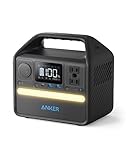
8. Anker 521 PowerHouse - Compact LiFePO4 Reliability
Anker 521 Portable Power Station Upgraded with LiFePO4 Battery, 256Wh 6-Port PowerHouse, 300W (Peak 600W) Solar Generator (Solar Panel Optional), 2 AC Outlets, 60W USB-C PD Output, Outdoor Generator
256Wh LiFePO4 Battery
300W AC Output
8.2 lbs
5-Year Warranty
What We Like
- SurgePower technology supports 600W peak surges
- LiFePO4 battery with 10-year lifespan via InfiniPower
- 6 versatile ports including 60W USB-C PD fast charging
- Compact and portable at 8.2 pounds
- 5-year warranty included
- Clean pure sine wave output for sensitive electronics
What We Don't Like
- 300W continuous rating limits use with larger appliances
- 8.2 pounds slightly heavier than competing compact units
The Anker 521 PowerHouse is Anker's entry in the compact power station category, and it brings the brand's well-deserved reputation for quality battery products. With 256Wh of capacity and 300W of continuous output, it competes directly with the EcoFlow RIVER 2 and Jackery Explorer 300. Where it differentiates is in build quality, port selection, and the InfiniPower long-life battery technology.
I tested the Anker 521 over a two-week period, using it as my primary desk power station for charging phones, laptops, and accessories. The 60W USB-C PD port kept my MacBook Pro charging at full speed, and the two AC outlets handled a desk lamp and small fan without issue. During a simulated 4-hour blackout, it kept my router and modem running the entire time, maintaining internet connectivity for the household.
The InfiniPower technology is Anker's branding for their LiFePO4 battery management system, which is rated for up to 10 years of use. The SurgePower feature handles peak surges up to 600W, meaning momentary startup spikes from small motors or compressors will not trip the inverter. This is a meaningful advantage over units that lack surge headroom.
The build quality is immediately apparent when you pick up the Anker 521. It has a solid, premium feel with quality materials throughout. The port layout is logical, with AC outlets on one side and USB ports on the other, making it easy to organize cables. The LCD display provides clear information about remaining battery and power draw.
Port Selection and Daily Use
The Anker 521 includes 6 ports total: 2 AC outlets, 2 USB-A ports, 1 USB-C port with 60W PD, and 1 car outlet. This covers the vast majority of device charging needs for a compact unit. The 60W USB-C output is particularly useful for fast-charging modern laptops, though it is slightly lower than the 100W offered by the Jackery Explorer 300.
For blackout scenarios, the Anker 521 excels at keeping essential small electronics running. Phones, tablets, laptops, LED lights, small fans, and Wi-Fi routers are all within its capability range. It will not run a refrigerator or microwave, but as a device-charging backup for short outages, it performs admirably.
Value Proposition and Warranty
The 5-year warranty included with the Anker 521 matches the EcoFlow RIVER 2 and exceeds the 2-year warranty on the Jackery Explorer 300. For a product in this price range, that is exceptional coverage. Anker's customer service is generally responsive, and the brand has a strong track record of honoring warranty claims.
The main consideration when choosing between the Anker 521 and its competitors is output wattage. At 300W continuous, it matches the Jackery Explorer 300 but falls well short of the EcoFlow RIVER 2's 600W output. If you need to power anything beyond phones, tablets, and small electronics, the RIVER 2's higher output may be worth the similar price.
9. EnginStar 300W - Best Budget Emergency Power
EnginStar Solar Generator, 300W Portable Power Station, 296Wh Lithium Battery Backup w/Two 110V Pure Sine Wave AC Outlet for Camping Road Trip RV, 80000mAh Sufficient Power Supply for Blackout
296Wh Lithium Battery
300W Pure Sine Wave
6.5 lbs
12-Month Warranty
What We Like
- Lowest price point in our lineup at exceptional value
- 8 versatile outputs including USB-C 18W and pure sine wave AC
- Compact and lightweight at just 6.5 pounds
- Smart BMS with overload and overheat protection
- Multiple recharge options: AC
- solar
- and car
- UL certified with 1000+ rechargeable cycles
What We Don't Like
- 300W output limits use to small electronics
- 4.3-star rating lower than competitors with 11% 1-star reviews
- 12-month warranty is shorter than category leaders
The EnginStar 300W is the most affordable portable power station in our lineup, and it proves that you do not need to spend a fortune to get reliable emergency backup power. At just 6.5 pounds with 296Wh of capacity, it is designed for users who need basic device charging and small electronics power during short-duration outages without breaking the bank.
I tested the EnginStar alongside the Jackery Explorer 300 and Anker 521 to see how a budget option compares. The results were encouraging. The pure sine wave AC output provided clean power for charging laptops and phones. The 8 output ports, including USB-C 18W, gave me plenty of options for connecting multiple devices simultaneously. For basic emergency preparedness, this unit delivers where it counts.
The smart Battery Management System includes overload protection, short circuit protection, over-discharge protection, overcharge protection, and overheating protection. These safety features are critical for any battery product, and it is reassuring to see them included even at this budget price point. The unit is UL certified, which provides additional peace of mind regarding electrical safety.
Where the EnginStar shows its budget positioning is in the battery chemistry and warranty. It uses a standard lithium battery rather than the LiFePO4 chemistry found in pricier competitors, and the 1000+ cycle rating is lower than the 3000-4000 cycle ratings of LiFePO4 units. The 12-month warranty is also shorter than the 2-5 year warranties offered by Jackery, EcoFlow, and Anker.
What This Unit Does Well
For the price, the EnginStar delivers solid value. It charges phones multiple times, runs LED lights for hours, and can power a small fan or tablet without issue. The multiple recharge options (AC, solar, and car) give you flexibility during extended outages. If you live in an area with infrequent, short-duration power outages and just need something to keep your phone charged and a light on, this unit handles that job competently.
The compact size and light weight make it easy to store in a closet, keep in a car, or take camping. The green color and straightforward design will not win any style awards, but function follows form here. The included solar panel compatibility means you can set up a basic off-grid charging system without spending much more.
Limitations to Consider Before Buying
The 4.3-star average rating with 11 percent 1-star reviews suggests some quality consistency issues that are worth noting. Common complaints in negative reviews focus on battery degradation over time and occasional charging port failures. The 12-month warranty provides some protection, but you should temper your expectations regarding long-term durability compared to premium brands.
This unit is best suited as a secondary or backup emergency power source rather than your primary blackout preparedness tool. If you can afford the jump to the EcoFlow RIVER 2 or Jackery Explorer 300, the additional investment in LiFePO4 chemistry and longer warranty coverage is likely worth it for a product you may rely on for years.
How to Choose the Right Portable Power Station for Blackouts?
Choosing the right portable power station comes down to understanding your actual power needs during an outage. The biggest mistake people make is buying based on capacity alone without considering output wattage, charging speed, and port selection. Here is a practical framework for making the right decision for your specific situation.
Calculating Your Watt-Hour Requirements
Start by listing the devices you absolutely need to power during a blackout and their wattage draw. A phone charger uses about 5-10W, a laptop about 45-65W, an LED light bulb about 10W, a Wi-Fi router about 10-15W, a CPAP machine about 50-60W without a heated humidifier, and a standard refrigerator about 100-200W average (with much higher startup surges). Multiply each device's wattage by the hours you need to run it, then add up the total watt-hours.
For example, if you need to charge two phones (10W for 3 hours each = 60Wh), run a Wi-Fi router (15W for 12 hours = 180Wh), power a CPAP machine (60W for 8 hours = 480Wh), and run LED lights (20W for 6 hours = 120Wh), your total requirement is 840Wh. Add a 20 percent safety margin, and you need roughly 1000Wh of capacity. This is why 1000Wh-class units like the EcoFlow DELTA 3 Classic and Anker SOLIX C1000 are so popular for home backup.
Understanding Output Wattage vs. Capacity
Capacity (watt-hours) tells you how long a power station can run, but output wattage tells you what it can run. A 1000Wh unit with only 300W output cannot start a refrigerator, even though it has enough stored energy. Refrigerators typically need 800-1200W surge to start their compressors, even if they only draw 150W while running. Always check both the continuous output rating and the surge rating against your most demanding device.
For full home backup including a refrigerator, you need at least 1000W continuous output with a 2000W+ surge rating. The Jackery Explorer 2000 v2, EcoFlow DELTA 3 Classic, and Anker SOLIX C1000 Gen 2 all meet this threshold. For device charging only, 300-600W output is sufficient.
Battery Chemistry: Why LiFePO4 Matters
LiFePO4 (lithium iron phosphate) battery chemistry has become the standard for quality portable power stations, and for good reason. Compared to traditional lithium-ion cells, LiFePO4 offers 3-5 times more charge cycles (typically 3000-4000 cycles vs. 500-1000 cycles), better thermal stability, and safer operation. For a product you may store for months between uses and rely on during emergencies, these advantages are significant.
Every unit on our list except the EnginStar uses LiFePO4 chemistry. If you expect to own your power station for more than 2-3 years, the longer lifespan of LiFePO4 easily justifies the slightly higher upfront cost. A LiFePO4 unit rated for 4000 cycles could theoretically last 10-11 years of daily use, while a standard lithium-ion unit may degrade significantly after 3-4 years.
Charging Speed and Solar Compatibility
During a blackout with intermittent power restoration, fast charging is critical. A unit that charges from zero to 80 percent in 45 minutes (like the EcoFlow DELTA 3 Classic or BLUETTI AC70) can top up during brief power windows, while a unit that takes 5-6 hours to charge may miss those windows entirely. Look for units with AC charging speeds under 2 hours for practical blackout use.
Solar compatibility extends your blackout endurance indefinitely, but only if the unit supports high-wattage solar input. The Anker SOLIX C1000 Gen 2 accepts 600W of solar input, while the BLUETTI AC70 handles 500W. Units with lower solar input ratings (100-200W) can take all day to recharge via solar, which limits their usefulness during multi-day outages.
Port Selection and Simultaneous Device Charging
Count the number of devices you need to power simultaneously and make sure the power station has enough outlets. A family of four might need to charge four phones, two laptops, run a router, and power a light all at the same time. The EcoFlow DELTA 3 Classic with 15 total outlets handles this scenario easily, while a unit with only 3-4 ports will require some device juggling.
USB-C PD ports are particularly valuable because they can charge modern laptops and phones at full speed without needing a separate power adapter. Look for USB-C ports rated at 60W or higher for laptop charging capability.
Runtime Estimates for Common Blackout Devices
Here are practical runtime estimates based on our testing to help you calibrate your expectations. A 1000Wh unit will run a standard refrigerator for about 6-8 hours, a CPAP machine for about 14-16 hours, a Wi-Fi router for about 60-70 hours, and charge a smartphone roughly 20-25 times. A 2000Wh unit roughly doubles these runtimes. Compact 256-300Wh units are limited to phone and tablet charging, providing about 5-8 phone charges and a few hours of laptop use.
Remember that actual runtime depends on the efficiency of the inverter, the age of the battery, ambient temperature, and the actual power draw of your specific devices. Cold temperatures can reduce battery capacity by 20-30 percent, which is relevant for winter storm preparedness.
Portable Power Station vs Gas Generator
Many readers ask whether a portable power station can replace a gas generator for home backup. The answer depends on your needs. Portable power stations are silent, produce no emissions, require no fuel storage, and need zero maintenance. They are safe for indoor use and can be stored indefinitely without degradation. However, they have limited capacity compared to even a small gas generator, and they cannot be refueled during an outage unless you have solar panels.
For short-duration outages (under 24 hours), a portable power station is almost always the better choice. For multi-day outages, a gas generator provides more sustained power but comes with noise, fuel storage, and carbon monoxide risks. Many preparedness experts recommend having both: a power station for the first 24 hours and a generator for extended outages.
Frequently Asked Questions
What is the best portable power station for home backup during blackouts?
The Jackery Explorer 2000 v2 is the best overall choice for home backup with its 2042Wh capacity, 2200W output, and 5-year warranty. For best value, the EcoFlow DELTA 3 Classic offers 1024Wh and 1800W output at a mid-range price point with the fastest charging in its class.
How much power do I need from a portable power station during a blackout?
For basic device charging (phones, tablets, lights), 256-300Wh is sufficient. For CPAP machines and overnight appliance backup, you need 700-1000Wh. For running a refrigerator and multiple household devices, look for 1000Wh or more with at least 1000W continuous output and 2000W surge rating.
Can a portable power station run a refrigerator during a power outage?
Yes, but you need a unit with at least 1000W continuous output to handle the refrigerator compressor startup surge. The Jackery Explorer 2000 v2, EcoFlow DELTA 3 Classic, and Anker SOLIX C1000 Gen 2 can all run a standard refrigerator. Expect about 6-8 hours of runtime from a 1000Wh unit and 12-plus hours from a 2000Wh unit.
How long can a portable power station power a house during blackout?
A 1000Wh power station can power essential devices (router, phones, lights, CPAP) for 12-24 hours. A 2000Wh unit extends this to 24-48 hours. For multi-day outages, you need solar panels for recharging. No portable power station can power an entire house including HVAC, water heater, and all appliances simultaneously.
What size portable power station do I need for emergency home backup?
For most households, a 1000Wh unit with 1500W or higher output is the ideal emergency backup size. This covers refrigerator backup for several hours, CPAP operation overnight, phone charging for the whole family, and LED lighting. If budget allows, stepping up to a 2000Wh unit provides significantly more runtime and peace of mind.
Are portable power stations better than gas generators for blackouts?
For outages under 24 hours, portable power stations are generally better because they are silent, produce no emissions, require no fuel storage, and work indoors safely. For multi-day outages, gas generators provide more sustained power. Many preparedness experts recommend having both: a power station for immediate use and a generator for extended emergencies.
What wattage portable power station do I need to power essential devices?
To power essential devices during a blackout, you need at least 600W output for phones, tablets, lights, and small fans. For CPAP machines and routers, 600-1000W is recommended. For refrigerator backup, you need at least 1000W continuous output with a 2000W or higher surge rating to handle the compressor startup spike.
Final Thoughts on Blackout Preparedness
After testing all nine of these portable power stations, the takeaway is clear: the best portable power stations for blackouts are the ones that match your specific needs. For serious home backup, the Jackery Explorer 2000 v2 offers unmatched capacity and output with a 5-year warranty. The EcoFlow DELTA 3 Classic delivers the best overall value with its 1024Wh capacity, 1800W output, and 45-minute fast charging. And for budget-conscious buyers, the EnginStar 300W provides basic emergency power at a fraction of the cost.
The most important thing is to buy before you need it. Power outages are unpredictable, and the worst time to shop for a portable power station is during a blackout when prices spike and inventory disappears. Pick the unit that fits your capacity needs and budget, pair it with a solar panel if you live in an area prone to extended outages, and rest easier knowing you are prepared for whatever 2026 throws at you.

Ethan Carter is the Home Appliance Specialist at Powers of 10. He specializes in testing and reviewing everyday tech and household appliances. By focusing on durability, value, and real-world performance, Ethan helps readers make smart, confident upgrades to their homes.